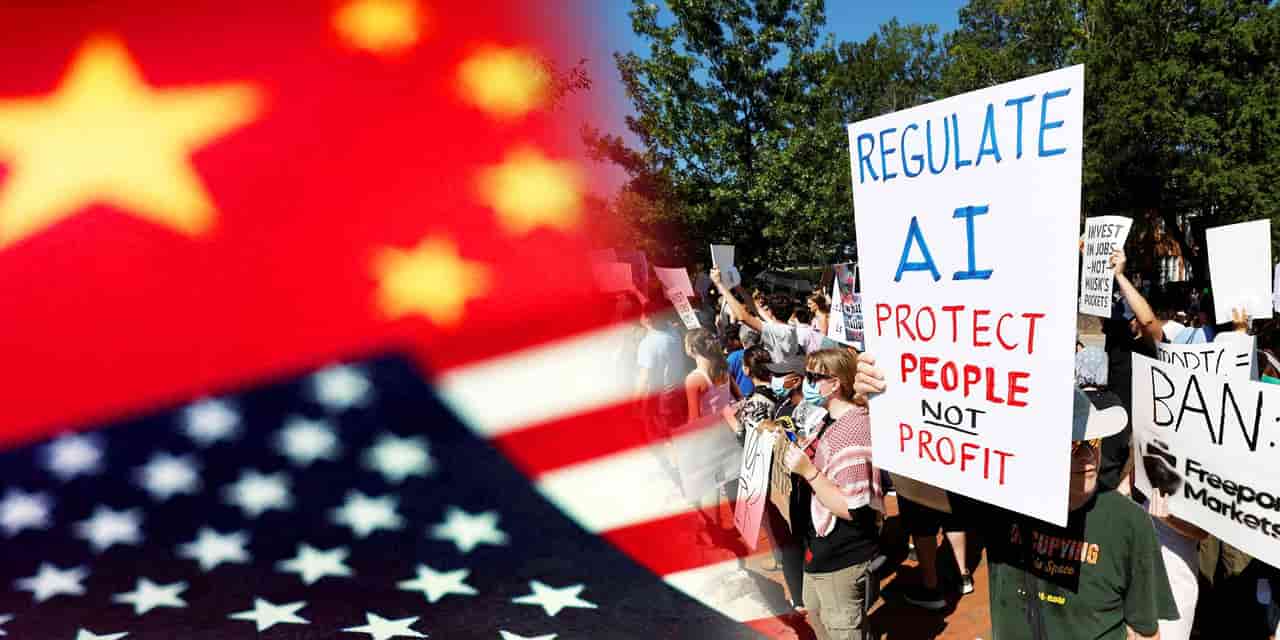
China has rejected urgent calls from prominent U.S. artificial intelligence leaders to slow down development, framing the proposal as another front in the technology rivalry between Washington and Beijing. The dispute highlights differing approaches to AI safety and competition ahead of a planned meeting between U.S. President Donald Trump and Chinese leader Xi Jinping.
Anthropic CEO Dario Amodei published an essay over the weekend urging AI companies to deliberately "slow the pace" of development due to potential existential risks. He warned that a "Chinese lead in AI would pose grave danger for the United States and the world" and called for restrictions on key tech sales to China. OpenAI CEO Sam Altman and SpaceX founder Elon Musk endorsed Amodei's essay.
Beijing responded swiftly, with Chinese Foreign Ministry spokesperson Guo Jiakun calling the warnings "fearmongering, confrontation and vicious competition" that would disrupt global AI governance. The state-run Global Times newspaper branded the proposal a "Cold War playbook" for the AI sector.
President Trump, meanwhile, stated his focus is on "keeping it that way" that the U.S. leads in AI, saying, "whoever wins AI wins." He criticized "very negative forces" for raising concerns that he believes "won't happen."
Despite rebuffing external calls for a slowdown, China's State Security Minister Chen Yixin acknowledged AI security risks, calling for "extensive international cooperation" and stating that AI has become a "new track for strategic rivalry."
This divergence in approach is likely to be a central issue when Trump and Xi meet on September 24 in Washington. The disagreement follows a U.S. alert alleging that top Chinese AI companies have systematically copied cutting-edge AI models from American firms, an accusation Beijing rejected.