Key facts
- Huawei is accelerating the launch of its Ascend 960DT AI chip to Q1 2027.
- The company announced its Peerium Computing Architecture for large AI computing systems.
- Huawei's Atlas 950 SuperPoD and SuperCluster systems are based on the new architecture.
- An Atlas 950 SuperCluster can connect up to 256,000 accelerator cards.
- China tech analyst Rui Ma noted the announced SuperPoD system is smaller than originally planned.
- Huawei's chip ambitions continue despite U.S. restrictions on advanced semiconductor technology.
Huawei is accelerating the launch of its next-generation Ascend 960DT AI chip to the first quarter of 2027, aiming to challenge Nvidia's dominance in the AI sector. The Chinese tech giant also announced its Peerium Computing Architecture, designed to build large-scale AI computing systems for both training and inference.
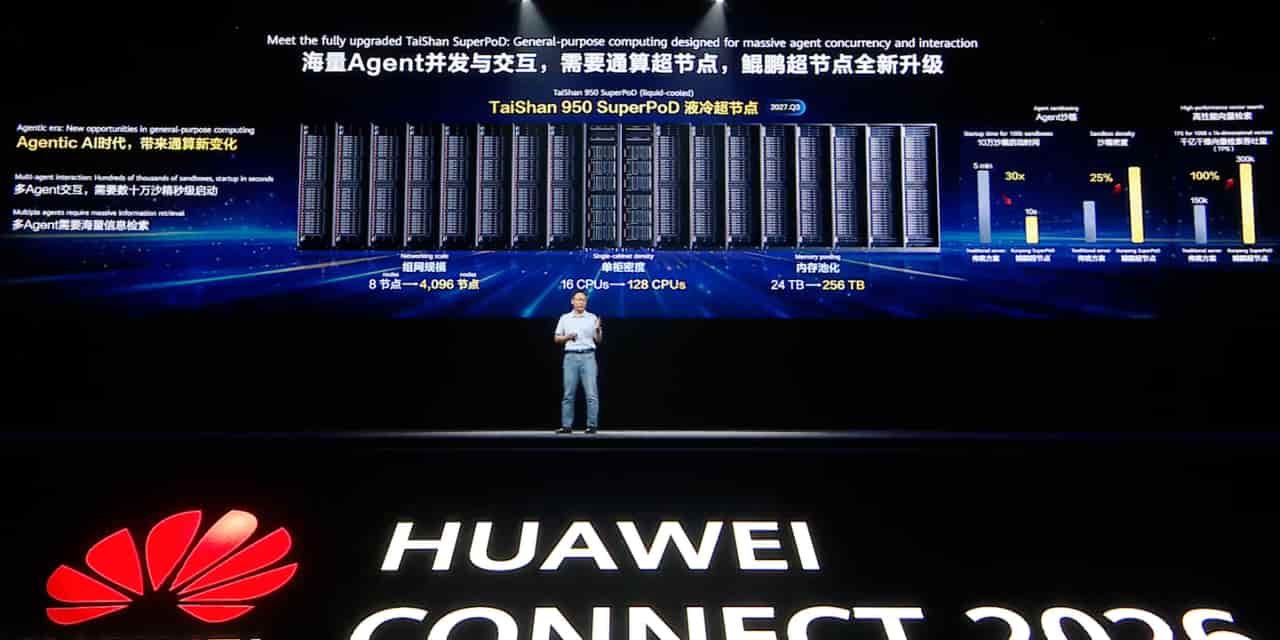
Rotating chairman Wang Tao announced the updated timeline at the Huawei Connect conference in Shanghai on Thursday. The Ascend 960DT was previously slated for a Q3 2027 release. Huawei's Atlas 950 SuperPoD and SuperCluster are the first systems to be based on the new architecture, with a SuperCluster capable of connecting up to 256,000 accelerator cards. The company also introduced what it calls the industry’s first “super node” utilizing near-packaged optics (NPO) technology to overcome data-transfer bottlenecks.
However, China tech analyst Rui Ma noted that the announced SuperPoD system is smaller than originally planned, despite the chip's earlier launch. Huawei's continued advancement in chip technology comes amid U.S. restrictions on China's access to advanced semiconductor technology. Ma suggested these restrictions are unlikely to halt China's pursuit of semiconductor self-sufficiency.