Key facts
- Hezbollah received $200 million from Iran last month.
- The funds are intended to help Lebanese displaced by the war with Israel.
- Approximately 50,000 families will receive an initial $3,000 payment.
- Intermediaries charged a 20% fee to transfer the funds.
- Hezbollah has suffered heavy Israeli blows in two wars since 2024.
Hezbollah has received $200 million from Iran to assist Lebanese displaced by the ongoing war with Israel, according to two individuals with direct knowledge of the transfer. The funds were moved last month, despite increasing US economic pressure on Iran and difficulties in transferring money to its Lebanese ally. Intermediaries involved in the transfer charged a 20% fee, reflecting the risks associated with dealing with the group.
A Hezbollah official confirmed that an amount had been secured and that a distribution plan would be announced soon, without specifying the source of the funds. The Iranian foreign ministry, Iran's permanent mission in Geneva, the US Treasury Department, and the Lebanese government did not immediately respond to requests for comment.
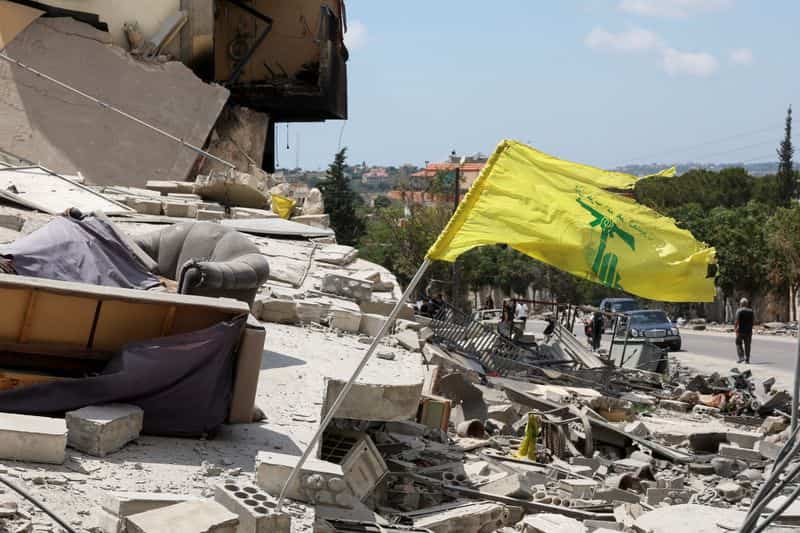
Israel's bombardment and invasion of Lebanon have displaced hundreds of thousands of Shi'ite Muslim constituents of Hezbollah since the group entered the regional war on March 2. However, those displaced have received minimal assistance from Hezbollah, an organization founded by Iran's Revolutionary Guards in 1982, which has faced significant Israeli military action in recent conflicts.
One source indicated that the funds would be used to provide an initial $3,000 per family, with priority given to those whose villages have been destroyed or are inaccessible due to Israeli occupation. These families number around 50,000. The US Treasury Department reported that Iran transferred $1 billion to Hezbollah in the first ten months of 2025, despite years of US sanctions.
Iran has not publicly acknowledged financing Hezbollah, and its policy of funding regional proxies has previously drawn domestic criticism, particularly amid worsening economic conditions in Iran. Reuters previously reported that Iran had promised additional funding to Hezbollah following an interim deal with Washington in June, which later collapsed.
Hezbollah leader Naim Qassem stated last month that the group would contribute to a project housing thousands of displaced individuals using "available resources and donations." In the past, Hezbollah's ability to fund local services and provide post-conflict aid has bolstered its support. Following the 2006 war with Israel, the group provided substantial cash payments and assisted in rebuilding Beirut's southern suburbs.
However, reconstruction efforts have been slow this time. Lebanese Prime Minister Nawaf Salam estimated that the total reconstruction costs from the wars since 2024 could exceed $27 billion. The two sources did not provide details on the money's transfer route, but one noted that financial companies in Iraq, Dubai, and Turkey, which previously facilitated such transfers, are now under pressure, making it increasingly difficult for Hezbollah to move funds.