Key facts
- Europe is canceling planned upgrades for the Ariane 6 rocket.
Europe is canceling planned upgrades for its Ariane 6 rocket, opting instead to focus on developing a next-generation vehicle. This decision comes as the current Ariane 6 program faces significant financial challenges, requiring substantial subsidies per launch.
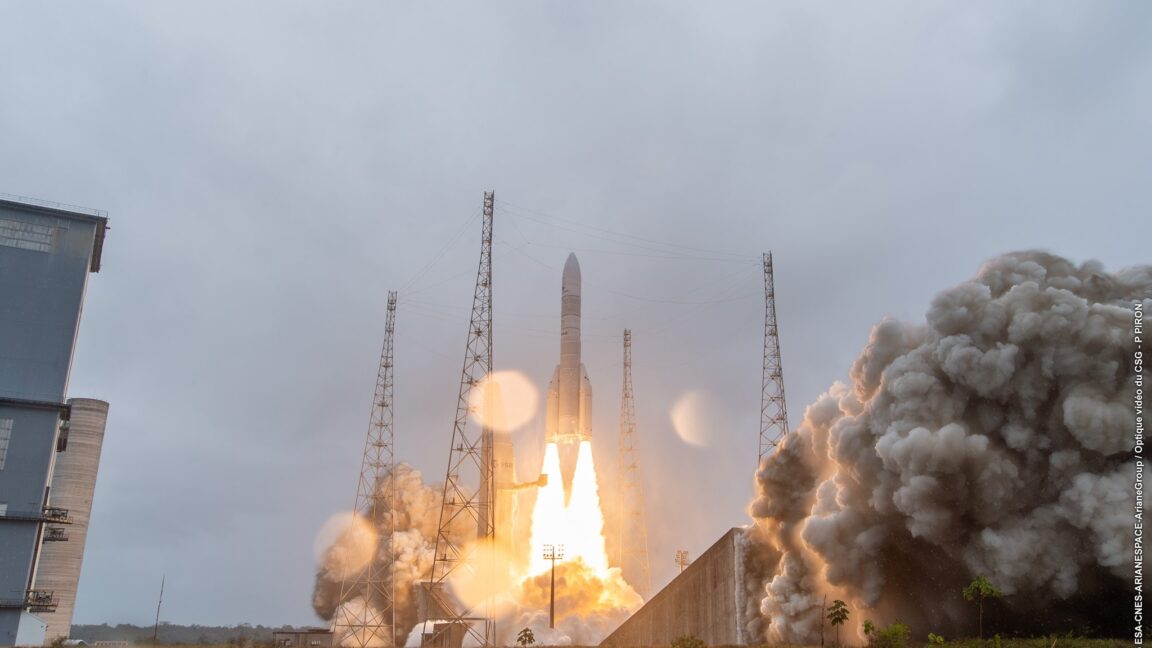
This strategic pivot reflects Europe's challenge in maintaining a competitive edge in the global space launch market, balancing high development and operational costs against the need for commercially viable services and the rise of reusable rocket technology from competitors.
Europe has decided to cancel planned upgrades for its Ariane 6 rocket, signaling a shift in strategy towards developing a next-generation vehicle. This decision comes amid significant financial challenges for the current program, which requires substantial government subsidies for each launch.
Europe invested approximately 3.6 billion euros in the development of the Ariane 6 and its launch facilities. Despite this investment, European governments are committed to subsidizing each launch by an estimated 32 million to 38 million euros, assuming nine flights per year. This means that before any customer pays the operator, Arianespace, European taxpayers have already contributed over 100 million euros per launch when amortizing development costs.
The European Space Agency's Director General, Josef Aschbacher, confirmed that the agency is on track to meet its target of 10 Ariane 6 launches next year. However, discussions are underway to potentially increase this capacity to 12, 15, or even 20 launches annually. Such an increase would necessitate scaling up production of all rocket components, including solid-rocket motors, engines, and fairings.
Aschbacher expects clarity from European ministers by the end of the year regarding plans for increasing Ariane 6 production. The ministers face a decision on whether to invest further in factories and logistics for higher production rates, especially given the need for heavy subsidies to attract commercial demand. Alternatively, they may choose to direct these funds towards developing a new generation of Ariane rockets that could feature partial reusability, aiming to better compete with reusable launch vehicles from the United States and China.
Pick the topics you care about. Get only what matters, on your cadence.