Key facts
- LandSpace's Zhuque-3 rocket successfully landed its first-stage booster on August 19.
- This marks China's first successful recovery of an orbital-class launch vehicle's first stage using landing legs.
- The Zhuque-3 booster is made of stainless steel and powered by methane-fueled engines.
- LandSpace plans to reuse the recovered booster after inspection and maintenance.
- The Zhuque-3 rocket has a current payload capacity of over 17,600 pounds to low-Earth orbit in reusable mode.
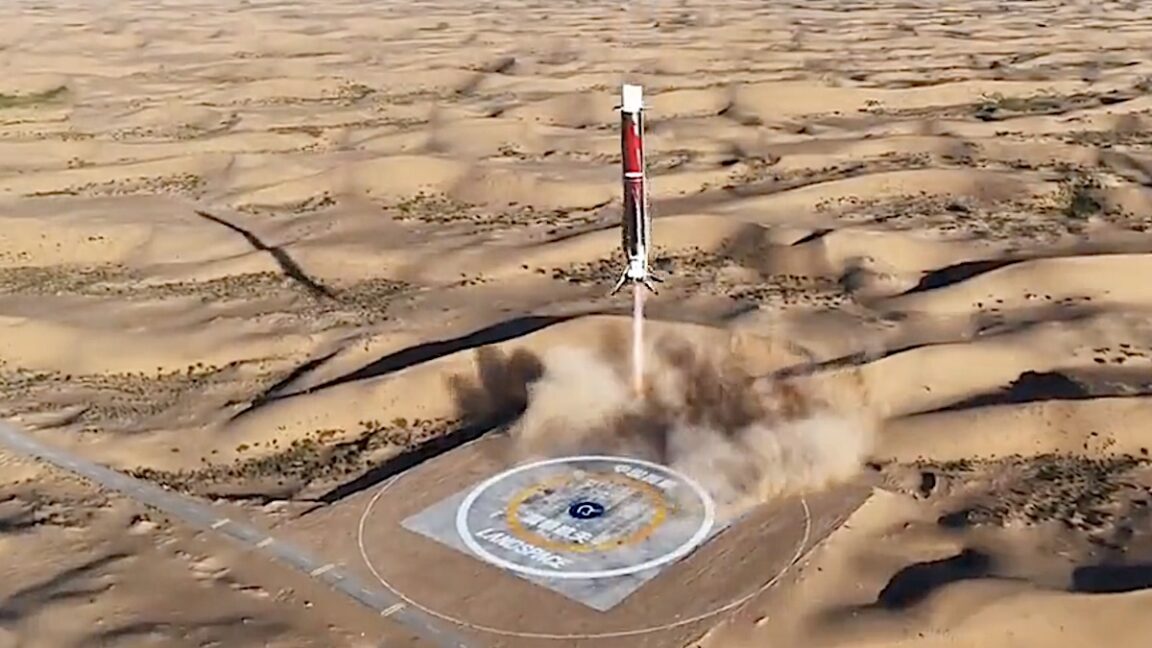
LandSpace, a Chinese launch company, successfully landed the first stage of its Zhuque-3 rocket on August 19, marking a significant milestone in China's reusable rocket capabilities. This achievement follows the first successful recovery of an orbital-class rocket booster by another Chinese rocket, the Long March 10B, on July 10. The Zhuque-3, a 216-foot-tall stainless steel rocket powered by nine methane-fueled engines, lifted off from the Jiuquan Satellite Launch Center and its first stage executed a propulsive landing on four extendable legs in the Gobi Desert. LandSpace stated this was China's first successful recovery of an orbital-class launch vehicle's first stage using landing legs and its first successful booster recovery on land. The company plans to inspect, maintain, and reuse the booster as soon as possible, aiming for at least 20 flights per booster. The Zhuque-3's current design can carry over 17,600 pounds to low-Earth orbit in reusable mode, with plans for an upgraded version with increased payload capacity. This development places China among a select group of nations with advanced reusable rocket technology, comparable to SpaceX and Blue Origin in the United States, though Chinese companies still need to demonstrate consistent booster turnaround and reuse.