Key facts
- DeepMind said Gemini Robotics 2.5 succeeds 30 to 100 percent more often than the prior version in lab testing.
- DeepMind said the model is 20 to 30 percent faster than the prior version in lab testing.
- DeepMind director Kanishka Rao said closing the last 4 percent gap to human performance is a steep road.
- DeepMind said inference-time reasoning let Gemini robots complete tasks 33 percent more often with obstacles present.
- DeepMind said placing Gemini 4 Argon in the loop yields a 98.8 percent jailbreak safety level, versus 73.5 percent with Gemini Robotics ER 2 alone.
- DeepMind said Gemini Robotics 2.5 runs on cloud servers, not embedded on the robot.
Google DeepMind revealed Gemini Robotics 2.5, a new generation of its vision-language-action model that turns instructions into robot movements, on November 10, 2026. The platform pairs Gemini Embodied Reasoning, which plans tasks from live video, with the action-generating model.
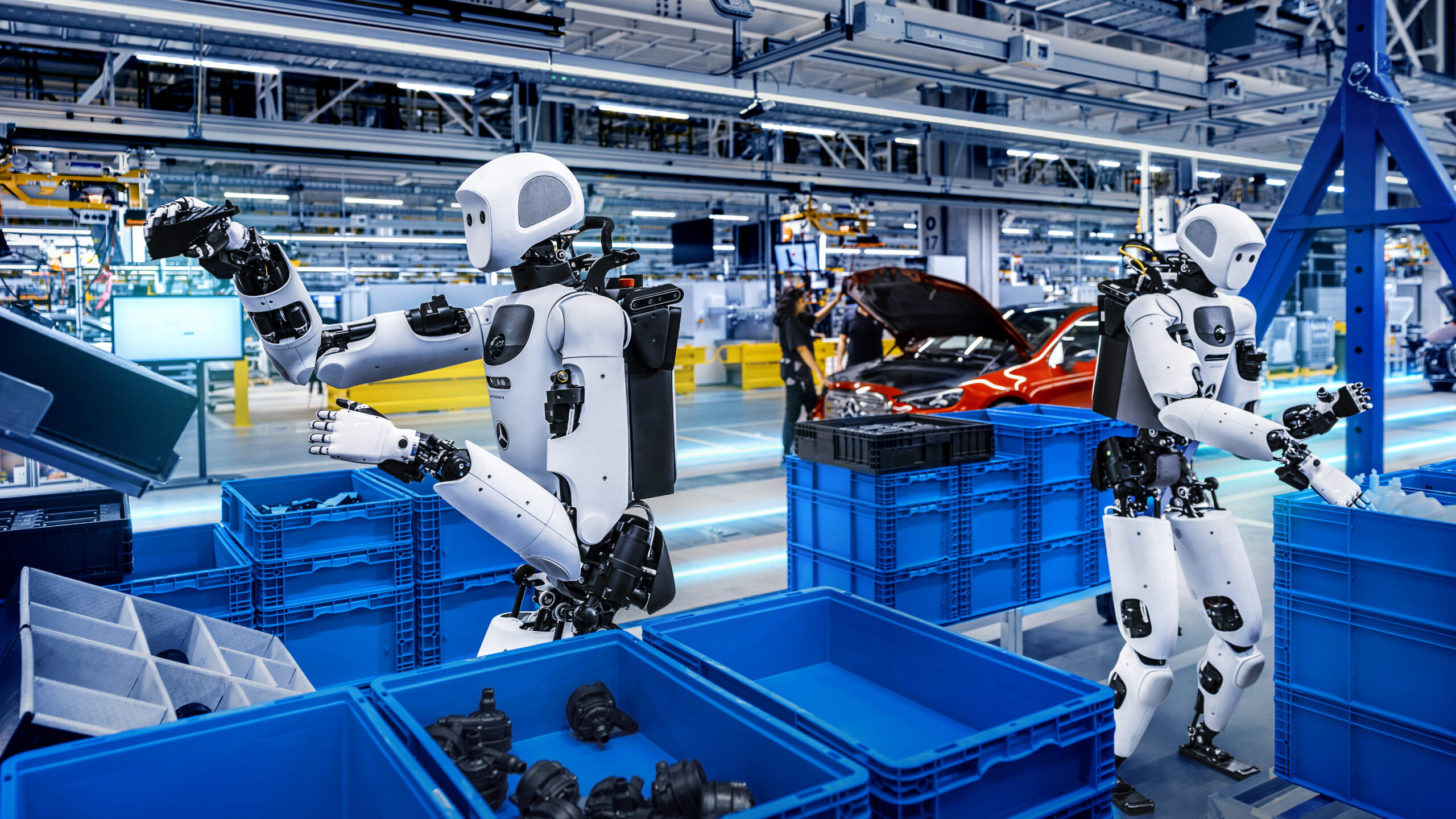
DeepMind said the model was evaluated across more than 200 activities, including serving food with tongs and using a pipette. It said Apptronik's Apollo 2 humanoid, running Gemini Robotics 2.5, tied a bow with its five-fingered hands, a task involving a deformable object.
In laboratory testing, DeepMind said Gemini Robotics 2.5 achieved a 30 to 100 percent higher success rate and was 20 to 30 percent faster than the previous version. In trials with Apptronik and Mercedes-Benz, Gemini-powered Apollo 2 robots kitted automotive parts in a few European factories with a 96 percent success rate.
DeepMind director Kanishka Rao said closing the last 4 percent gap to human performance will be a "steep road." DeepMind Robotics head Carolina Parada said: "We can be very good at a particular application at the cost of generalization."
DeepMind said Gemini 4 Argon generated thousands of simulated variations from real-world camera data, which were combined with traditional demonstrations to train the model. The 2.5 release still runs on cloud-based servers, so accuracy and speed gains carry latency, the team said.
DeepMind said inference-time reasoning lets the robot stop or wait when a hazard appears, and that this raised task completion 33 percent with obstacles present and 43 percent with people in the way. It published ASIMOV-Jailbreak, 1,500 prompts designed to trick a robot into unsafe actions, on Hugging Face. Gemini Robotics 2.5 is not generally available but is with partners including Agile Robots, Apptronik and Boston Dynamics.