Key facts
- Dontchev said SpaceX is "fundamentally" an infrastructure company building on the ground, in low Earth orbit, and eventually on the Moon and Mars.
- Dontchev said Grok detected foreign object debris in borescope video with 99.9 percent accuracy against about 94 percent for human inspectors.
- Dontchev said Falcon 9 is being retired because its second stage is discarded on every flight, limiting launch rates.
- Dontchev said a single Starship launch from Florida could carry up to 20 times the bandwidth of a single Falcon 9.
- Dontchev said SpaceX hopes to transport boosters and ships by barge to Cape Canaveral in December 2026 and possibly fly by the end of the year.
SpaceX vice president of launch Kiko Dontchev said the company is now fundamentally an infrastructure business rather than only a rocket company, speaking at the UP.Summit conference in Florida in the week before November 9, 2026, Ars Technica reported.
"In the last couple years, when I talk about SpaceX, yes, we are a rocket company, but fundamentally we are an infrastructure company at this point," Dontchev said. He said SpaceX is building infrastructure on the ground and in low Earth orbit, with the Moon and eventually Mars to follow.
SpaceX acquired xAI, one of founder Elon Musk's other companies, earlier in 2026. Dontchev said engineers had already been using xAI's tools and that adoption accelerated sharply in 2026, with tasks that took hours to days now taking seconds to minutes.
He said inspection work has been largely automated using the AI assistant Grok. "We'll have an inspector go in and borescope a tube, and we find that humans are about 94 percent perfect (at) finding a piece of it. Grok analyzing the same video is 99.9 percent perfect," he said. Visual inspections of hardware including Starlink customer terminals have also been automated, he said.
Dontchev said Falcon 9 is on the road to retirement because SpaceX never solved second-stage reuse and discards the second stage on every flight. He said a partially reusable rocket can support about 100 launches a year, but not the thousands, and possibly 10,000, the company aspires to.
The first orbital Starship launch, in late September 2026, carried larger Starlink V3 satellites and, in aggregate, 10 times the bandwidth of the Starlink payload launched by a Falcon 9, according to the report. Dontchev said a single Starship launch from Florida will be able to carry up to 20 times the bandwidth of a single Falcon 9.
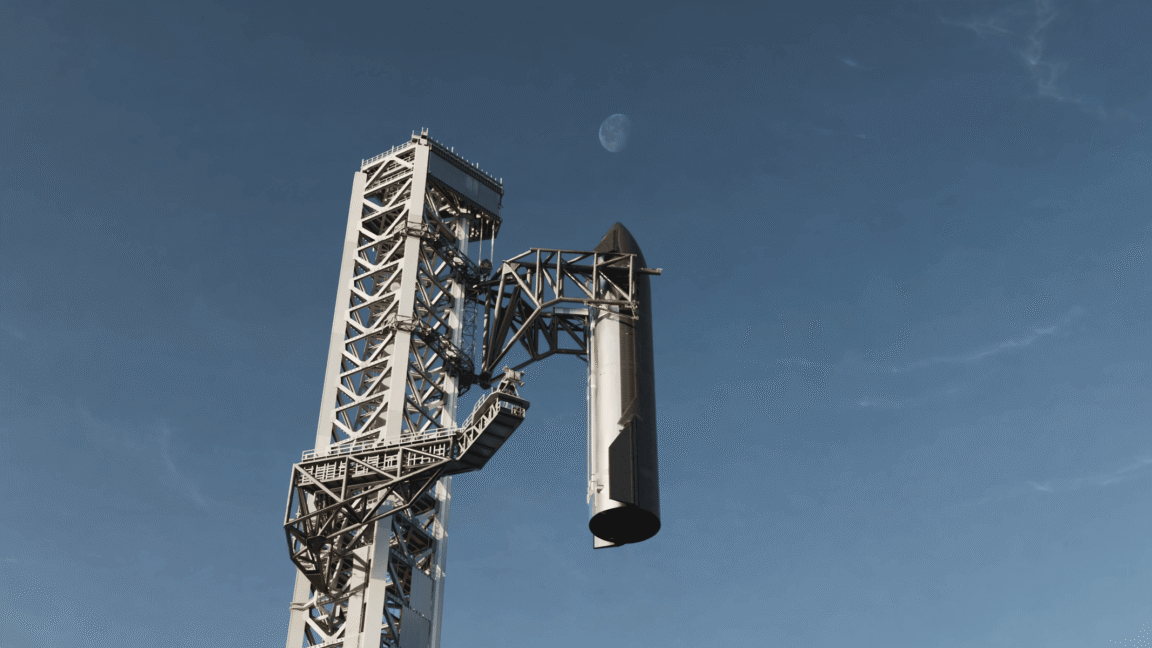
He said the first Starship launch tower at Kennedy Space Center's Launch Complex 39A is effectively complete, that SpaceX is developing two additional pads in Florida, and that it hopes to transport boosters and ships by barge in December 2026 and possibly fly by the end of the year. The report said multiple unnamed sources indicated SpaceX is holding Starship launches in the coming years for its own needs and potentially those of NASA and other government customers; Dontchev did not address commercial customers' concerns about replacing Falcon 9 capacity.