Key facts
- AST said Blacklift would lift 20 metric tons to low Earth orbit.
- AST committed $1.3 billion to Firefly for the license, engines, and support.
- Nine Miranda engines will power Blacklift's first stage.
- AST said its external launch agreements cover over 100 BlueBird satellites for 2027 and 2028.
AST SpaceMobile, a Texas-based, publicly traded company building large satellites for direct-to-cell communications, said it is developing a medium-lift rocket called Blacklift with the capacity to lift 20 metric tons to low Earth orbit and would start commercial launches in late 2028, according to an Ars Technica report dated November 6, 2026. The company has been having trouble finding rides to space.
Abel Avellan, founder, chairman, and CEO of AST SpaceMobile, said in a news release, "The Blacklift rocket is the springboard to significantly expand our total addressable market, providing AST SpaceMobile with regular unconstrained access to orbit and providing for most favorable owner's economics in the industry."
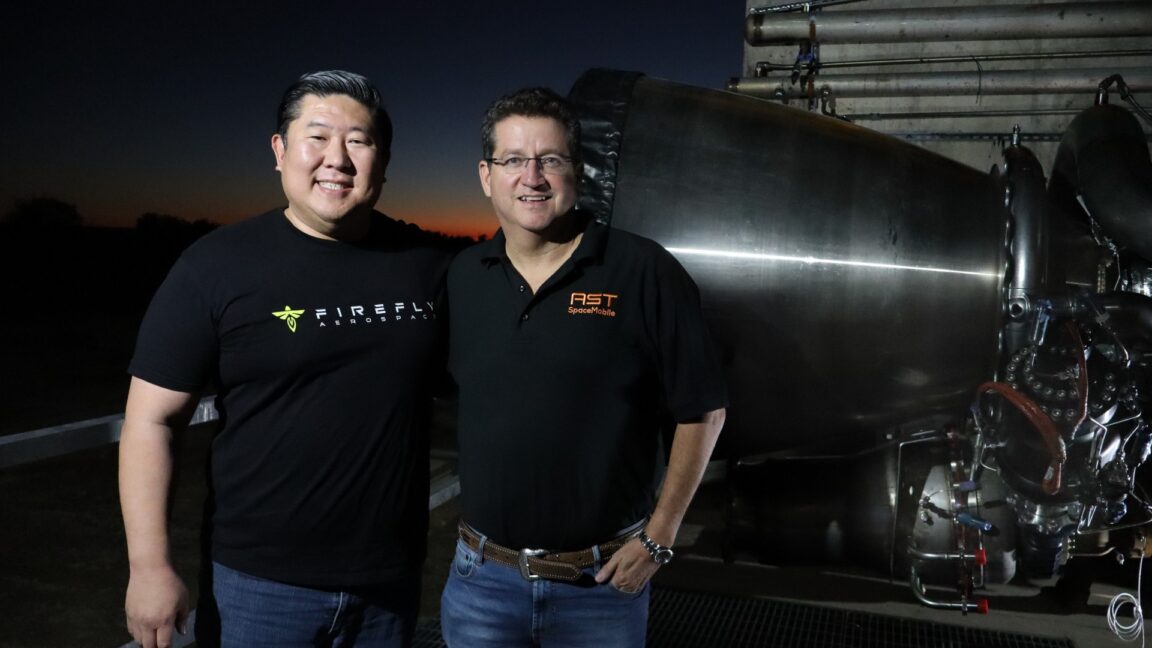
AST said it signed an agreement with Firefly to deliver engines for the first three Blacklift rockets, provide engineering services over a three-year period, and acquire a perpetual license to manufacture the Miranda and vacuum-variant Vira engines from Firefly. Nine Miranda engines will power Blacklift's first stage. AST committed $1.3 billion to Firefly for the engine license ($800 million), 27 Miranda engines and nine Vira engines ($250 million), and engineering support ($250 million).
Ars Technica said the timeline is wildly optimistic. SpaceX holds the record for the fastest time to orbit with Falcon 9, at 4.7 years, and the article said comparable programs suggest five to nine years from announcement to first orbital launch. Of the medium- and heavy-lift vehicles announced by US companies since 2015, only United Launch Alliance's Vulcan has reached orbit, taking 8.7 years.
AST said in its news release, "AST SpaceMobile will continue to use external providers, with agreements now covering in total over 100 BlueBird satellites to be deployed cumulatively between 2027 and 2028." The article also noted that a firm called Cowboy Space said in October it was building a large rocket named Big Iron, with a first flight claimed for 2028.