Key facts
- Infineon, STMicroelectronics and NXP executives spoke at an industry gathering in Munich, Germany.
- The three companies supply power chips, sensors and microcontrollers for robots, vehicles and industrial machinery.
- STMicroelectronics has agreed to introduce humanoid robots from Italy's Oversonic into its factories.
- The first Oversonic robot was installed at an STMicroelectronics semiconductor plant in Malta.
- Infineon CEO Jochen Hanebeck said Europe is second to other regions in many areas of physical AI.
- NXP CEO Rafael Sotomayor said mistakes in physical AI can have irreversible consequences.
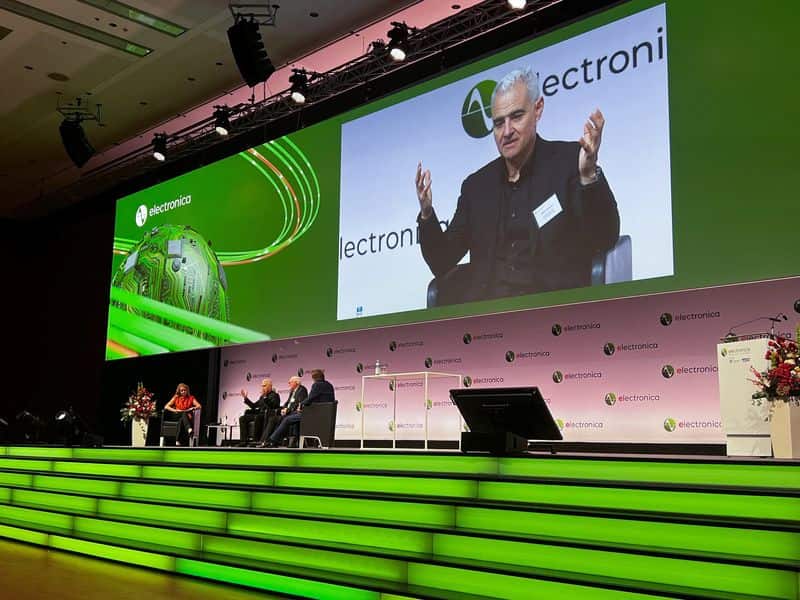
The chief executives of Infineon, STMicroelectronics and NXP said on November 9 that Europe is well positioned to compete with the US and Asia in robotics and physical AI, an industry term for artificial intelligence that operates in machines rather than data centers. They spoke at an industry gathering in Munich, Germany.
The three companies are major suppliers of the power chips, sensors and microcontrollers used in robots, vehicles and industrial machinery. They compete with US rivals including Texas Instruments and onsemi.
Infineon CEO Jochen Hanebeck said industrial or physical AI is "first of all, a must win for Europe," adding that there are many topics where Europe feels second to other regions.
STMicroelectronics CEO Jean-Marc Chery said physical AI would require close cooperation between chipmakers and customers, including training robots in AI-simulated environments before putting them to work. STMicroelectronics has agreed to introduce humanoid robots from Italy's Oversonic into its factories, with the first already installed at a semiconductor plant in Malta. Most such projects remain at an early stage, with factory trials far more common than widespread use.
NXP CEO Rafael Sotomayor said Europe's historical strengths gave it an advantage in developing the safe, reliable systems required as AI moves from making recommendations to taking physical action, where mistakes can have irreversible consequences. "There's no undo for a broken bone if you make a wrong decision," he said.