Key facts
- Cluster munitions caused at least 1,063 casualties in 2025, with most occurring in Ukraine.
- 87% of casualties were civilians, and approximately 40% were children.
- The report was released by the Cluster Munition Coalition ahead of a treaty review conference.
- Russia and Ukraine are not signatories to the Convention on Cluster Munitions.
- New production of cluster munitions was identified in nine countries, including China and Russia.
Cluster munitions resulted in at least 1,063 casualties in 2025, with the majority occurring in Ukraine, according to a report by the Cluster Munition Coalition released on Tuesday. This figure represents the third-highest annual toll recorded since 2010.
The report highlighted that 87% of those affected were civilians, and approximately two-fifths were children. Coalition director Tamar Gabelnick stated that while the treaty helps affected communities, the rising human toll and continued use, production, and transfers by states not party to the convention are serious concerns.
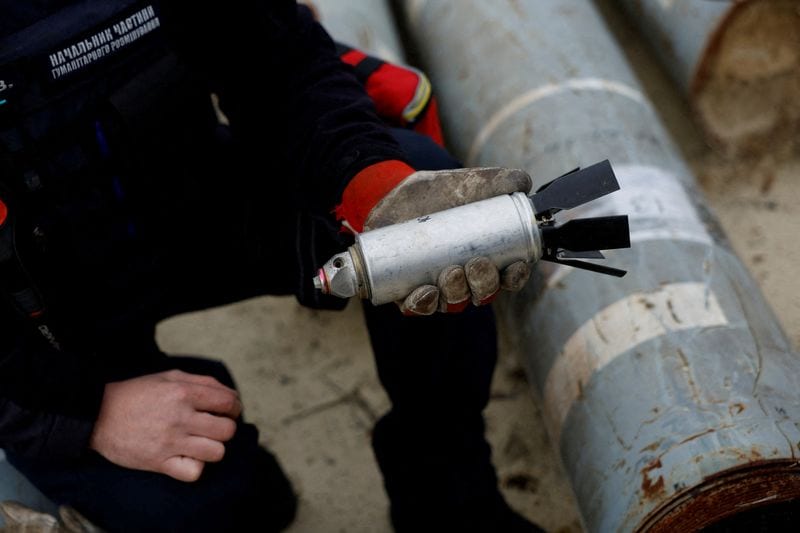
The highest annual toll, 1,172 casualties, was recorded in 2022, the year Russia launched its full-scale invasion of Ukraine. Cluster munitions are designed to release smaller bomblets over a wide area, and unexploded ordnance can remain a hazard long after conflicts end.
Neither Russia nor Ukraine has signed the Convention on Cluster Munitions, which prohibits their use. Russia maintains that these weapons are lawful, while Ukraine states it adheres to international humanitarian law when using them. The report also identified new production of cluster munitions in nine countries, including China, Israel, North Korea, Russia, and South Korea.
Ahead of a treaty review conference in Vientiane, Laos, the Red Cross urged more states to join the convention. Fahad Ahmed, a Legal Adviser at the Red Cross, emphasized the need for major military powers to become signatories. The Red Cross also noted that funding cuts have led to reduced physical rehabilitation support for victims.