Key facts
- NATO allies intercepted Russian submarines training to disable undersea cables near Svalbard.
- The operation was conducted by Russia's GUGI undersea warfare directorate.
- Britain, Norway, and the United States were involved in tracking and confronting the Russian vessels.
- Undersea cables are critical for global internet connectivity and financial transactions.
- Western intelligence officials fear Russia is increasing sabotage operations in Europe.
- The incident occurred in Arctic waters near the Svalbard archipelago.
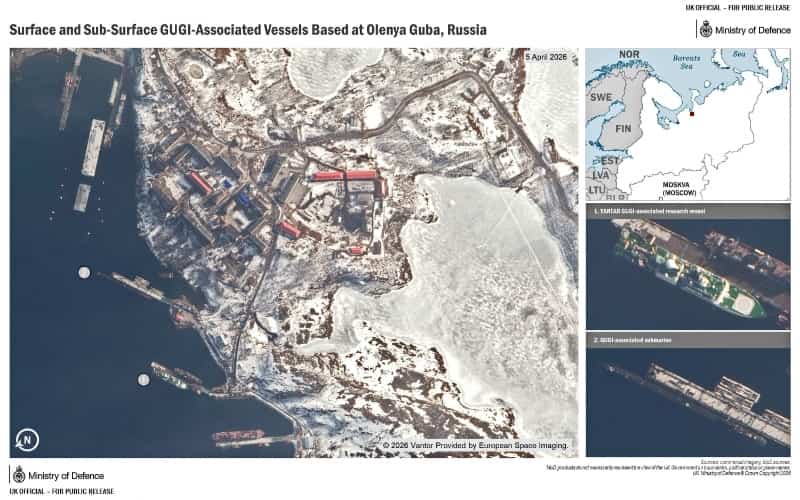
NATO allies, including Britain, Norway, and the United States, intercepted Russian submarines conducting an exercise to simulate disabling critical undersea cables in Arctic waters near the Svalbard archipelago earlier this spring. The operation, attributed to Russia's GUGI undersea warfare directorate, was reportedly aimed at deploying sophisticated destructive technology without leaving evidence. Western officials, speaking on condition of anonymity, stated that the joint operation prevented the Russian vessels from completing their exercise, leading them to eventually leave the area.
While Britain and Norway had previously disclosed covert Russian operations in Arctic waters, the specific details of this new weapon, the precise location, and the U.S. involvement had not been previously reported. The incident occurs amid growing concerns among Western intelligence agencies that Russia may be escalating sabotage operations in Europe and preparing for potential conflict with NATO. Some U.S. intelligence analysts are particularly worried that Russia might test NATO's mutual defense pact, Article 5, with the destruction of subsea cables being a potential component of such an effort.
Undersea cables, some no thicker than a garden hose, are vital for global internet connectivity and financial transactions. Their strategic importance has made them targets in past conflicts. The two subsea fiber-optic cables linking Svalbard to mainland Norway lie as deep as 2,700 meters and carry substantial satellite data. Russia's Defence Ministry and the Kremlin have not responded to requests for comment and consistently deny conducting sabotage operations or plotting confrontations.
Western officials suggest that Russia's focus on European states has intensified as the front line in Ukraine has stabilized. Countries like Poland, Lithuania, and Romania have reported various violations, and Germany recently responded to an attempted drone attack on Leipzig/Halle Airport by closing a Russian consulate and cultural center. CIA Director John Ratcliffe reportedly visited Moscow to warn Russian intelligence counterparts against escalating sabotage activities.
British and Norwegian officials shared their findings with Moscow during the confrontations, aiming to deter Russia from using the new technology. Norway's Defence Minister Tore Sandvik stated that the joint operation sent a clear message that Russia cannot operate covertly and that any attempt to target critical infrastructure would be met with consequences. Britain's Defence Ministry referenced earlier statements acknowledging attempted covert activities by Russia's GUGI. The White House and CIA declined to comment on the incident.
The strategic importance of the Bear Gap, an icy expanse between Svalbard and mainland Norway, has been highlighted by the potential for escalation. Russian nuclear submarines based in the Kola Peninsula would traverse this area to reach the Atlantic. Britain recently deployed forces to Jan Mayen island, near this region, for a joint exercise with Norwegian and U.S. allies. Norway plans to establish a new fiber-optic cable linking Svalbard and Jan Mayen to the mainland by 2028.
NATO has increased its focus on subsea infrastructure security since the 2022 destruction of the Nord Stream pipelines. Maritime analytics firm Windward reported a significant increase in vessels conducting 'drifting' activities—slowly sailing over or near sensitive subsea infrastructure—in the North Sea and South China Sea regions. While surveying infrastructure in international waters is not illegal, security experts view extensive mapping as preparation for sabotage. Initiatives like NATO's Baltic Sentry and the UK-led Nordic Warden have been launched to enhance patrols of critical infrastructure. Despite these efforts, at least 11 subsea cables were damaged or cut in the Baltic Sea between October 2023 and the end of last year. Experts consider Russia and China to be the most significant underwater threats, and with the global network of subsea cables expanding, Europe remains vulnerable due to its increased reliance on this infrastructure and diminished capacity to protect it.
