All NewsEducationTVBrokers
Equities & FundsCrypto & Digital AssetsAI & TechnologyBusiness & CorporateUS Politics & PolicyGeopolitics & Global RiskMacro, Rates & FXCommodities & EnergyEuropean Politics & MarketsAsia-PacificReal Estate & Property
All NewsHome
© PiQ · The news that matters, on your cadence.AboutFAQTermsPrivacyDMCA
← Back to Geopolitics & Global Risk

Engine failure caused fatal Army helicopter crash in February, military says

Created at 10 Sep · 5:11 AM1 source↑ Market-relevant
IN SHORT

An Army AH-1S Cobra helicopter crashed in February due to engine failure, killing two soldiers. The military investigation identified a misaligned internal cylinder in the engine as the cause, leading to a catastrophic failure during an emergency landing training exercise. The Army is considering accelerating the retirement of the helicopter model.

Key Numbers

2soldiers killed in helicopter crash
February 9date of helicopter crash
55 kilometersdistance of crash site from Seoul
1988year AH-1S Cobra helicopter was first introduced
1991year AH-1S Cobra helicopter was deployed
2028planned retirement year for AH-1S Cobra helicopter

Who's Involved

Army officials
identified engine failure as cause of fatal helicopter crash
Army
stated engine failure was due to a fault in the internal cylinder
two warrant officers
killed in helicopter crash
Joint Chiefs of Staff
to be consulted on accelerating helicopter retirement
Defense Acquisition Program Administration
to work with on replacement helicopter deployment plan
Army Aviation Command
aviation safety management functions to be transferred from
Army Headquarters Combat Readiness and Safety Group
to receive aviation safety management functions
Engine failure caused fatal Army helicopter crash in February, military says

↳ Why This Matters

The investigation into the fatal helicopter crash highlights potential systemic issues in military aviation safety and equipment maintenance, potentially leading to accelerated retirement of aging aircraft and revised safety protocols for both manned and unmanned platforms.

Key facts

  • A military investigation determined engine failure caused a fatal Army helicopter crash in February.
  • Two soldiers died in the crash of an AH-1S Cobra helicopter during emergency landing training.
  • The crash was attributed to a misaligned internal cylinder in the engine, causing shaft whirling and component failure.
  • The Army is considering accelerating the retirement of the AH-1S Cobra helicopter.
  • Aviation safety management functions will be transferred to Army Headquarters by April next year.

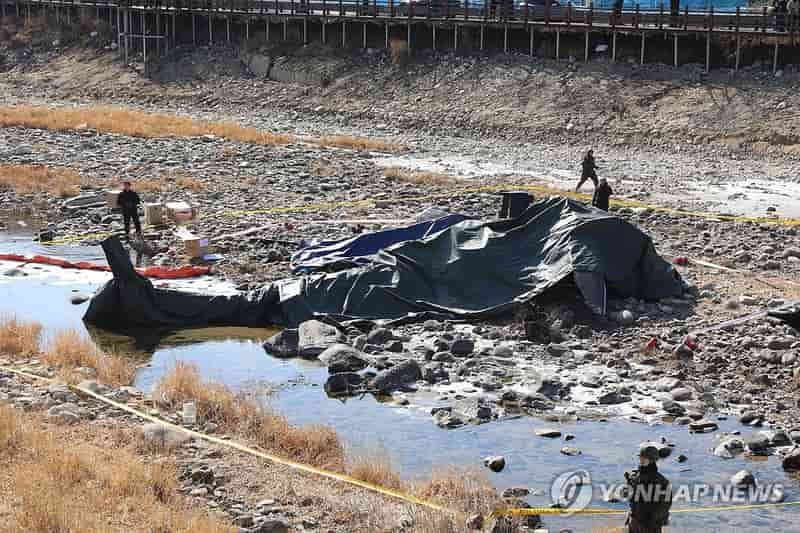
A military investigation has concluded that a sudden engine failure was the primary cause of a fatal helicopter crash in February that resulted in the deaths of two soldiers. The AH-1S Cobra helicopter, belonging to an Army aviation unit, crashed on February 9 during an emergency landing familiarization training in Gapyeong County, located approximately 55 kilometers northeast of Seoul.

According to the official findings released by Army officials on Thursday, the crash was attributed to a physical defect within the engine. Specifically, a slight misalignment of an internal cylinder caused the engine's central drive shaft to wobble. This wobble led to violent vibrations, a phenomenon known as "shaft whirling," where the spinning shaft moves erratically. When the pilot attempted to increase power to climb, the spinning power shaft collided with a second spinning shaft, generating extreme heat that melted critical components and led to the engine's shutdown.

An Army official stated in a press briefing that the accident was caused by an engine flameout resulting from a fault in the exhaust diffuser's internal cylinder, ruling out environmental or human errors. The Army is now considering accelerating the retirement of the AH-1S model, which was first introduced in 1988 and deployed in 1991, with retirement initially planned to begin in 2028. The military also plans to coordinate with the Defense Acquisition Program Administration to adjust the deployment schedule for its replacement, the LAH-1 Miron, to ensure its smooth introduction.

To enhance oversight and safety, the Army announced it will transfer aviation safety management functions and personnel from the Army Aviation Command to the Army Headquarters Combat Readiness and Safety Group by April of the following year. For airfields that operate both helicopters and drones, the Army intends to improve the safety management system by implementing integrated inspections for manned and unmanned platforms, moving away from individual checks.

Frequently asked questions

An AH-1S Cobra helicopter, an attack helicopter first introduced in 1988 and deployed in 1991, crashed during training.

A misaligned internal cylinder in the engine caused the central drive shaft to wobble, leading to "shaft whirling." This resulted in the power shaft slamming into a second shaft, generating extreme heat and melting components.

No civilian damage was reported, and the crash resulted in the deaths of two Army warrant officers.

The Army plans to accelerate the retirement of the AH-1S Cobra, adjust the deployment of its replacement, transfer aviation safety management functions, and improve integrated safety inspections for manned and unmanned aircraft.

What Happens Next

01The Army plans to consult with the Joint Chiefs of Staff to consider accelerating the helicopter's retirement.
02The Army will work with the Defense Acquisition Program Administration to adjust the operational deployment plan for its replacement, the LAH-1 Miron.
03The Army will transfer aviation safety management functions and personnel from the Army Aviation Command to the Army Headquarters Combat Readiness and Safety Group by April next year.

How It Developed

An AH-1S Cobra helicopter crashed during emergency landing familiarization training in Gapyeong County on February 9, killing two warrant officers.
The Army identified a misaligned internal cylinder in the helicopter's engine as the cause of the crash.
The engine failure occurred when a spinning power shaft slammed into a second shaft, generating extreme heat and melting components.
Army officials stated the cause was a physical factor, not environmental or human error.
The Army plans to consult with the Joint Chiefs of Staff to consider accelerating the retirement of the AH-1S Cobra helicopter, which was first introduced in 1988.
The Army will work with the Defense Acquisition Program Administration to adjust the operational deployment plan for its replacement, the LAH-1 Miron.
The Army will transfer aviation safety management functions to the Army Headquarters Combat Readiness and Safety Group by April next year to strengthen oversight.
The Army will improve safety management systems for airfields operating both helicopters and drones by transitioning to integrated inspections.

Sources

T1
Engine shutdown caused fatal Army helicopter crash in Feb.: militaryYonhap News Agency

Related Stories

South Korean team returns from UAE after assessing Strait of Hormuz security
10 Sep · 4:41 AM
Philippine ferry fire leaves 5 dead, 87 missing
10 Sep · 1:16 AM
Finnish police: Ukrainian drones diverted by jamming, wind
9 Sep · 10:22 AM
Iran claims 'devastating' strikes on Jordan base, damaging US aircraft
10 Sep · 1:45 AM
Israel military reports sirens in northern region amid suspected hostile aircraft alert
9 Sep · 10:15 PM