All NewsEducationTV
Equities & FundsCrypto & Digital AssetsAI & TechnologyBusiness & CorporateUS Politics & PolicyGeopolitics & Global RiskMacro, Rates & FXCommodities & EnergyEuropean Politics & MarketsAsia-PacificReal Estate & Property
All NewsHome
← Back to Geopolitics & Global Risk

Climate crisis destabilising mountain regions, experts warn

Created at 27 Aug · 6:11 PM1 source↑ Market-relevant
IN SHORT

A devastating flash flood in Nepal, caused by a glacier collapse, has heightened fears that global heating is destabilising mountain regions worldwide, threatening millions. Scientists warn of increased hazards from melting permafrost and glaciers.

Key Numbers

360deaths from flash flood
1,400people missing after flash flood
4.4magnitude of initial earthquake report
5.2magnitude registered by glacial collapse impact
7 to 9 metresrise in river levels within 30 minutes
1.5Caverage global temperature increase above pre-industrial levels

Who's Involved

US Geological Survey
confirmed seismic energy generated by glacial collapse
International Centre for Integrated Mountain Development
reported river level rise after flood
Hamish Pritchard
glaciologist with the British Antarctic Survey, explained impact of heat on ice bonds
Intergovernmental Panel on Climate Change
warned of increasing instability in cryosphere regions
Richard Waller
senior lecturer in physical geography at Keele University, explained permafrost melt dynamics

↳ Why This Matters

The disaster underscores the growing threat of climate change to vulnerable mountain regions worldwide, highlighting the potential for catastrophic events that endanger millions and disrupt vital water resources.

Key facts

  • A glacier collapse in the Himalayas caused a flash flood that killed at least 360 people and left 1,400 missing.
  • Scientists attribute the event to global heating, which is weakening glaciers and permafrost worldwide.
  • The melting ice and permafrost are making mountain regions increasingly unstable, posing risks of floods and landslides.
  • High temperatures and saturated soil likely contributed to the specific glacier's failure.
  • Experts warn that similar catastrophic failures are inevitable in vulnerable mountain areas globally.

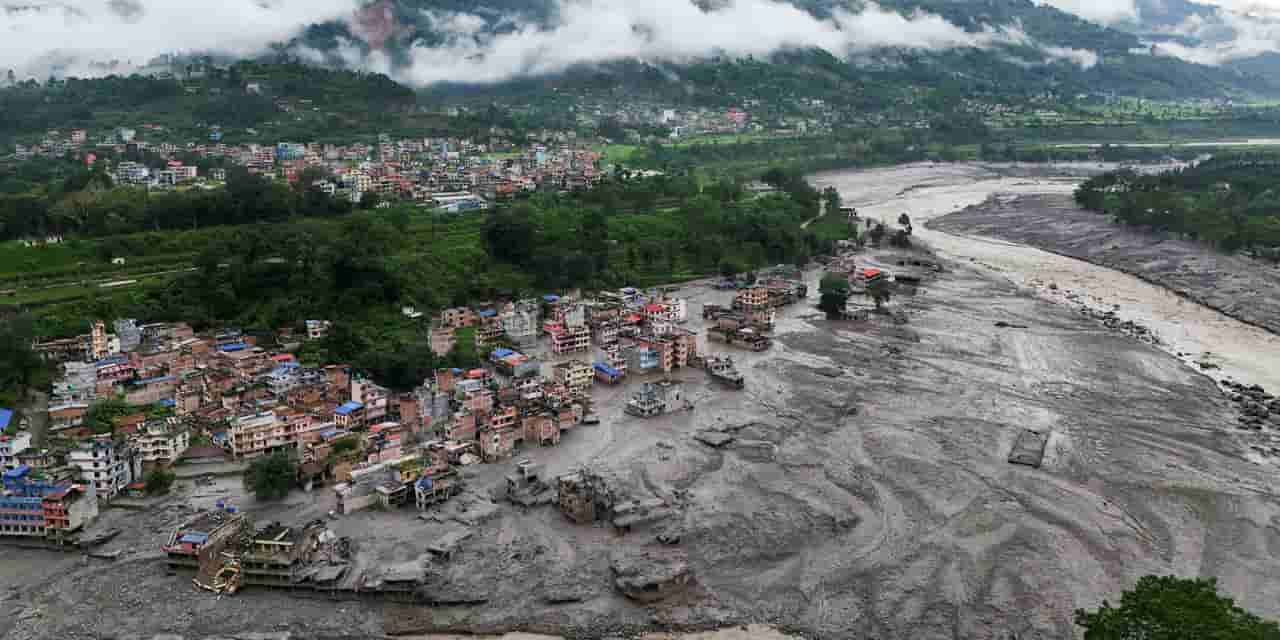
A catastrophic flash flood in Nepal, triggered by a massive glacier collapse high in the Himalayas, has killed at least 360 people and left 1,400 missing, raising alarms about the escalating impact of the climate crisis on mountain regions.

The torrent of mud, water, and ice tore through communities along the Bhotekoshi River, destroying buildings and infrastructure. While initially attributed to a magnitude 4.4 earthquake, further analysis by the US Geological Survey indicated that the seismic energy was generated by a glacial collapse and debris flow, registering a magnitude of 5.2.

Scientists point to global heating, driven by the burning of fossil fuels, as the primary cause for the weakening of glaciers and permafrost worldwide. Unusual heatwaves in the region, which likely melted the ice binding the bedrock, combined with a saturated soil from the monsoon season, are believed to have contributed to the disaster. Dr. Hamish Pritchard of the British Antarctic Survey noted that high temperatures would have weakened the snowpack and thawed the bonds holding glaciers in place.

This event aligns with warnings from the UN's Intergovernmental Panel on Climate Change, which cautioned that rising temperatures would lead to increased instability in permafrost and glaciers, resulting in floods, landslides, and freshwater shortages. As global temperatures approach 1.5C above pre-industrial levels, alpine and polar regions are warming even faster due to the loss of reflective snow and ice.

Dr. Richard Waller of Keele University explained that melting permafrost and ice-filled joints in the bedrock create conditions for catastrophic failures. This process is altering landscapes, expanding glacial meltwater lakes, and threatening the water supply for hundreds of millions of people in Asia who depend on rivers originating from glaciers. Studies show glacier loss rates in Nepal have increased significantly.

Experts warn that high mountain areas globally, including the European Alps, Caucasus, Himalayas, and Andes, are vulnerable to similar events. Glaciologists are calling for enhanced disaster preparedness and the urgent implementation of early warning systems to protect populations living in these increasingly hazardous valleys.

Frequently asked questions

The flash flood was primarily caused by a large glacier collapse high in the Himalayas, exacerbated by global heating.

At least 360 people were killed, and 1,400 are reported missing.

Global heating is weakening glaciers and permafrost by melting the ice that binds bedrock, making mountain regions unstable and prone to collapses and floods.

Experts warn that high mountain areas globally, including the European Alps, Caucasus, Himalayas, and Andes, are vulnerable to similar events.

What Happens Next

01Scientists continue to examine the precise mechanics of the Himalayan disaster.
02Emergency services are searching for bodies and mobilising humanitarian relief for survivors.
03There is a call for greater disaster preparedness and the urgent development of early warning systems.

How It Developed

A glacier collapse high in the Himalayas caused a devastating flash flood along the Bhotekoshi River.
The flood swept away buildings and roads, resulting in at least 360 deaths and 1,400 missing.
Seismic analysis indicated the event was a glacial collapse and debris flow, not primarily an earthquake.
Scientists attribute the weakening of glaciers and permafrost to global heating caused by burning fossil fuels.
Intense heatwaves and saturated soil from the monsoon season likely contributed to the glacier's instability.
The UN warned in 2023 that ice-bound landmasses would become increasingly unstable with rising temperatures.
Melting permafrost and glacier ice reduce the land's reflectivity, causing further warming and melting.
Glacier retreat is altering landscapes, creating glacial meltwater lakes and threatening river sources for millions.

Sources

T1
Climate crisis could be destabilising mountain areas like Nepal, experts warnThe Guardian

Related Stories

Himalayan glacier collapse disrupts China-Nepal trade route
27 Aug · 12:36 PM
Aid race to Nepal and Tibet as new lake threatens to burst
27 Aug · 4:30 PM
Pilgrims Missing After Nepal-Tibet Floods
27 Aug · 9:06 AM
Global aid mobilizes for Nepal after devastating flash flood
27 Aug · 4:45 AM
Magnitude 5 earthquake hits Tibet, hundreds of miles north of Himalayan flood
27 Aug · 5:03 PM