Key facts
- A flash flood in Nepal's Rasuwa district near the Tibet border has killed at least 157 people, with hundreds more missing.
- The disaster is believed to have been triggered by an earthquake-induced ice-rock avalanche on the Lhende Khola river.
- Foreign tourists, including many Americans, Australians, Britons, and Canadians, are among the missing.
- Houses, roads, power projects, and a border crossing were destroyed in Nepal and Tibet.
- Rescue efforts are ongoing, hampered by damaged infrastructure and difficult terrain.
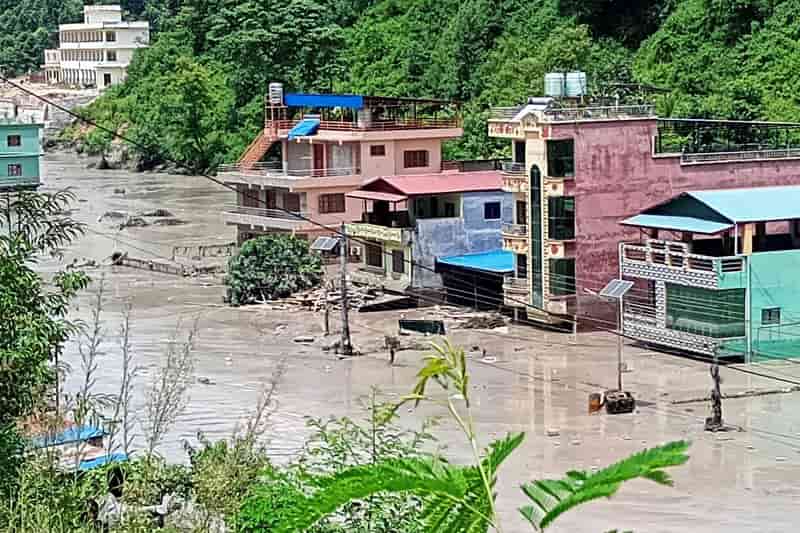
Rescue workers are searching for hundreds of people still missing after a catastrophic flash flood on the border of Nepal and China's Tibet, triggered by a massive wall of mud and rock collapsing into a river. The disaster, which occurred on Wednesday, has swept through mountain towns and valleys, killing scores of people and causing widespread destruction.
Officials in Nepal's tourism ministry reported that approximately 340 foreigners were among more than 400 tourists missing. As of late Wednesday, Nepal police confirmed that 157 bodies had been recovered. Verified videos depicted crushing masses of water and debris sweeping away people at the border, with authorities in both countries fearing significantly higher casualties and extensive destruction.
Houses, roads, and power projects were washed away in Nepal. In Tibet, officials in the county of Gyirong reported that a mudslide hit a border land crossing, leading to fears of 'major casualties' and cutting off roads, communications, and power links. A survivor recounted losing his wife to the mudslide, while another described being saved by clinging to a mango tree.
Early reports suggested an earthquake might have caused a glacier to collapse, triggering the floods. However, the U.S. Geological Survey later stated that the recorded seismic energy was generated by the glacial rock and ice collapse and debris flow. Many victims were reportedly on a pilgrimage to Kailash Mansarovar, a sacred site in Tibet.
Nationalities reported missing include 47 from the United States, 34 from Australia, 33 from Britain, and 24 from Canada. South Korea reported eight of its nationals missing from a hydropower plant, with Malaysia and Japan also reporting missing citizens. Canadian Prime Minister Mark Carney described the floods as 'absolutely devastating'.
The U.N. Secretary-General stated that U.N. teams and partners are mobilising supplies and personnel to support affected communities. China's state broadcaster reported three deaths and 265 missing in Gyirong, with the toll still under verification. Australian Prime Minister Anthony Albanese confirmed 34 Australians were missing, noting Nepal's limited resources for disaster response.
Security footage from the Chinese side of the border showed people fleeing as the torrent of rock, mud, and water destroyed buildings and vehicles. Locals gathered outside a Nepali army training center, the base for helicopter rescue operations, seeking information about missing family members, while police recorded names of the missing in the dark due to power outages. In the affected areas, homes, trees, and vehicles were submerged or buried. Helicopters were seen bringing in survivors, but rescue operations in some areas like Syapru Besi and Timure were hampered by impassable terrain and the river flowing above its normal course.
Flood alerts were issued in the Indian states of Uttar Pradesh and Bihar, which border Nepal. Authorities in Bihar had evacuated approximately 5,000 people from six districts and planned further evacuations.