Key facts
- Nepal and China have warned of new flood risks due to lakes forming on their shared border.
- The region is still grappling with a catastrophic flood caused by a glacier collapse.
- The initial flood killed at least 362 people, with hundreds still missing.
- A lake formed by debris at the initial flood site in Nepal is rising and at risk of bursting.
- China expects 3 million cubic meters of water to flow into a dammed lake on its side, increasing breach risk.
- Rainfall is forecast to exacerbate the threat of further flooding.
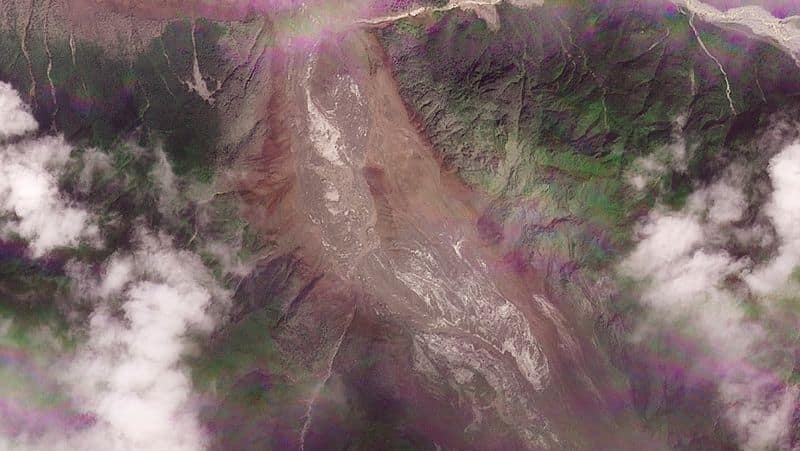
Nepal and China have issued warnings of fresh flood risks in the Himalayas as two lakes that have developed on either side of their border threaten to burst. The region is still grappling with a catastrophic flood that struck border regions on Wednesday, killing at least 362 people and leaving nearly 1,000 still missing. Search and rescue operations are ongoing amid the debris-strewn valleys and hillsides.
Both countries attribute the initial flood to a glacier collapse that pushed rock, ice, mud, and debris into river systems. Nepal's disaster authority issued a notice warning that a lake formed by debris blocking a river at the flood site is rising and at risk of bursting, urging residents and rescuers to exercise caution and move to safe places.
China has also warned that approximately 3 million cubic meters of water, equivalent to about 1,200 Olympic swimming pools, are expected to flow into an already dammed lake on its side of the border over the next three days. This creates a high risk of a breach, with peak flow anticipated around September 1. Chinese state media, citing the water resources ministry, indicated that rainfall forecast for the coming week will exacerbate the threat.
Heeding the warnings, some rescue workers in Nepal began moving towards higher ground. Pawan Koirala, a rescue worker, stated that he and his team of 13 were moving away from the river bed to avoid the danger zone while continuing their rescue efforts.