All NewsEducationTV
Equities & FundsCrypto & Digital AssetsAI & TechnologyBusiness & CorporateUS Politics & PolicyGeopolitics & Global RiskMacro, Rates & FXCommodities & EnergyEuropean Politics & MarketsAsia-PacificReal Estate & Property
All NewsHome
← Back to Geopolitics & Global Risk

Avalanche triggers flash floods in Nepal, killing at least 8 and leaving hundreds missing

Created at 26 Aug · 10:26 AM1 source↑ Market-relevant
IN SHORT

An avalanche of ice and rock triggered massive flash floods in Nepal, killing at least eight people and leaving hundreds missing. The Bhotekoshi River flooded, destroying villages, roads, and hydropower projects. Rescue efforts are underway, with international assistance requested.

Key Numbers

8people killed
384tourists reported missing
291missing tourists from India, US, UK, Malaysia

Who's Involved

Sasmit Pokharel
spokesperson for the Nepali government
Saswata Sanyal
disaster risk reduction specialist at climate research group

↳ Why This Matters

The disaster highlights the increasing vulnerability of the Himalayan region to extreme weather events driven by climate change, posing significant risks to human life, infrastructure, and local economies.

Key facts

  • An avalanche of ice and rock caused flash floods in Nepal on Wednesday.
  • At least eight people were killed and 384 tourists are missing.
  • The floods destroyed villages, roads, and hydropower projects.
  • The Bhotekoshi River and its tributary, Lhende Khola River, were significantly affected.
  • Nepal has requested rescue assistance from India and China.

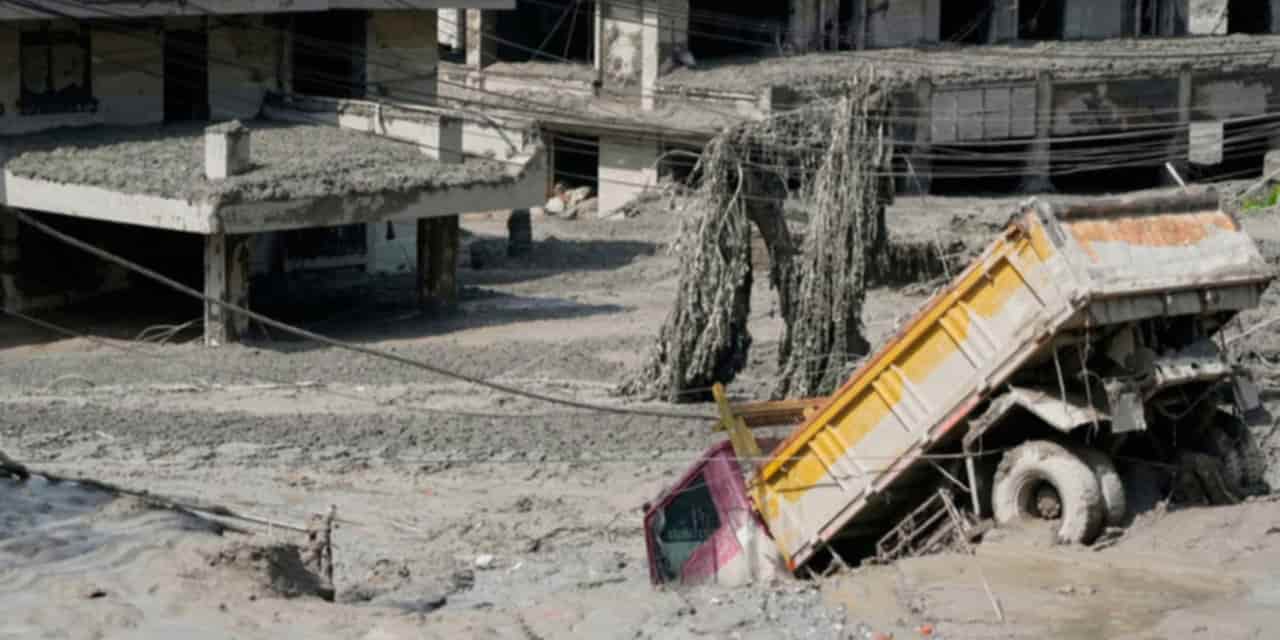
Hundreds of people were reported missing and at least eight killed after an avalanche of ice and rock triggered massive flash floods in Nepal on Wednesday. The Bhotekoshi River overflowed around 9 a.m., devastating several villages and destroying critical infrastructure, including roads and hydropower projects. Officials issued warnings to residents in affected districts to stay clear of the Bhotekoshi, Trishuli, and Narayani rivers.

Authorities reported 384 tourists missing, with 291 of them from countries such as India, the United States, the United Kingdom, and Malaysia. The Lhende Khola River, a tributary of the Bhotekoshi, experienced the most severe flooding. Sasmit Pokharel, a spokesperson for the Nepali government, stated that assistance has been requested from both India and China for rescue operations.

The Rasuwa district was particularly hard-hit, experiencing flash floods similar to those in August of the previous year, which were caused by an overflowing glacial lake in Tibet due to high temperatures. Climate experts at the International Centre for Integrated Mountain Development believe an avalanche from a glacier likely caused Wednesday's event. Saswata Sanyal, a disaster risk reduction specialist, noted that the Lhende Khola has flooded twice in fourteen months, with the recent event triggered by an ice-rock avalanche blocking the river. He emphasized the importance of early warning systems in the warming Himalayan region.

The Himalayan region is highly susceptible to extreme weather events like heavy rains, floods, and landslides, as it is warming at a faster rate than the global average due to human-caused climate change. Research indicates an increase in the frequency of extreme weather, including heat waves, heavy rainfall, and melting glaciers. Studies have shown that glaciers across the Hindu Kush Himalaya region are losing ice at an accelerating pace, with ice loss rates doubling since 2000.

Frequently asked questions

An avalanche of ice and rock from a glacier triggered the flash floods.

At least eight people have been killed, and 384 tourists are reported missing.

The Bhotekoshi River area and the Rasuwa district were the worst affected.

The Himalayan region is warming faster than the global average, leading to more frequent extreme weather events like melting glaciers and heavy rains.

What Happens Next

01Rescue efforts are ongoing with international assistance.
02Further assessments of damage to infrastructure and villages will be conducted.

How It Developed

An avalanche of ice and rock triggered massive flash floods in Nepal.
The Bhotekoshi River flooded around 9 a.m. Wednesday.
At least eight people were killed and 384 tourists reported missing.
Villages, roads, and hydropower projects were destroyed.
Warnings were issued to residents of several districts to stay away from river banks.
Nepal requested assistance from India and China for rescue efforts.
The Lhende Khola River, a tributary of the Bhotekoshi, experienced maximum flooding.
Climate experts suggest the avalanche was likely caused by a glacier.

Sources

T1
Hundreds missing and at least 8 killed after avalanche triggers deadly flash floods in NepalAP News

Related Stories

8 South Koreans missing, 10 stranded in Nepal flood
26 Aug · 11:06 AM
Nepal flash flood devastates villages near Tibet border
26 Aug · 6:16 AM
Tibet mudslide causes casualties, disrupts China-Nepal border crossing
26 Aug · 8:33 AM
Typhoon Narra triggers record floods in southern China, forcing 54,000 evacuations
25 Aug · 1:22 PM
Haiti gang attack kills 47, kidnaps over 50
25 Aug · 5:06 PM