All NewsEducationTV
Equities & FundsCrypto & Digital AssetsAI & TechnologyBusiness & CorporateUS Politics & PolicyGeopolitics & Global RiskMacro, Rates & FXCommodities & EnergyEuropean Politics & MarketsAsia-PacificReal Estate & Property
All NewsHome
← Back to Geopolitics & Global Risk

Aid race to Nepal and Tibet as new lake threatens to burst

Created at 27 Aug · 4:30 PM1 source↑ Market-relevant
IN SHORT

International aid efforts are underway in Nepal and Tibet following catastrophic flash floods that killed at least 359 people and left over 1,300 missing. Authorities are warning of a new, swelling lake at the disaster site that risks bursting, further endangering the region.

Key Numbers

359confirmed deaths in Nepal
1,300+people missing in Nepal
25miles of roads destroyed
$2minitial UN disaster funds allocated
500+foreigners missing in Nepal
177Indians missing in Nepal
90US citizens missing in Nepal
34Australians missing in Nepal
33British citizens missing in Nepal
25Canadians missing in Nepal
558missing on the Tibet side
260foreign nationals missing in Tibet
3confirmed deaths on the Tibet side

Who's Involved

Tom Fletcher
UN's humanitarian chief
Girilal Budhathoki
Flood survivor who lost family
Kamal Kharel
Hydropower plant worker rescued by army
Nirajan Paudyal
Journalist seeking family in Soley village
Srijana Gurung
Acting Nepal director for Plan International
Maya Wang
Deputy Asia director at Human Rights Watch

↳ Why This Matters

The disaster underscores the growing threat of glacial lake outburst floods (GLOFs) in the Himalayas, exacerbated by climate change, posing significant risks to communities and infrastructure in the region. The ongoing rescue and aid efforts are critical for saving lives and providing essential support to survivors.

Key facts

  • Flash floods in Nepal and Tibet on Wednesday killed at least 359 people and left over 1,300 missing.
  • A new lake formed at the flood site is swelling and at risk of bursting.
  • Infrastructure damage, including roads and bridges, is hindering rescue efforts.
  • Hundreds of tourists from India, the US, Britain, Australia, and Canada are among the missing.
  • The US Geological Survey stated the event was caused by glacial collapse, not an earthquake.

International rescue and aid efforts are underway in Nepal and Tibet following devastating flash floods that occurred on Wednesday. The torrents, triggered by a glacial collapse, have killed at least 359 people and left over 1,300 missing, with hundreds of foreign tourists among those unaccounted for. The destruction of roads and bridges is severely hampering rescue operations, while authorities warn that a newly formed lake at the disaster site is swelling and could burst, posing a further threat.

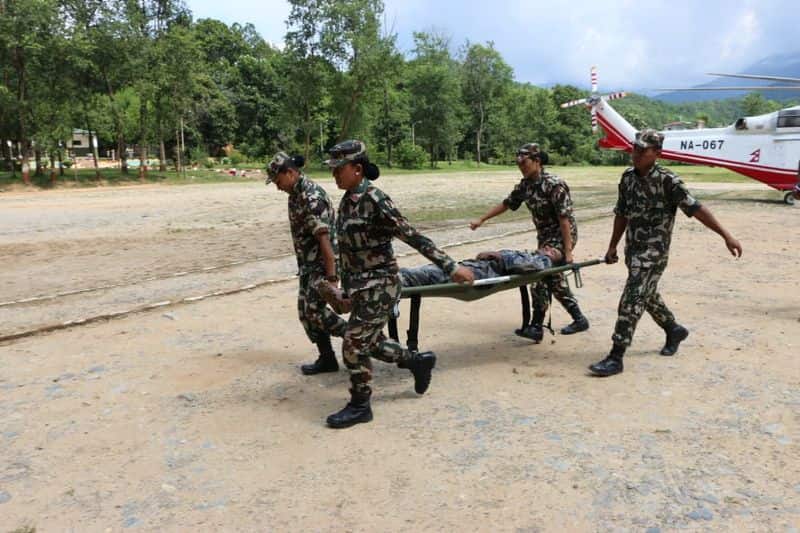
In Nepal, rescue teams have found bodies downstream, and injured individuals are being transported to Kathmandu for medical care. The Nepali army has conducted helicopter rescues. Videos from the disaster show a massive wall of water overwhelming villages, sweeping away homes, roads, and power plants. The UN has allocated initial disaster funds for emergency medical care, shelter, and water.

On the Tibetan side, Chinese authorities have reported fewer deaths but a significant number of missing persons, including foreign nationals. The region's tight control over information makes it difficult to ascertain the full scale of the destruction. Human Rights Watch has raised concerns about disaster risk reduction and called for greater access for information and international researchers.

Survivors recount harrowing experiences of the floods, with one man losing his wife and four children. The disaster highlights concerns about the increasing frequency and intensity of climate-related events in the Himalayan region, with NGOs emphasizing the urgent need for medical aid, food, shelter, and hygiene kits for affected communities.

Frequently asked questions

The floods were caused by the collapse of a glacier, which created a massive wall of water. The US Geological Survey confirmed this was a seismic shock generated by glacial rock and ice collapsing, not an earthquake.

At least 359 people have been confirmed dead in Nepal, with over 1,300 missing. On the Tibet side, Chinese state media reported three deaths and at least 558 missing.

Authorities are warning that a new lake formed at the flood site is swelling and at risk of bursting, which could cause further devastation.

The destruction of dozens of bridges and nearly 25 miles of roads in the mountainous region has severely complicated rescue and aid delivery efforts.

What Happens Next

01Continued efforts to locate missing persons.
02Assessment of the stability of the new lake and potential mitigation measures.
03Distribution of emergency aid to affected communities.
04Investigation into disaster risk reduction measures in the region.

How It Developed

Catastrophic flash floods hit Nepal and Tibet on Wednesday.
At least 359 people were killed and over 1,300 are missing.
Rescue efforts are complicated by destroyed infrastructure.
Bodies have been found hundreds of miles downstream.
Dozens of injured people were transported to Kathmandu.
A swelling lake at the flood site poses a continuing danger.
Chinese authorities warned the barrier lake was overflowing and could burst.
More than 500 foreigners were among the missing in Nepal.

Sources

T1
Race to get aid into Nepal and Tibet amid warnings another lake could burstThe Guardian

Related Stories

Himalayan glacier collapse disrupts China-Nepal trade route
27 Aug · 12:36 PM
Global aid mobilizes for Nepal after devastating flash flood
27 Aug · 4:45 AM
Pilgrims Missing After Nepal-Tibet Floods
27 Aug · 9:06 AM
King Charles 'heartbroken' by deadly Nepal floods
27 Aug · 3:46 PM
Nepal flood survivors describe horror as loved ones swept away
27 Aug · 8:41 AM