All NewsEducationTV
Equities & FundsCrypto & Digital AssetsAI & TechnologyBusiness & CorporateUS Politics & PolicyGeopolitics & Global RiskMacro, Rates & FXCommodities & EnergyEuropean Politics & MarketsAsia-PacificReal Estate & Property
All NewsHome
← Back to Geopolitics & Global Risk

Australia counters China's Pacific influence with new security pacts

Created at 27 Aug · 7:06 PM1 source↑ Market-relevant
IN SHORT

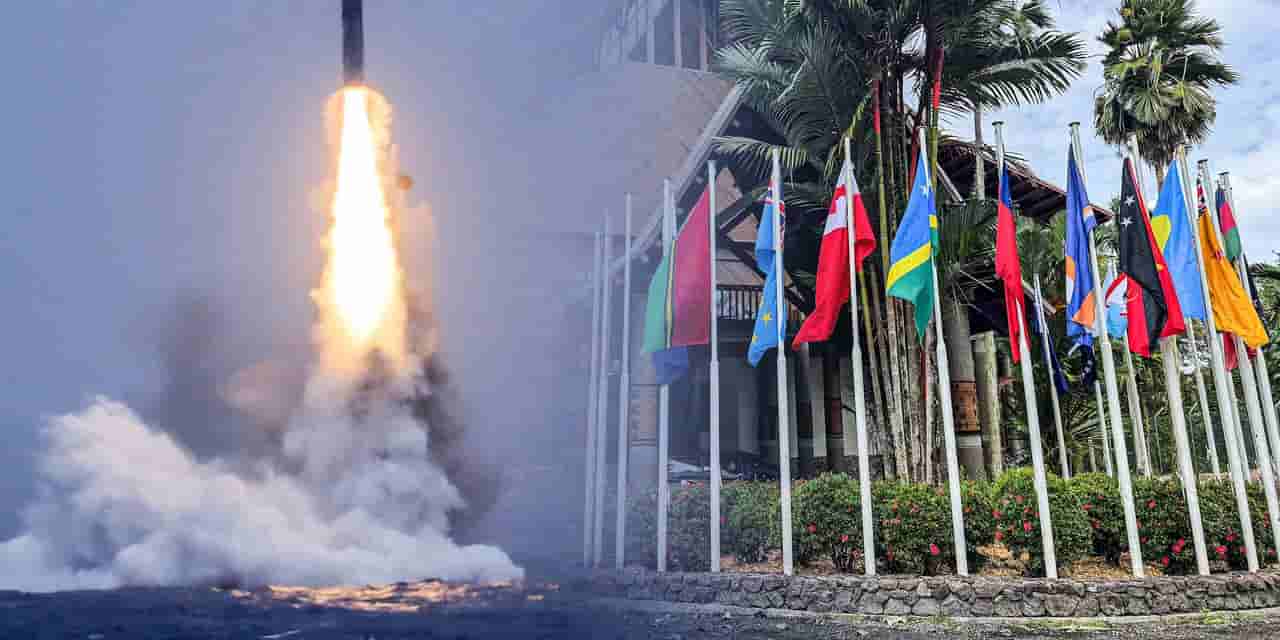
Australia has strengthened its position in the Pacific by signing new security and defence treaties with Fiji and Papua New Guinea, countering China's growing influence in the region. This diplomatic push comes amid heightened regional tensions following China's recent intercontinental ballistic missile test.

Key Numbers

7,000 kilometersmissile test range
A$600 millionAustralia-funded package for PNG

Who's Involved

Australia
has been strengthening partnerships with Pacific nations
China
conducted a ballistic missile test in the South Pacific
Fiji
signed a new mutual defence treaty with Australia
Papua New Guinea
signed a defence treaty with Australia
Oliver Nobetau
Pacific expert from The Lowy Institute
Anthony Albanese
Prime Minister of Australia
Sitiveni Rabuka
Prime Minister of Fiji
Feleti Teo
Prime Minister of Tuvalu
Surangel Whipps Jr
President of Palau
Matthew Wale
Prime Minister of Solomon Islands
Australia counters China's Pacific influence with new security pacts

↳ Why This Matters

Australia's strategic partnerships in the Pacific aim to counter China's growing regional influence and potential military expansion, impacting regional security dynamics and alliances.

Key facts

  • Australia has signed new security and defence treaties with Fiji and Papua New Guinea.
  • These agreements aim to counter China's growing influence and potential military presence in the Pacific.
  • Fiji and PNG have agreed to make Australia their main strategic partner.
  • China conducted an intercontinental ballistic missile test in the South Pacific on July 6.
  • Pacific leaders have expressed alarm over China's missile test, citing sensitivity to weapons testing.

Australia has intensified its diplomatic efforts in the Pacific, securing new security and defence agreements with Fiji and Papua New Guinea, signaling a shift in regional allegiances away from China. These moves come as China conducted a test of an intercontinental ballistic missile from a submarine in the South Pacific on July 6, an act that has alarmed regional leaders.

For the past four years, Australia has been actively working to bolster its relationships with small Pacific nations, which had increasingly been aligning with China. The recent signing of a mutual defence treaty with Fiji, the most populous nation in the region, capped a series of agreements that suggest Australia is gaining an edge in this diplomatic contest. Pacific expert Oliver Nobetau noted that Pacific nations are now "siding with Australia," positioning Canberra to block any potential Chinese military foothold.

Australia's strategy has involved a "piecemeal approach," tailoring incentives to the specific needs of each country. Fiji received policing support, Tuvalu gained access to a migration scheme for climate change-vulnerable residents, Nauru received assistance with banking services, and Papua New Guinea received development support and entry into Australia's rugby league competition as part of a significant funding package. These efforts have resulted in landmark security pacts where countries have designated Australia as their primary strategic partner.

The defence treaties signed with Fiji and PNG, both countries with militaries, go further by promising mutual aid in case of armed attack. New Zealand has also indicated a potential willingness to join such a regional alliance. The Chinese missile test, occurring amidst this diplomatic maneuvering, has drawn strong condemnation from Pacific leaders, who are particularly sensitive to weapons testing due to historical nuclear tests in the region.

Frequently asked questions

China tested an intercontinental ballistic missile from a submarine in the South Pacific, an act that angered regional leaders sensitive to weapons testing and signaled its military reach.

Australia is strengthening ties through tailored incentives, development aid, and new security and defence treaties with Pacific nations like Fiji and Papua New Guinea.

Fiji and Papua New Guinea have signed defence treaties with Australia, promising mutual aid in case of armed attack.

What Happens Next

01New Zealand may join a potential regional alliance with Australia, Fiji, and PNG.
02Other Pacific countries may follow Fiji and PNG in signing defence treaties with Australia.

How It Developed

Australia has been working to strengthen ties with Pacific nations for four years.
Australia signed a new mutual defence treaty with Fiji on July 6.
Australia has secured strategic access to critical infrastructure like ports and wharves in Pacific countries.
Australia has provided tailored incentives to Pacific nations, including policing support to Fiji and migration visas to Tuvalu.
Papua New Guinea signed a defence treaty with Australia in October.
China conducted a test of a ballistic missile from a submarine in the South Pacific on July 6.
Pacific leaders expressed concern over China's missile test.
Australia's recent deals indicate it is gaining diplomatic ground against China in the Pacific.

Sources

T1
Australia's Pacific rivalry with China heats up after Beijing's ICBM testNikkei Asia
T2
Australia's Pacific charm offensive countering Chinastraitstimes.com

Related Stories

Japan Accelerates Anti-Drone System Amid China's Military Expansion
27 Aug · 4:05 AM
Papua New Guinea parliament to consider Bougainville independence vote
26 Aug · 11:28 PM
North Korea vows strong response to US arms sale to South Korea
27 Aug · 5:57 AM
Greece-Israel alliance strained by public anger over Gaza war, arms sales
27 Aug · 12:46 AM
US Patriot missile shortage in Europe 'beyond critical' due to Iran war
27 Aug · 5:06 PM