Key facts
- BRICS leaders are meeting in New Delhi for their 18th summit on September 12-13, 2026.
- A key challenge is securing a joint statement due to tensions between Iran and the UAE.
- The U.S. and Israel launched attacks on Iran in February 2025, leading to conflict.
- The conflict has disrupted oil trade and caused crude prices to exceed $100 a barrel.
- The UAE suspended trade and financial transactions with Iran in August 2026.
- BRICS has expanded to include Egypt, Ethiopia, Iran, UAE, and Indonesia.
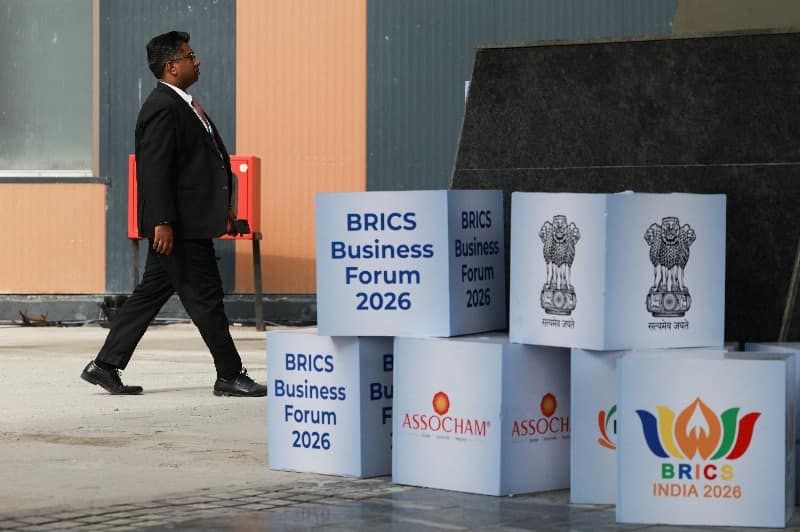
Leaders of the BRICS countries have gathered in New Delhi for their 18th summit, facing the significant challenge of issuing a joint declaration amidst deep divisions between two member states, Iran and the United Arab Emirates, over the escalating Persian Gulf crisis. The summit, held on September 12-13, 2026, is particularly strained as the U.S.-led war on Iran, a BRICS member since 2024, has intensified. This conflict, initiated after U.S. and Israeli attacks on Iran, has severely impacted global oil trade, pushing crude prices above $100 a barrel and leading to a near-total shutdown of the Strait of Hormuz. The UAE, having been targeted by Iranian missiles, suspended all trade and financial dealings with Iran in August 2026, placing the two nations on opposing sides of the conflict. Foreign policy experts believe that the bloc's ability to find mutually acceptable language on the Middle East crisis will be crucial for a joint statement, which, while unlikely to alter the geopolitical landscape, could signal unity among emerging economies against economically damaging policies like Western sanctions. Chinese President Xi Jinping's attendance marks his first visit to India in seven years, highlighting Beijing's emphasis on BRICS. Other key attendees include Russian President Vladimir Putin, Iranian President Masoud Pezeshkian, South African President Cyril Ramaphosa, Egyptian President Abdel Fattah al-Sisi, and Indonesian President Prabowo Subianto, along with UN Secretary-General Antonio Guterres. The UAE is expected to be represented by Abu Dhabi Crown Prince Sheikh Khaled bin Mohamed bin Zayed Al Nahyan. Kremlin spokesman Dmitry Peskov acknowledged that the UAE-Iran differences negatively impact the drafting of a joint declaration but expressed hope for a mutually agreeable phrasing. The bloc, originally BRIC, expanded to include South Africa, and more recently Egypt, Ethiopia, Iran, the UAE in 2024, and Indonesia in January 2025. Saudi Arabia's participation remains in a partner-country capacity. Analysts note that the divergent views of new members, particularly Iran and the UAE, could diminish the group's effectiveness despite its growing appeal.
