Key facts
- Chinese President Xi Jinping arrived in New Delhi on Saturday for the BRICS summit.
- Xi Jinping will hold talks with Indian Prime Minister Narendra Modi on Saturday evening.
- This is Xi's first visit to India in seven years, following a damaging military clash in 2020.
- BRICS includes Brazil, Russia, India, China, South Africa, Egypt, Ethiopia, Iran, UAE, and will include Indonesia in 2025.
- The summit is taking place amid geopolitical tensions including the Russia-Ukraine war and the US-Iran conflict.
- President Trump's policies and potential tariffs are casting a shadow over the summit.
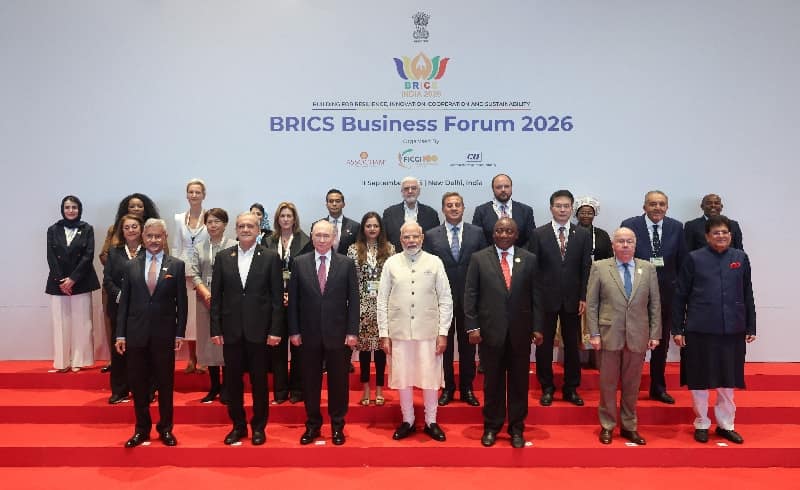
Leaders of the BRICS nations are convening in New Delhi for their annual summit, facing a landscape marked by escalating geopolitical tensions and disruptions across energy markets, shipping, and global trade. The bloc, originally formed in 2009 and later expanded, aims to challenge the existing world order dominated by the United States and its Western allies. Chinese President Xi Jinping arrived in the Indian capital on Saturday for the summit and talks with Prime Minister Narendra Modi. This visit marks Xi's first to India in seven years and comes as the two Asian neighbors cautiously rebuild ties damaged by a 2020 military clash on their disputed Himalayan border. The summit is being held amid geopolitical tensions triggered by the US-Iran conflict, the Russia-Ukraine war, and their disruption to global energy, trade, and transport. President Trump's policies and potential tariffs are casting a shadow over the proceedings, while internal divisions and divergent national interests pose significant challenges to the group's progress and consensus-building approach. The recent expansion, which includes Egypt, Ethiopia, Iran, and the UAE in 2024 and Indonesia in 2025, further complicates the bloc's unified stance. The grouping's largest achievement to date is the New Development Bank, established in 2015 to fund infrastructure and sustainable development projects in emerging markets, though it has suspended new transactions in Russia due to sanctions. Members are also exploring alternatives to dollar-based payment systems.