Key facts
- BRICS now accounts for 29.1% of global GDP, up from 19.7% in 2009.
- China's GDP represents 60.4% of the expanded BRICS+ bloc's total.
- The G7's GDP share is now only 15 percentage points higher than the expanded BRICS group.
- Internal divisions between the UAE, Saudi Arabia, and Iran emerged as a significant fault line.
- Projects funded by BRICS' New Development Bank have seen the dollar's share decline to below 60%.
- Intra-bloc trade in BRICS+ stood at $1.2 trillion in 2025.
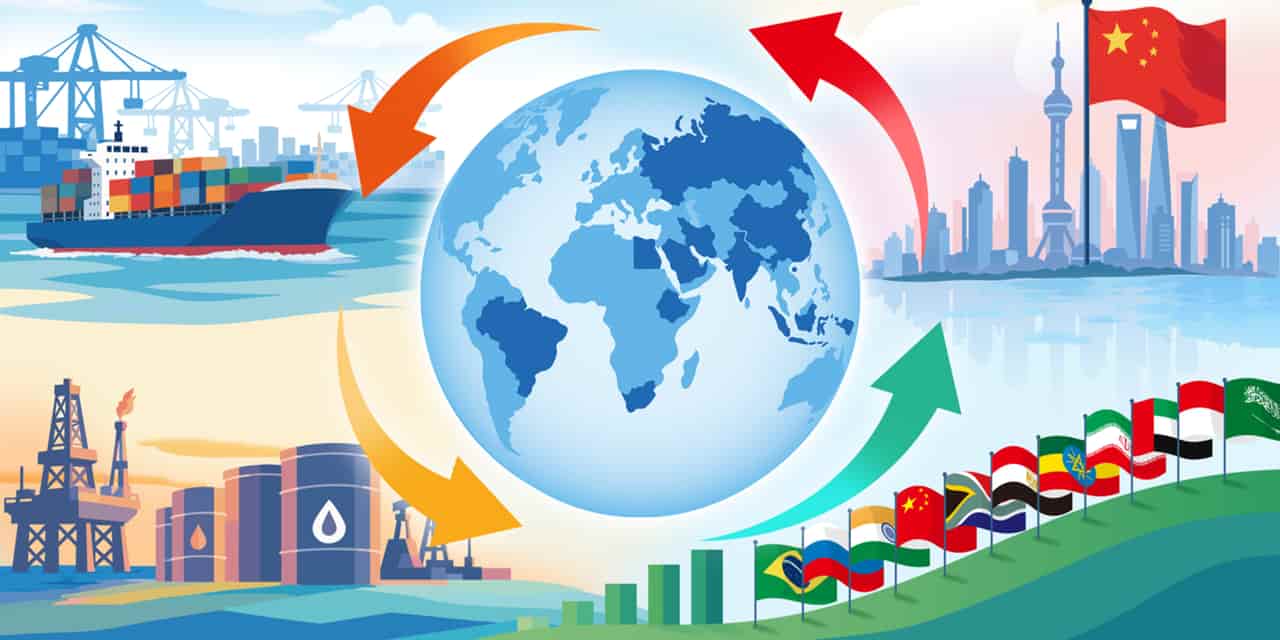
The 18th BRICS summit, hosted by India from September 12-13, marks two decades since the group's inception and its expansion to 11 members, including recent additions like Indonesia, Egypt, Ethiopia, Iran, Saudi Arabia, and the UAE. Originally conceived to give emerging economies a greater voice in global governance, BRICS now represents a significant portion of global GDP, challenging the dominance of Western-led institutions.
The bloc's collective GDP share has grown substantially, from 19.7% in 2009 to 29.1% in 2025, with China contributing over 60% of this total. This expansion has narrowed the economic gap with the G7, reducing the difference in GDP share from 33 percentage points to 15 percentage points.
However, the enlarged bloc faces considerable internal friction. Geopolitical rivalries, particularly between Iran and key US allies Saudi Arabia and the UAE, have complicated consensus-building. This was evident when the BRICS Foreign Ministers' Meeting in New Delhi concluded without a joint declaration, with India issuing only a chair's statement and an outcome document. India and China, both significant members, are also economic competitors and geopolitical rivals.
BRICS has been pursuing a de-dollarization strategy to mitigate reliance on the US dollar and protect member states from sanctions and currency volatility. While a complete shift away from the dollar is unlikely soon, projects funded by the New Development Bank have seen the dollar's share fall below 60%, with the Chinese yuan often used for financing. However, this shift is uneven, with many projects still heavily reliant on the dollar or local currencies. Other Western currencies like the euro and Swiss franc also feature in project financing in some member countries.
Intra-bloc trade has shown growth, reaching $1.2 trillion in 2025, indicating a strengthening economic connection among members.