Key facts
- Argo Space plans two Chiron missions in 2027, both carrying payloads for an undisclosed national security customer.
- The first Chiron mission is bound for low-Earth orbit and the second to a geostationary transfer orbit.
- Neither Chiron mission will fly on a SpaceX vehicle; the first uses an undisclosed new commercial rocket.
- Argo says Chiron can achieve more than 2 km/s of delta-v in a roughly 200-kg spacecraft.
- Argonaut, the larger vehicle, has a maximum payload capacity of 1,400 kg and a maximum delta-v of 17 km/s per tank.
- Argo Space has raised $20 million to date and has fewer than 30 people, according to the report.
Argo Space, founded in late 2022 by engineers Robert, Ryan and Kirby Carlisle after careers at SpaceX during the Falcon 9 era, is building spacecraft that use water as propellant rather than launching with separate tanks of liquid hydrogen and liquid oxygen. In space, the vehicle uses solar power to split water into hydrogen and oxygen gases and burns them to generate thrust, an approach Argo says provides more thrust than a conventional electric thruster with a similar amount of power.
The company flew its first demonstration mission, Navigator, in July on a Falcon 9 rideshare. Argo made contact with the spacecraft, but one of its two rollout solar arrays failed to deploy. Controllers spent about half a day troubleshooting and gathering data, and the spacecraft remained power negative, draining its battery, so there was not enough energy to test the propulsion system. Robert Carlisle said the mission validated flight software, ground software, core avionics and structures, but not propulsion.
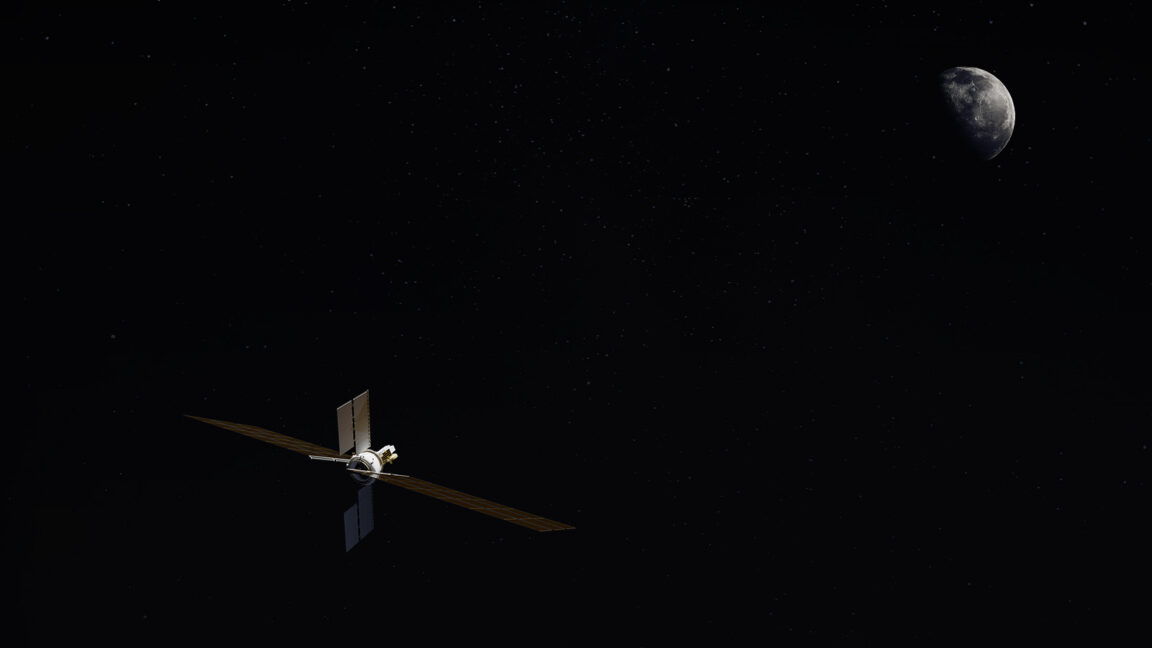
Argo's next-generation Chiron spacecraft is intended to pack high performance into a roughly 200-kg package. The company plans two Chiron missions in 2027, both flying payloads for an undisclosed national security customer: the first to low-Earth orbit and the second to a geostationary transfer orbit. The goal across the two flights is to demonstrate Chiron's propulsion system, including its ability to maneuver between different orbital environments.
Neither mission will fly on a SpaceX vehicle. Argo's first Chiron mission is flying on an undisclosed new commercial rocket, and the second on an unspecified government-furnished launch vehicle. Robert Carlisle said a Falcon 9 rideshare was not available within the company's schedule and that launch slots require a wait list.
Argo says Chiron can achieve more than 2 km/s of delta-v, enough to raise a circular orbit at about 400 km above Earth to more than 5,000 km, or to support several decades of station-keeping in geostationary orbit. After Chiron, the company is working on Argonaut, with a maximum payload capacity of 1,400 kg and a maximum delta-v of 17 km/s per tank. In September, Argo signed a deal with ispace to deliver ispace's Lunar Connect communication relay satellite to lunar orbit later this decade.
Argo has raised $20 million to date and has fewer than 30 people, according to the report. Kirby Carlisle said spacecraft are less capital-intensive to develop than rockets and that Argo can test most systems at its facilities in El Segundo, California, without the extensive ground infrastructure rockets require.