Key facts
- The holographic display uses a projector and a transparent film laminated into the windshield with holographic optical elements, described by Mercedes development engineer Lena Hees as super-small mirrors.
- Mercedes development engineer Maximilian Hilger said some customers like the Hyperscreen while others want to maintain luxury materials.
- New Mercedes chief design officer Bastian Baudy told German magazine Auto Motor Sport that materiality and haptics must remain tangible with switches, buttons and intuitive controls.
- Mercedes research manager Manual Holstein said the production projector could be small enough to hide behind wood or metal trim and would have no audible fan.
- Holstein said the prototype was operating at 20 percent of its maximum brightness during the demonstration.
- A recent JD Power study indicated car owners classify passenger screens as not necessary and hold generally negative opinions about them.
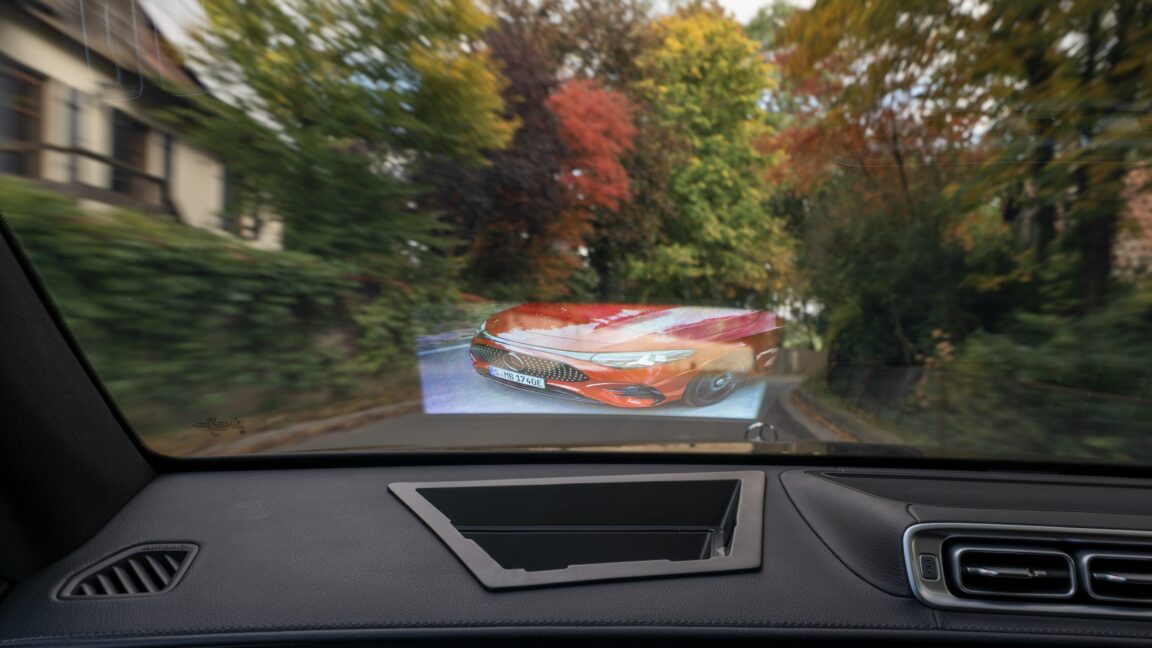
Mercedes-Benz is working on a holographic display that could replace the passenger touchscreens now fitted to many luxury vehicles. The system still uses a projector, but its key element is a transparent film laminated into the windshield. The film contains holographic optical elements, which Mercedes development engineer Lena Hees described as super-small mirrors that selectively reflect projector light so the image stays visible in direct sunlight while remaining hidden from the driver.
The prototype was installed in a right-hand-drive pre-2027 S-Class at Mercedes' research facilities in Sindelfingen, Germany. Its projector sits in a trapezoidal opening cut into the dashboard and a cooling fan was audible during the demonstration. Mercedes research manager Manual Holstein said the production version would have a smaller projector opening that could be hidden behind wood or metal trim, no audible fan and improved resolution. He said the prototype was running at 20 percent of its maximum brightness.
The display showed full-color video of the C-Class Electric during the demonstration. Resolution was better than current head-up displays but poor compared with a passenger touchscreen, contrast was too high and the image was distorted into a narrow height by the windshield angle. Holstein said the distortion was specific to the prototype and that the holographic film, or eyebox, could be made larger and raised higher.
Mercedes is weighing the display against customer sentiment on screens. Development engineer Maximilian Hilger said some customers like the Hyperscreen, the pillar-to-pillar screen in a growing number of Mercedes models, while others want to maintain luxury materials. New chief design officer Bastian Baudy told German magazine Auto Motor Sport that materiality and haptics must remain tangible, with switches, buttons and intuitive controls. CEO Ola Källenius told Ars that technology must be packaged in an aesthetically pleasing way.
A recent JD Power study indicated that car owners classify passenger screens as not necessary and hold generally negative opinions about them. Mercedes envisions the holographic display highlighting points of interest in the view through the windshield, and a similar display on the driver side could show situational information, enable video calls or provide entertainment when parked. The company said it could also let drivers watch content when its Level 3 autonomous driving system allows them to take their eyes off the road.