
Key facts
- Anthropic's filing says employees call each other Ants, a nickname it says captures a collaborative, ego-light culture.
- The report says ANT would join insect-themed tickers FLY, BEE, BUG, HIVE and GRUB in stock market history.
- Ecologist Deborah Gordon said calling employees Ants implies there is no central control and they do not know what they are doing.
- Ant ecologist Andrew Suarez said cheating is a good strategy when rare and a poor one once common, a point he tied to AI agents.
- Ecologist Rob Dunn said a leafcutter colony can hold a million workers in chambers that might read as small office cubicles.
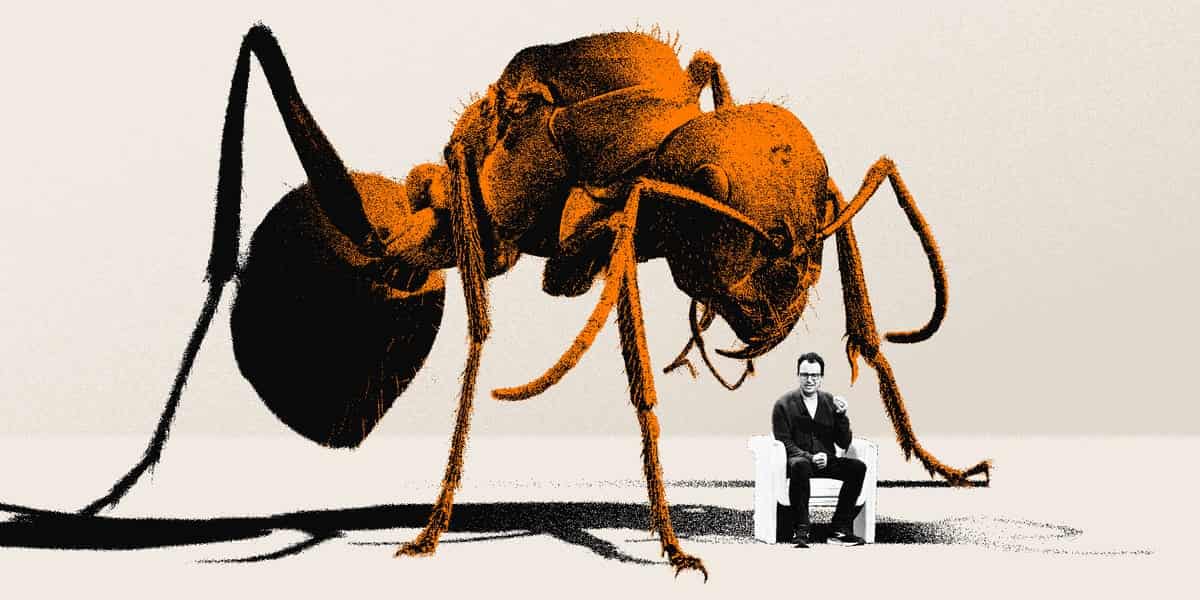
Anthropic submitted a financial prospectus for what the report describes as possibly the largest initial public offering ever, and announced it would list on the Nasdaq under the ticker ANT, according to its government filing. The filing says employees call each other Ants, a nickname it describes as capturing the collaborative, ego-light culture of the team.
The report places ANT among at least the sixth insect-themed ticker in stock market history, alongside FLY, BEE, BUG, HIVE and GRUB. It also notes that Alibaba launched the fintech company Ant Group in 2014, and that founder Jack Ma described the name with the words "Small is beautiful, small is powerful."
Deborah Gordon, an ecologist in Stanford's biology department who has studied ant behavior for more than 40 years, said the nickname is "not very affirming." Her book "Ants at Work" opens with the line that the basic mystery about ant colonies is that there is no management. Calling employees Ants, she said, says not only that there is no central control but that they do not even know what they are doing. She also noted that all worker ants are female.
Andrew Suarez, an ant ecologist at the University of Illinois, told the report that in ant societies cheating "is a very good strategy when it's rare" and a poor one once everybody does it, a point he said is worth knowing for anyone deploying fleets of AI agents. He added that some colonies settle border disputes without bloodshed, with workers sizing each other up and the outmatched side withdrawing.
Rob Dunn, a professor of applied ecology at North Carolina State University, said a leafcutter colony can hold a million workers in underground chambers that "might read as small office cubicles," with no worker having a perspective on what happens in a different cubicle. He said he did not know what the Anthropic analogy was, adding: "Maybe that's tokens." Dunn is convening a meeting of entomologists to discuss what lessons scout bees and ants might offer for thinking about AI models and AI agents.
Some entomologists quoted in the report raised questions about how Anthropic's data centers could affect ants, including water demand in drought-stricken Arizona and vibration from facilities. The report also cites an estimate of some 20 quadrillion ants in the world.