Key facts
- US government, Meta, and Google are joining Biohub in a $1.8 billion AI biology data initiative.
- The initiative aims to build open datasets to train AI models for biological research and accelerate drug development.
- The Department of Energy will invest over $500 million over five years.
- The National Institutes of Health will coordinate datasets built with over $500 million in prior federal funding.
- Meta, Google DeepMind, and Isomorphic Labs are jointly investing $300 million.
- Biohub previously committed $500 million in April.
The U.S. government, Meta Platforms, and Google parent Alphabet are collaborating with the nonprofit Biohub to create extensive open datasets for training artificial intelligence models in biological research. This initiative, named the Virtual Biology Initiative, aims to significantly compress drug development timelines by building predictive models based on vast amounts of cell data.
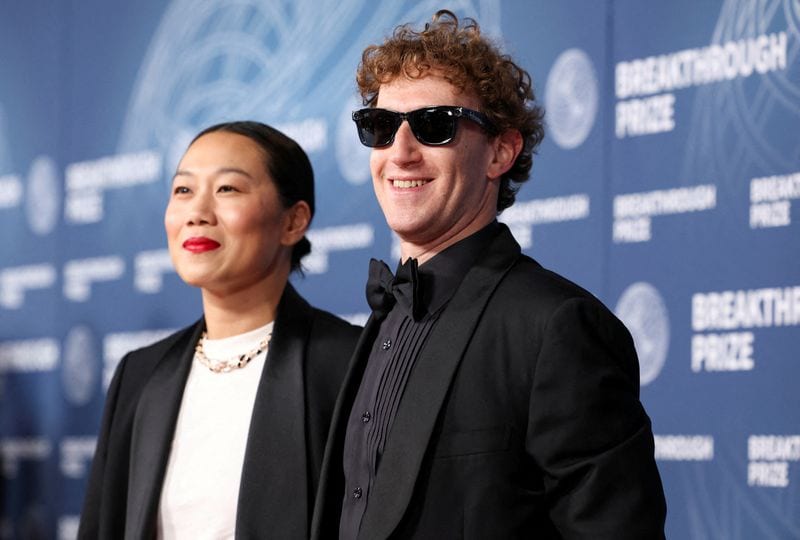
The total investment in the project has reached $1.8 billion. This includes a $500 million commitment from Biohub, a philanthropic venture founded by Meta CEO Mark Zuckerberg and his wife, Dr. Priscilla Chan, made in April. The U.S. Department of Energy will contribute over $500 million over five years for laboratory measurement, modeling, and computation. The National Institutes of Health will coordinate datasets and repositories, leveraging more than $500 million in earlier federal funding, which Biohub will standardize for AI training.
Tech heavyweights Meta, Google DeepMind, and drug discovery startup Isomorphic Labs are jointly investing $300 million. According to Biohub's head of science Alex Rives, companies that fund the initiative will receive an embargo period for data access before it becomes publicly available.
Currently, cell datasets comprise hundreds of millions of cells, but an accurate predictive model will require billions and eventually trillions. Biohub's goal is to bridge this gap, with the first dataset expected within a year and predictive models anticipated within five years. Other AI labs, such as Anthropic and the OpenAI Foundation, are also pursuing similar biological data initiatives.