Key facts
- US and China agreed to frame their relationship as a "constructive relationship of strategic stability" in May.
- The phrase "constructive relationship of strategic stability" signifies a positive agenda and long-term horizons.
- This new language contrasts with the "strategic competition" era that began in 2018.
- Terms like "de-risking," "de-coupling," and "China Plus One" have largely disappeared from Washington's vocabulary.
- Major tech executives like Tim Cook (Apple), Jensen Huang (Nvidia), Lisa Su (AMD), and Elon Musk (Tesla) attended a state dinner for Xi Jinping.
- China's role in global supply chains and as a market is critical for these tech companies.
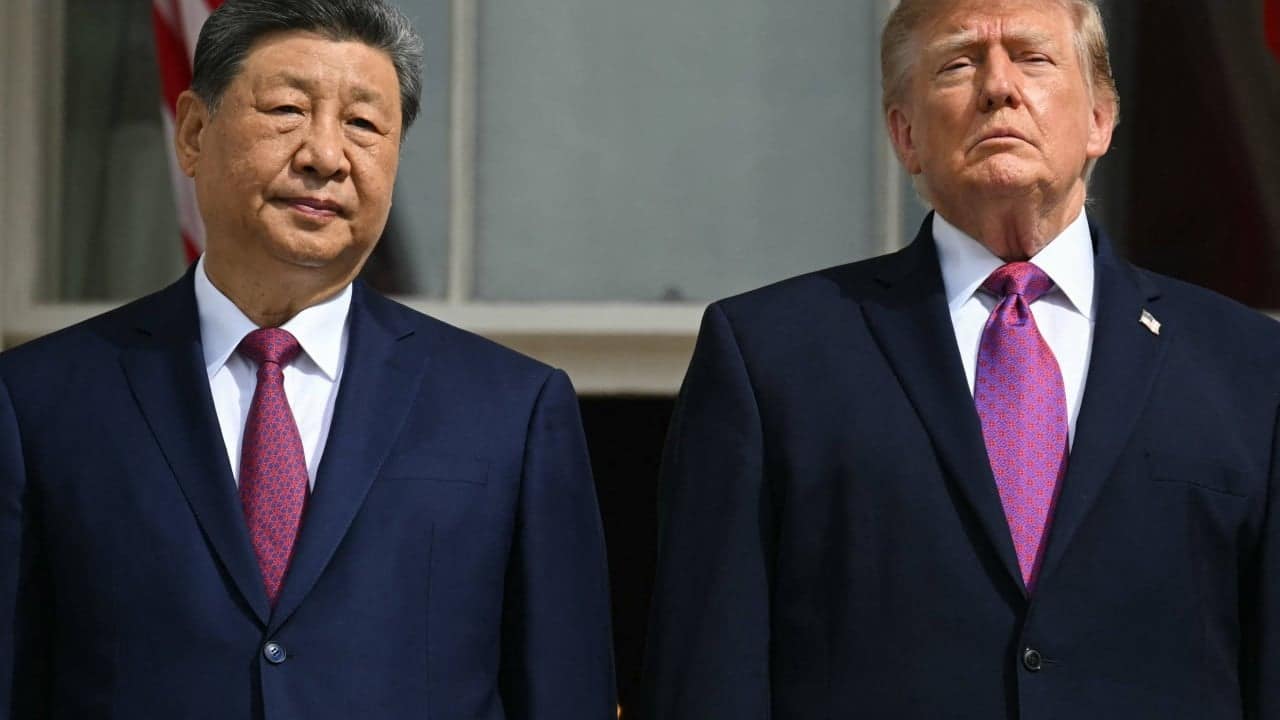
The United States and China have adopted new language to describe their bilateral relationship, moving from "strategic competition" to a "constructive relationship of strategic stability." This shift, solidified during President Donald Trump's state visit to Washington for President Xi Jinping in September 2025, signals a departure from the trade wars and decoupling strategies that characterized the previous years.
The phrase "constructive relationship of strategic stability" is intended to signify a commitment to a positive agenda and long-term horizons, setting boundaries for the relationship. This contrasts sharply with the period since 2018, when the Trump administration initiated a trade war, imposed tariffs, and sanctioned Chinese technology firms like Huawei, while urging companies to adopt "China Plus One" strategies to diversify supply chains.
These economic shifts have led to a change in Washington's rhetoric, with terms like "de-risking," "de-coupling," and "China Plus One" becoming less prevalent. Former U.S. Commerce Secretary Gina Raimondo's 2023 statement that China was "uninvestable" has been replaced by a more engaged approach. The presence of top tech executives from Apple, Nvidia, AMD, and Tesla at the state dinner for Xi Jinping underscores the critical importance of China to their businesses, both as a market and as a base for their supply chains. Executives like Jensen Huang and Lisa Su have publicly advocated for continued engagement with China, suggesting that decoupling strategies are not proving effective.