Key facts
- Indian authorities detained tens of thousands of people, including the leader of the "Cockroach" movement, to prevent a protest.
- The "Cockroach Janata party" (CJP) protested the removal of 130 million names from India's electoral roll.
- Protesters allege the voter roll revision was intended to benefit Narendra Modi's government.
- Chief Election Commissioner Gyanesh Kumar is called to resign over the electoral roll revision process.
- Delhi police denied permission for the protest and deployed over 25,000 security personnel.
- Travel disruptions included cancelled trains and shut metro stations in Delhi.
Indian authorities imposed a severe lockdown in Delhi and detained tens of thousands of people, including the leader of the youth-led “Cockroach” movement, in an effort to prevent an anti-government protest. The demonstration, organized by the “Cockroach Janata party” (CJP), aimed to protest against an exercise that has reportedly removed 130 million names from India’s electoral roll.
The CJP, along with opposition parties, civil society groups, and student organizations, alleges that the process of revising the voter roll was manipulated to strengthen the ruling government's position. They are calling for the resignation of Chief Election Commissioner Gyanesh Kumar, who oversaw the exercise.
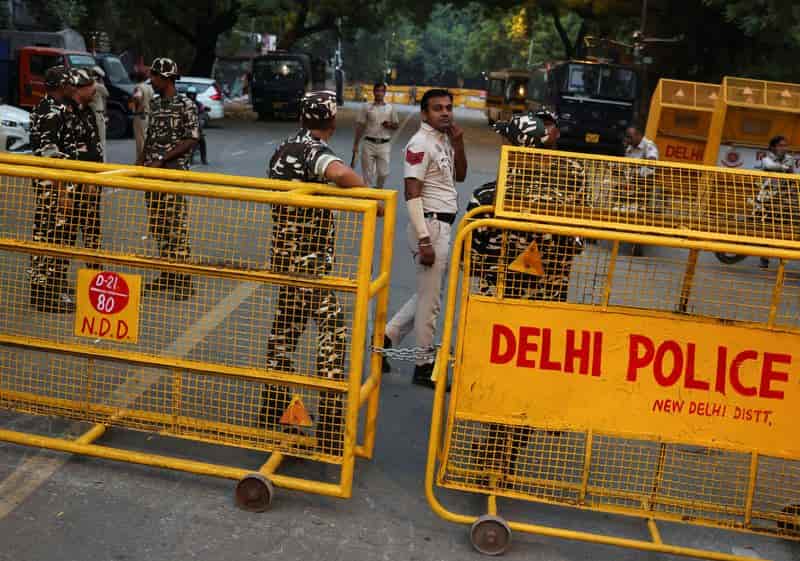
Delhi police denied permission for the protest and implemented extensive security measures, deploying over 25,000 police and security personnel. Roads were barricaded, train services into the city were cancelled for 10 hours, and nearly 50 metro stations were shut. Schools and courtrooms were instructed to operate online for the day, and hotels were told to refuse new customers.
Abhijeet Dipke, the CJP's founder and leader, was detained upon landing at Delhi airport. He accused the government of being afraid of the youth-led movement. "If you think you can stop us by threatening us with jail, then you have it wrong," Dipke stated in a video before his detention.
Arrests and detentions were reported across India, with estimates in the tens of thousands. Prominent figures like YouTuber Dhruv Rathee and former Delhi Chief Minister Arvind Kejriwal were also detained. Student leaders likened the protest to India's "second freedom struggle."
The revision of electoral rolls, known as “special intensive revision (SIR),” began last year and drew criticism for the disproportionate removal of names from minority communities. An investigation by the Indian Express newspaper exposed irregularities in the process, which had been overruled by Kumar.
Paravin Singhal, a 75-year-old lawyer, expressed dismay at having his name removed from the rolls after 50 years of voting, calling the government's actions "lawless."