Key facts
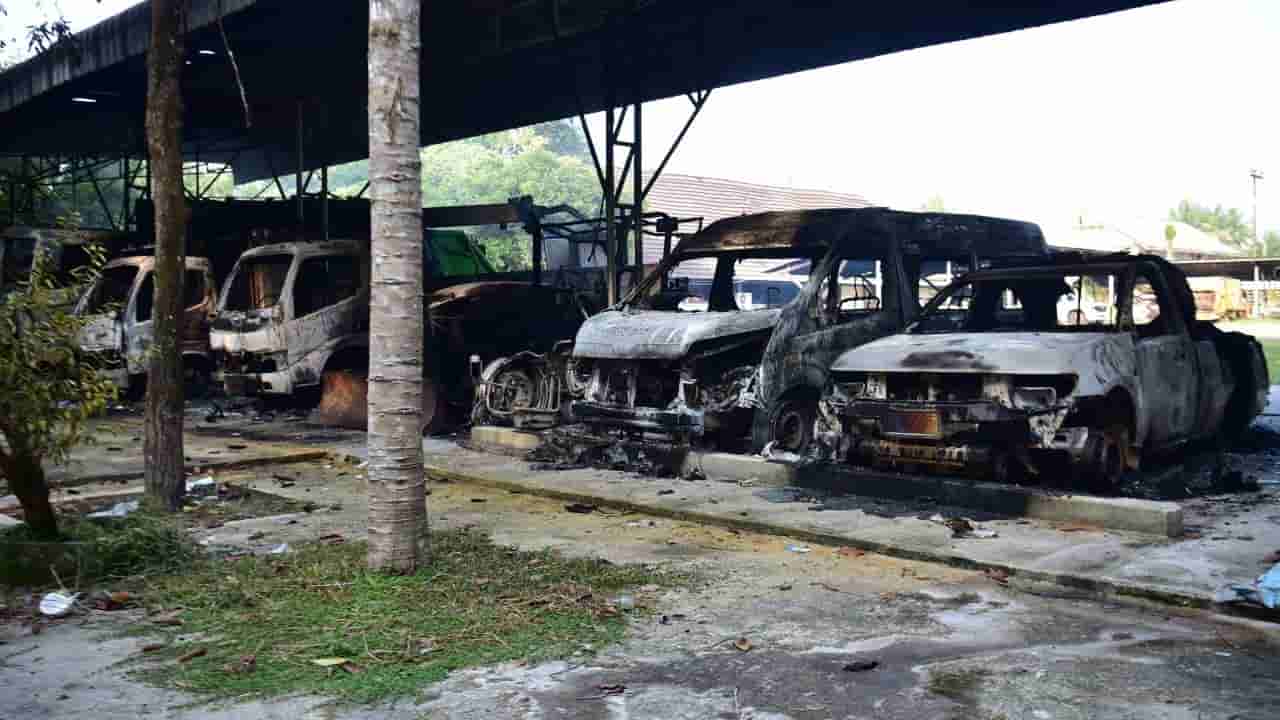
- A coordinated wave of 78 attacks, including arson and bombings, occurred in Thailand's southern provinces last weekend.
- The attacks targeted government buildings, businesses, vehicles, and railway tracks, injuring three people.
- One resident claims he was shot by a military helicopter, an account the military denies.
- The violence is part of a long-running insurgency in the predominantly Muslim and ethnic Malay provinces.
- Peace talks have repeatedly stalled since 2013, with recent efforts to revive them.
- Villagers express heightened fear and mistrust due to the ongoing violence.
A coordinated wave of 78 attacks, including arson, bombings, and other incidents, swept across four provinces in Thailand's southern deep south last weekend, injuring three people and deepening a cycle of fear among villagers. The violence, which has killed over 7,800 people since flaring in 2004, rarely intrudes on the country's popular tourist destinations but has long shaped life in the predominantly Muslim and ethnic Malay provinces bordering Malaysia.
Among the incidents, security guard Ni-arfan Doloh was shocked when masked men emerged from a government office and set it ablaze. Hours later, resident Solae Doloh and his friends came under fire while riding home, with Solae claiming the shots came from a surveying military helicopter. The Thai military has denied this, stating the aircraft was merely surveying the area. Police are investigating the shooting, and local representatives are calling for an independent inquiry.
This latest spate of violence comes as Bangkok seeks to revive stalled peace talks with the Barisan Revolusi Nasional (BRN), the main separatist group. Previous talks, facilitated by Malaysia, began in 2013 but have yielded little progress. The government's chief negotiator indicated a desire to address underlying political grievances rather than just reducing violence. The attacks have heightened mistrust, with residents like Hasan Toema fearing they might be wrongly accused of being insurgents, and others like Matohae Doalo expressing increased anxiety and reluctance to venture out alone.