Key facts
- Nepal's military is airlifting heavy machinery to rescue hundreds of workers trapped in hydropower tunnels after devastating floods.
- The floods, caused by a glacier collapse on the Nepal-Tibet border, have killed nearly 800 people and left over 3,000 missing.
- Hundreds of workers are believed to be trapped in approximately six hydropower project tunnels blocked by mud and rock debris.
- Specialized tunnel rescue teams from China and India are assisting Nepali authorities.
- Rescue operations are facing challenges due to debris and the inability to use explosives.
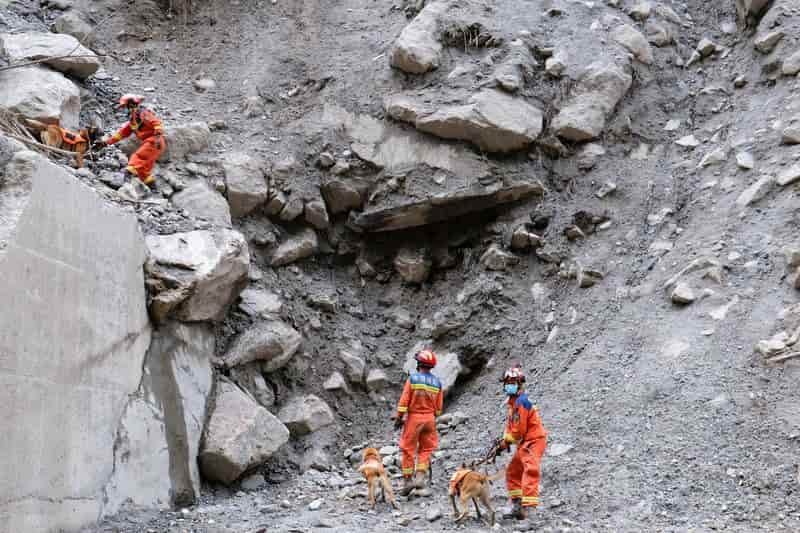
Nepal's military is airlifting heavy machinery to rescue hundreds of people believed to be trapped inside blocked hydropower project tunnels following a devastating glacier collapse and flood on the Nepal-Tibet border. The unprecedented deluge of ice, rock, mud, and debris killed nearly 800 people and left more than 3,000 missing.
Rescue efforts are concentrated on approximately half a dozen hydropower tunnels, with significant challenges posed by large amounts of debris and the inability to use explosives. Pictures show earth-moving equipment working through the night under lights, with soldiers using torchlight to access tunnels. Nepal's disaster management authority reported 933 people missing from hydropower projects, while the Red Cross estimates over 90,000 people have been affected by the disaster.
Prime Minister Balendra Shah described the flood as an "unprecedented and devastating natural disaster" and noted the difficulty in compiling a complete damage assessment. Despite adverse weather and terrain, nearly 21,000 security personnel, civilian workers, and volunteers are involved in the rescue. As of Sunday night, 788 deaths were confirmed, with 2,500 missing, including those at hydropower projects. China reported 16 deaths and 546 missing in Gyirong County, mobilizing over 2,100 rescue workers and allocating significant funds for relief.
Specialized tunnel rescue teams from China and India are assisting Nepal. Rescue operations have faced suspensions due to bad weather and concerns over a newly formed lake created by the disaster. Chinese state broadcaster CCTV linked the flood to glacier instability caused by global warming.