All NewsEducationTVBrokers
Equities & FundsCrypto & Digital AssetsAI & TechnologyBusiness & CorporateUS Politics & PolicyGeopolitics & Global RiskMacro, Rates & FXCommodities & EnergyEuropean Politics & MarketsAsia-PacificReal Estate & Property
All NewsHome
← Back to Geopolitics & Global Risk

Nepal teams seek hundreds trapped in hydropower tunnels after floods

Created at 31 Aug · 6:36 AM1 source↑ Market-relevant
IN SHORT

Rescue teams in Nepal, aided by Chinese and Indian experts, are working to reach hundreds of people believed to be trapped inside blocked hydropower project tunnels following a devastating flood caused by a glacier collapse. The disaster has killed nearly 800 people and left thousands missing.

Key Numbers

nearly 800people killed
more than 3,000people still missing
933people missing from hydropower projects
more than 90,000people affected by the disaster
788deaths reported in Nepal
2,500missing in Nepal
16deaths reported in China
546missing in China
2,100Chinese rescue workers mobilized
220 million yuanallocated for relief efforts by China
21,000security personnel involved in rescue

Who's Involved

Reuters
news agency reporting on the disaster
Nepal army spokesperson Raja Ram Basnet
commented on the challenges of opening tunnels
Prime Minister Balendra Shah
described the flood as an unprecedented and devastating natural disaster
Narendra Pariyar
district administrator of Rasuwa
Chinese state-run CCTV
reported on China's relief efforts and the cause of the flood
Nepal teams seek hundreds trapped in hydropower tunnels after floods

↳ Why This Matters

The disaster highlights the vulnerability of Himalayan regions to climate change-induced glacial events and the critical need for international cooperation in disaster response and data sharing.

Key facts

  • Hundreds of people are believed to be trapped inside blocked hydropower project tunnels in Nepal.
  • A glacier collapse on the Nepal-Tibet border caused a devastating flood, killing nearly 800 and leaving over 3,000 missing.
  • Rescue teams from Nepal, China, and India are working to clear debris and reach those trapped.
  • Nepal's disaster management authority reported 933 missing from hydropower projects.
  • The flood was linked by China to glacier instability and the effects of climate change.

Nepal's rescue teams, supported by Chinese and Indian experts, are engaged in a critical overnight operation to reach hundreds of individuals believed to be trapped within blocked hydropower project tunnels. This effort follows a catastrophic flood in the Himalayas, triggered by a glacier collapse on the Nepal-Tibet border, which has resulted in nearly 800 confirmed deaths and left over 3,000 people missing. The deluge of ice, rock, and mud carved a path of destruction through valley towns and villages in Nepal and across the border in China.

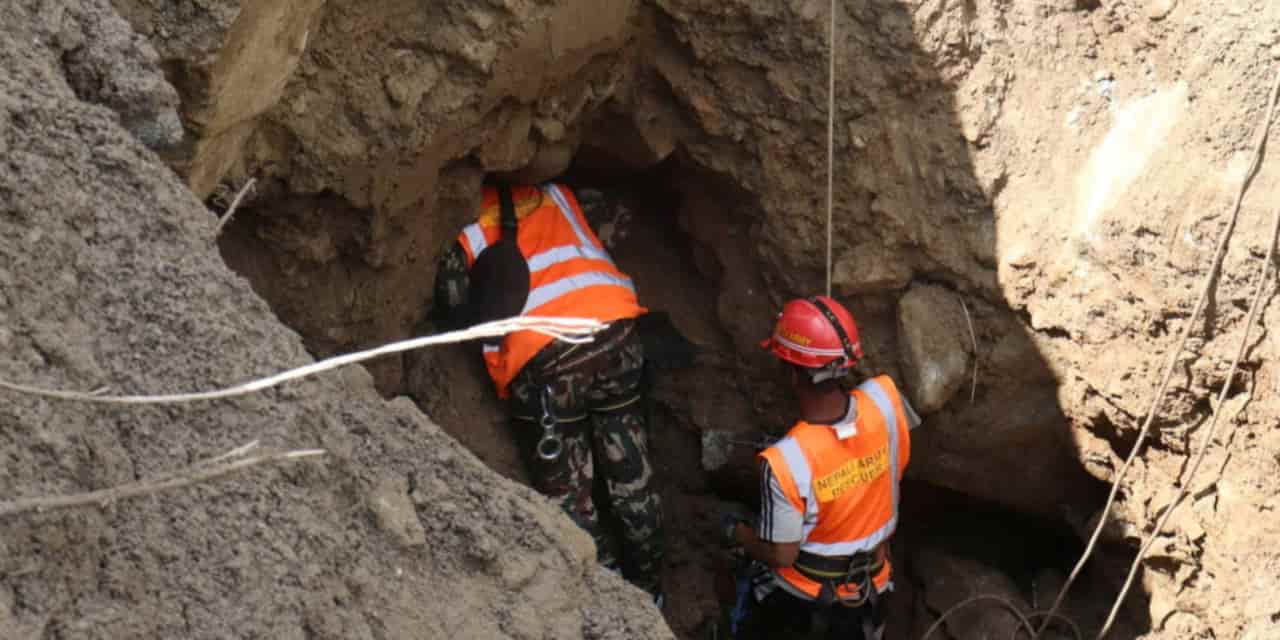
Officials in Nepal stated that the primary focus is on clearing the mud and rock debris from approximately half a dozen hydropower tunnels where workers are feared to be trapped. Images from the rescue sites show earth-moving equipment operating under lights in the dark, with soldiers using torchlight to search for access points. Nepal's disaster management authority has reported 933 individuals missing from hydropower projects in the affected region, while the Red Cross estimates that more than 90,000 people have been impacted by the disaster.

Nepal army spokesperson Raja Ram Basnet highlighted the significant challenge posed by the large volume of debris deposited, emphasizing that opening the tunnels is the main priority. Prime Minister Balendra Shah characterized the event as an "unprecedented and devastating natural disaster." He noted that nearly 21,000 security personnel, along with civilian workers and volunteers, are participating in the extensive rescue operations. As of Sunday night, Nepal had officially reported 788 deaths and 2,500 missing, while Chinese authorities confirmed 16 deaths and 546 missing in Gyirong county.

China has mobilized over 2,100 rescue workers and allocated at least 220 million yuan ($33 million) for relief efforts, including airdropping equipment and supplies. Chinese soldiers are utilizing life-detection equipment in their search for the missing. Despite Nepal's general self-sufficiency in rescue efforts, it has sought expertise from its neighbors for tunnel rescue operations. The rescue work has faced interruptions due to adverse weather and concerns about a lake formed by the disaster potentially causing further flooding. However, favorable weather on Monday allowed rescue operations to accelerate, according to Rasuwa district administrator Narendra Pariyar.

Chinese state broadcaster CCTV reported that the flood was caused by glacier instability linked to the long-term effects of global warming, describing it as a "new and prominent feature of cryosphere disasters" on the Tibetan plateau. Two Nepali officials indicated that China had not shared extensive information on glacier risks and water levels earlier in the year, raising concerns that a lack of data sharing could hinder future disaster preparedness. Chinese scientists determined that the mudslide reached the Gyirong border crossing in a matter of minutes, as depicted in dramatic surveillance footage showing torrents of water and debris engulfing structures.

Frequently asked questions

The flood was caused by a glacier collapse on the Nepal-Tibet border, linked by China to glacier instability and the effects of global warming.

Hundreds of workers are believed to be trapped inside blocked hydropower project tunnels.

As of Sunday night, 788 people had died and 2,500 were missing in Nepal. In China, 16 people were killed and 546 were missing.

Rescuers face challenges from a large amount of debris blocking the tunnels, adverse weather, and difficult terrain.

What Happens Next

01Continued efforts to clear debris and access blocked hydropower tunnels.
02Further assessment of the full extent of damage and casualties.
03Ongoing search for missing individuals.

How It Developed

A glacier collapse on the Nepal-Tibet border triggered a massive flood of ice, rock, and debris.
The flood killed nearly 800 people and left over 3,000 missing, with hundreds of bodies buried.
Hundreds of workers are believed to be trapped inside blocked hydropower project tunnels.
Rescue teams, including Chinese and Indian experts, are working to clear debris and access the tunnels.
Nepal's disaster management authority reported 933 missing from hydropower projects.
The Red Cross estimated over 90,000 people affected by the disaster.
Prime Minister Balendra Shah described the flood as an unprecedented and devastating natural disaster.
Nearly 21,000 security personnel are involved in rescue operations.

Sources

T1
Nepal teams seek hundreds trapped in hydropower tunnels after floodsNikkei Asia

Related Stories

China-Nepal disaster death toll nears 1,000 as rescue efforts intensify
31 Aug · 6:11 AM
Gov't team begins ground search for 9 missing Koreans in Nepal floods
31 Aug · 4:51 AM
Russia-Ukraine war: Ukraine military uses helicopters to deliver heavy machinery to trapped tunnel workers
30 Aug · 12:06 PM
Nearly 90 Americans missing in Nepal-China flooding, State Department says
30 Aug · 6:20 PM
Fifteen Britons among 261 foreigners missing in China after floods
30 Aug · 5:21 PM