Key facts
- Dozens of workers are believed to be trapped in a chamber at Nepal's Rasuwagadhi hydropower plant.
- An official expressed confidence that the trapped workers may be alive due to food and water availability.
- Rescue efforts are underway with the assistance of Nepali, Indian, Chinese, Korean, and Australian experts.
- The disaster, triggered by a glacial collapse, has resulted in at least 639 missing people.
- The Rasuwagadhi Hydroelectric Project is a 111-megawatt facility near Nepal's border with China.
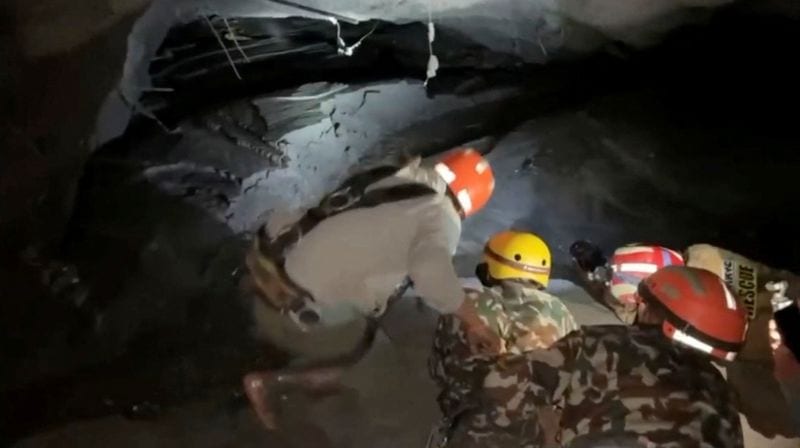
An official from the Nepal Electricity Authority stated that there is a high probability that dozens of workers trapped for a week in an underground chamber at the Rasuwagadhi hydropower plant are still alive. Amhsu Kiran Shahi, a board member of the authority, told Reuters that 46 people are believed to be in a room-like structure within the tunnel and are likely surviving due to available food and water. This incident is part of a larger disaster triggered by a glacial collapse near Nepal's border with China, which caused unprecedented floods of ice, rock, mud, and debris. So far, Nepali authorities have rescued 279 people from various hydropower projects affected by the deluge. However, at least 639 more individuals remain missing, with some suspected to be trapped in tunnels. Rescue operations are ongoing, involving Nepali, Indian, and Chinese teams digging to find survivors. The Rasuwagadhi Hydroelectric Project, a 111-megawatt facility, is located in the Rasuwa district. Shahi mentioned that the army attempted to access the area through the tunnel three days prior without success but plans to try again. Rescuers are also searching at other sites, such as the Upper Trishuli 3A facility, where thick mud had initially hampered efforts. International assistance, including experts from India, China, Korea, and Australia, is being utilized in the rescue efforts. A preliminary estimate by the United Nations Development Programme suggests the disaster created at least 2.2 million tons of debris. Meanwhile, families of the missing are visiting a hospital wall in Kathmandu covered in photographs, some of missing relatives and others of retrieved bodies yet to be identified, in desperate hopes of finding news. Some families have given up hope and are cremating straw effigies.