Key facts
- Nepal and China officials met on May 27 to discuss cooperation on floods and glacier-related hazards.
- Nepali officials sought more detailed information on glacier movements and water levels from China.
- China's embassy stated that substantial progress was made on cross-border disaster information sharing.
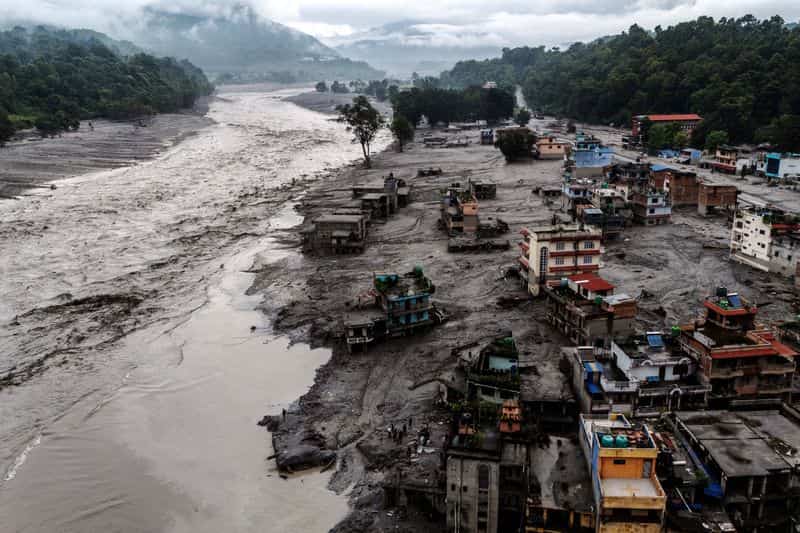
- A glacier collapse in August triggered a mudslide that killed nearly 800 people and left over 3,000 missing.
- Chinese teams shared important information with Nepal in a timely manner, according to the Chinese embassy.
Three months before a catastrophic flood killed hundreds in Nepal, officials from Nepal and China met to discuss enhanced cooperation on monitoring and responding to glacial hazards. The May 27 meeting in Kathmandu involved 10 Nepali officials and about a dozen from China, including representatives from the Tibet region where the disaster later struck.
During the meeting, participants called for joint risk-reduction measures, such as inventories of glacial lakes and hazard mapping. However, two Nepali officials told Reuters they did not receive sufficient information from China regarding glacier risks and water levels, expressing concern that inadequate data sharing could impede their ability to anticipate and prepare for major disasters. Sauhardra Joshi, a hydrologist who attended the meeting, stated that Nepal desired earlier notification of glacier movements.
China's embassy in Nepal stated on X that Beijing and Kathmandu had maintained close contact and achieved substantial progress in promoting cross-border disaster information sharing. The embassy also noted that Chinese and international experts face significant challenges monitoring hazards in the remote Himalayan region, asserting that Chinese teams had shared important information with Nepal in a timely manner.
Binod Parajuli, another Nepali government hydrologist, mentioned that at the meeting, Chinese representatives indicated they lacked the mandate to sign an agreement on Nepal's requests and suggested further discussions. He also noted that while China shares forecasts for heavy rain in Tibet, it does not provide similar information for avalanches, water levels, landslides, or extreme events.
Twelve days prior to the disaster, China's World Meteorological Centre emailed Nepali officials, warning of a monsoon depression forecast for the area from August 14 to 19 and highlighting the potential for secondary hazards like landslides and flash floods. The Chinese embassy also stated that China has been sharing information, including monitoring data on a lake formed by debris from the recent calamity.
Environmental anthropologist Austin Lord of the Stimson Center commented that while a lack of bilateral cooperation was not a significant factor in Nepal's response to the latest disaster, there is a lack of a well-articulated system and limited exchange between Nepal and China. He added that Chinese scientists possess greater capacity and resources for monitoring in the region compared to their Nepali counterparts.
The flood, triggered by a glacier collapse, occurred around 8:32 a.m. Nepal time on a Wednesday. Surveillance footage showed the deluge blasting through a border crossing in Tibet. Twenty-six minutes later, a Nepali official was alerted to a flood on the Trishuli river, but a border monitoring station had not transmitted data since 8:40 a.m., and downstream stations also failed to report, possibly due to being washed away. A public alert was issued at 9:13 a.m. At least four monitoring stations were destroyed by the flood, which carried approximately 57.4 million cubic meters of water. The surge damaged 19 bridges, 40 km of highway, and knocked out over 10% of Nepal's power generation capacity. Preliminary assessments indicate the disaster was caused by a glacier chunk breaking away and unleashing high-speed flash floods.