All NewsEducationTVBrokers
Equities & FundsCrypto & Digital AssetsAI & TechnologyBusiness & CorporateUS Politics & PolicyGeopolitics & Global RiskMacro, Rates & FXCommodities & EnergyEuropean Politics & MarketsAsia-PacificReal Estate & Property
All NewsHome
← Back to Geopolitics & Global Risk

UN official warns of severe Himalayan glacial flood risks

Created at 1 Sep · 1:26 PM1 source↑ Market-relevant
IN SHORT

A senior UN official has warned that the Himalayan region faces severe risks from future glacial floods, with millions of people and critical infrastructure at risk. Last week's flood in Nepal, which killed over 1,000 people, was triggered by a glacier collapse.

Key Numbers

1,000+death toll from Nepal flood
47potentially dangerous glacial lakes identified in 2020
15major power stations under construction lost in Nepal flood

Who's Involved

Kanni Wignaraja
UN Assistant Secretary-General and Regional Director for Asia and the Pacific at UNDP
United Nations Development Programme (UNDP)
Compiled updated data on at-risk populations and infrastructure

↳ Why This Matters

The increasing frequency and severity of glacial floods in the Himalayas pose a direct threat to millions of lives, critical infrastructure, and regional stability, exacerbated by climate change and geological factors.

Key facts

  • The Himalayan region faces severe risks from future glacial floods, according to a UN official.
  • A recent flood in Nepal, caused by a glacier collapse, resulted in over 1,000 deaths.
  • Millions of people living along riverbanks are at risk, and hydroelectric power infrastructure is threatened.
  • Climate change is exacerbating glacier melt, increasing the frequency and intensity of glacial floods.
  • Researchers identified 47 potentially dangerous glacial lakes in 2020, with the actual number now estimated to be higher.

The Himalayan region is facing significant and increasing risks of severe glacial floods in the coming years, a senior United Nations official has warned. Kanni Wignaraja, Assistant Secretary-General at the UN and Regional Director for Asia and the Pacific at the United Nations Development Programme (UNDP), stated that the consequences could render entire riverbanks uninhabitable for millions of people and threaten vital hydroelectric power generation.

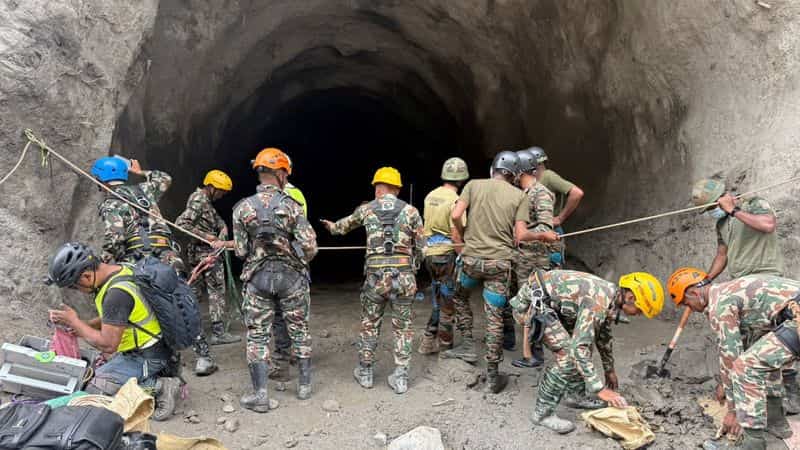
Last week's devastating flood in Nepal, which claimed over 1,000 lives, was a stark example of these dangers, triggered by the collapse of a glacier near the Langtang Lirung mountain peak. This event unleashed a landslide and a subsequent flood wave down the Trishuli River. While distinct from glacial lake outburst floods (GLOFs), where meltwater builds up behind natural barriers until pressure causes a breach, both phenomena are on the rise.

Wignaraja explained that climate change is accelerating glacier melt in the region, loosening rocks and increasing pressure on glacial lake barriers. The Himalayas' relatively young geological age also makes them more susceptible to tectonic shifts that can trigger sudden collapses. Researchers had identified 47 potentially dangerous glacial lakes in Nepal, China, and India in 2020, but the actual number is now believed to be considerably higher.

Nepal is particularly dependent on glaciers for its water supply and income, facing difficult choices about relocation and infrastructure resilience. The recent flood destroyed 15 major power stations under construction, in addition to operational ones. While new technology can enhance the resilience of electrical networks and hydropower stations, Wignaraja noted that the scale of events like last week's 'mud and ice tidal wave' could overwhelm most existing defenses.

Frequently asked questions

The flood was triggered by the collapse of a glacier near the Langtang Lirung mountain peak, which caused a landslide and a subsequent flood wave.

The main threats are glacial lake outburst floods (GLOFs), where meltwater breaches natural dams, and landslides caused by glacier collapses, both leading to flash floods.

The population at risk is estimated to be in the millions.

Hydroelectric power stations and electrical networks are highly vulnerable, as demonstrated by the loss of 15 major power stations under construction in Nepal.

What Happens Next

01UNDP and partner organizations will continue to monitor glacial lake risks.
02Nepal will face difficult choices regarding relocation and infrastructure resilience.

How It Developed

A UN official warned of severe future glacial flood risks in the Himalayas.
Last week's flood in Nepal, triggered by a glacier collapse, killed over 1,000 people.
Millions of people and critical infrastructure, including hydroelectric power, are at risk.
Climate change is accelerating glacier melt, increasing the risk of glacial lake outbursts and landslides.
The region's young mountains are also prone to tectonic shifts that can trigger collapses.

Sources

T1
Himalayas face severe glacial flood risks in years ahead, UN official warnsReuters

Related Stories

China flood rescue efforts hampered by relentless rain and river
1 Sep · 6:37 AM
Floods in Himalayas highlight climate change risks for India
1 Sep · 6:41 AM
Flash flood devastates Nepal-China border crossing
1 Sep · 6:31 AM
UN climate fund seeks $10bn-plus from Asia after US withdrawal
1 Sep · 7:41 AM
Nepal flood survivors face critical survival window
31 Aug · 8:06 PM