
Key facts
- South Korea's Nuri rocket successfully launched 15 satellites into orbit on its fifth flight.
- The payload included five NEONSAT microsatellites and 10 CubeSats.
- The NEONSATs will monitor the Korean Peninsula for national security and disaster response.
- The NEONSAT constellation is designed to image the peninsula more than three times daily.
- The fifth flight was Nuri's first attempt to sequentially deploy multiple primary satellites.
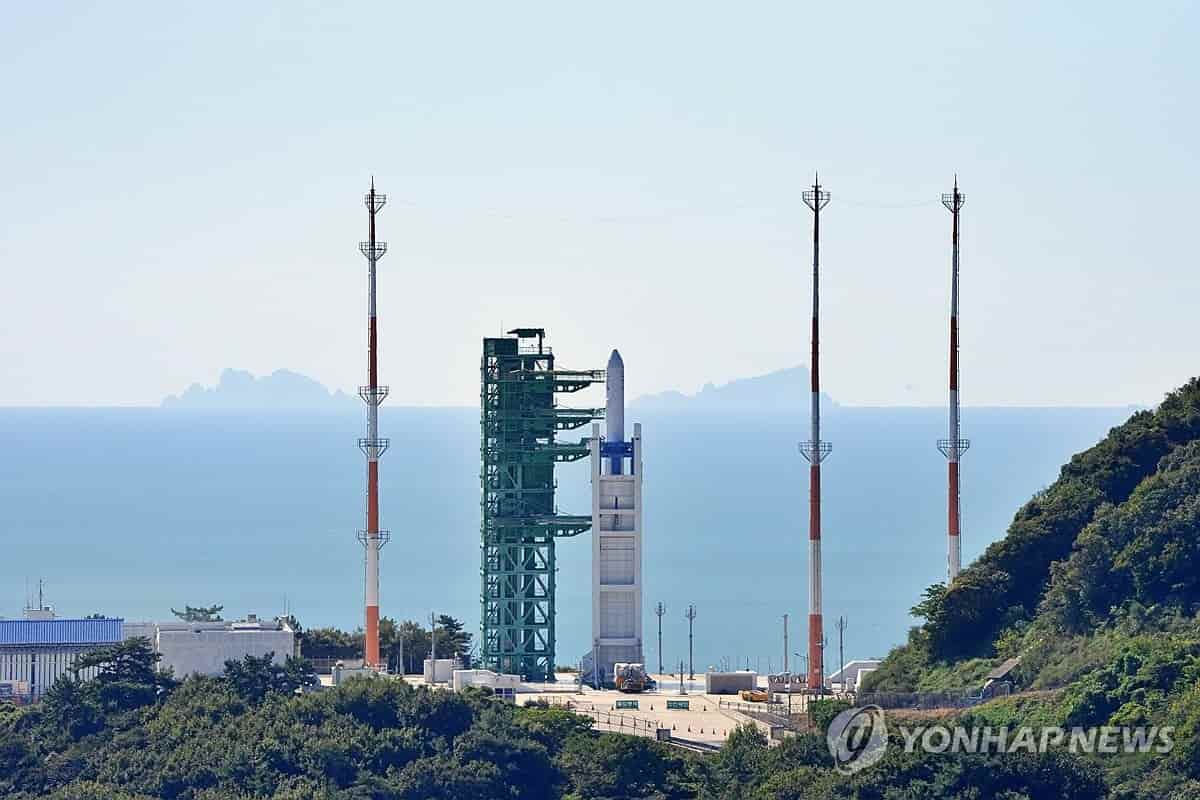
South Korea's homegrown Nuri rocket successfully launched on its fifth flight on Wednesday, placing 15 satellites into orbit. The launch occurred at 12:25 p.m. from the Naro Space Center in Goheung.
The payload included five New-space Earth Observation Satellite Constellation for National Safety (NEONSAT) microsatellites and 10 CubeSats. The Nuri rocket successfully separated its first and second stages before deploying the satellites at an altitude of approximately 575 km, according to the Korea AeroSpace Administration (KASA).
The five NEONSATs, weighing less than 100 kilograms each, were deployed sequentially with 35 to 40-second intervals between them. The rocket's upper stage rotated between deployments to prevent collisions. The 10 CubeSats were released in pairs every 10 seconds.
Following the satellite deployment, the Nuri rocket performed a collision-avoidance maneuver and vented its remaining fuel. The rocket is expected to reenter Earth's atmosphere and burn up about 20 minutes after liftoff. The Korea Aerospace Research Institute will monitor the flight from South Korea and Palau.
This fifth mission marks Nuri's first attempt to sequentially deploy multiple primary satellites designed for the same mission. Each NEONSAT carries an electro-optical camera capable of distinguishing objects as small as 1 meter in black-and-white images and 4 meters in color images. The satellites are intended to monitor the Korean Peninsula for national security and disaster response.
The NEONSAT constellation is planned to eventually comprise 10 satellites, with the remaining five scheduled for Nuri's sixth flight next year. Once fully operational, the constellation will be able to image the Korean Peninsula more than three times daily and revisit locations within 24 hours.