
Key facts
- NASA is keen on joint science missions with Europe, particularly the LISA gravitational wave observatory.
- LISA will be the world's first space-based observatory for detecting and studying gravitational waves.
- The mission involves three spacecraft flying in a triangle formation, 1.6 million miles apart.
- NASA's contribution to LISA is estimated at about one-third of the total mission cost.
- NASA will receive 100% of the scientific data from the LISA mission.
- The estimated cost for NASA to conduct LISA independently would be around $3 billion.
NASA is prioritizing international partnerships that offer clear benefits and "good deals," a shift in strategy that is creating friction with some agencies, most notably the European Space Agency (ESA).
NASA Administrator Jared Isaacman has emphasized that foreign partners must provide "meaningful contributions" that NASA or US companies are not already undertaking, and deliver them with urgency. This approach has led to the cancellation of projects like the Lunar Gateway and Mars Sample Return due to budget constraints and a renewed focus on human spaceflight and a lunar surface station.
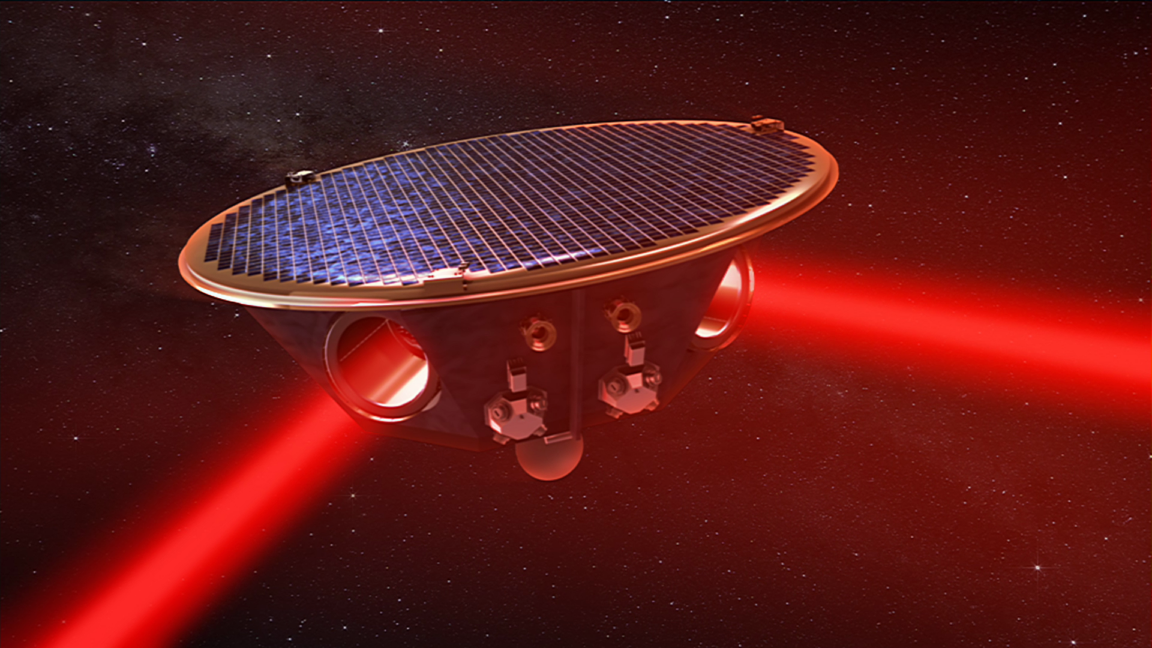
While ESA has struggled to find a place in NASA's Moon Base program, a potential collaboration on the Laser Interferometer Space Antenna (LISA) mission is seen as a prime example of a "good deal." LISA, led by ESA, is the world's first space-based observatory designed to detect and study gravitational waves. The mission involves three spacecraft flying in a triangular formation, approximately 1.6 million miles (2.5 million kilometers) apart, to detect faint signals of low-frequency gravitational waves. Launch is anticipated around 2035.
Under the agreement, NASA is responsible for supplying the laser transmitters and telescopes, as well as charge management devices and support for ground-based data analysis. ESA will handle the construction, launch, and operation of the spacecraft. Ira Thorpe, a gravitational wave astronomer and leader of the US science team for LISA, described the mission as "a very good deal for the US," noting that NASA is paying for roughly one-third of the mission's cost while receiving 100% of the scientific data. Thorpe estimates that NASA would have to spend around $3 billion to undertake such a mission independently.