Key facts
- Iran-backed Houthis are expected to formally close the Bab el-Mandeb Strait to all 'enemy' shipping within days.
- The Bab el-Mandeb Strait historically handles about 12% of global crude oil flows and 10% of LNG flows.
- The Strait of Hormuz accounts for roughly 30% of oil and 20% of LNG flows.
- US President Donald Trump reportedly refused to authorize direct US air strikes against the Houthis when requested by Saudi Arabia.
- Saudi Arabia plans to form a 14-country task force called the Multinational Maritime Defense Coalition (MMDC).
Iran-backed Houthi rebels in Yemen are poised to formally close the Bab el-Mandeb Strait to all 'enemy' shipping within days, a move that could significantly disrupt global energy markets. This escalation follows previous actions targeting the Strait of Hormuz and Saudi oil infrastructure, which have already inflated energy prices and heightened regional insecurity.
A senior energy source, who works closely with Iran's Petroleum Ministry, told OilPrice.com that the Houthis are likely to declare the Bab el-Mandeb Strait closed to all 'enemy' shipping, not just Saudi vessels as has been the case. This action would mean Iran effectively holds hostage up to 42% of the world's crude oil flows and up to 30% of its LNG flows, considering the combined impact with the Strait of Hormuz.
Historically, the Strait of Hormuz accounts for approximately 30% of global oil and 20% of LNG flows, while the Bab el-Mandeb Strait handles about 12% of oil and 10% of LNG. Before the current blockades, the Bab el-Mandeb Strait managed up to 2.6 million barrels per day of refined products like diesel and jet fuel, crucial for Europe which relies heavily on these imports due to its reduced refinery capacity.
The Houthis' recent seizure of key islands in the Red Sea, including Perim Island at the mouth of the Bab el-Mandeb Strait, has amplified their leverage. Shipping through the strait has already dropped nearly 90% below normal averages, according to IMF PortWatch data, even without a formal blockade.
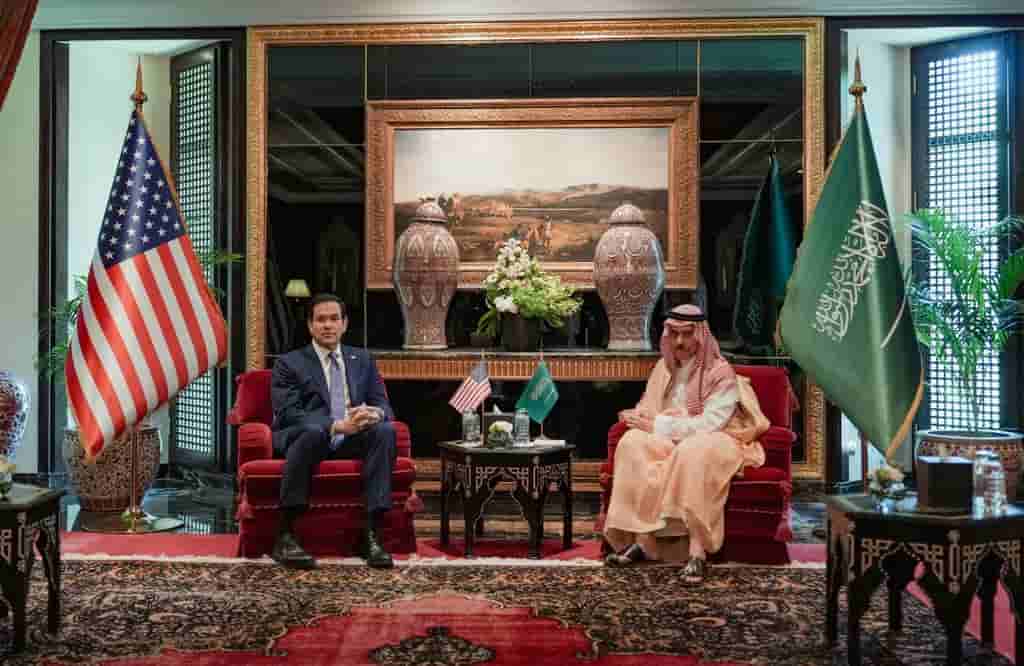
US Secretary of State Marco Rubio met with Saudi Foreign Minister Prince Faisal bin Farhan Al Saud on Wednesday in Washington, DC., according to a press release by the State Department. The statement indicated that the two continued discussions from the UN General Assembly about bilateral cooperation on regional security and stability, including in Iran, Gaza, Lebanon, Sudan, and other regional issues.