Key facts
- Pakistan will use "whatever means are available" to defend Saudi Arabia against Iran-backed Houthi rebels, according to Defense Minister Khawaja Muhammad Asif.
Pakistan's defense minister, Khawaja Muhammad Asif, stated Tuesday that Pakistan would use "whatever means are available" to defend Saudi Arabia against Iran-backed Houthi rebels. This indicates a potential direct involvement in the regional conflict under a new mutual defense pact with Saudi Arabia and Turkey.
Pakistan's pledge of military support to Saudi Arabia under a new defense pact could escalate regional tensions and potentially draw the nation into direct conflict with Iran-backed groups, impacting global trade routes like the Bab el-Mandeb Strait.
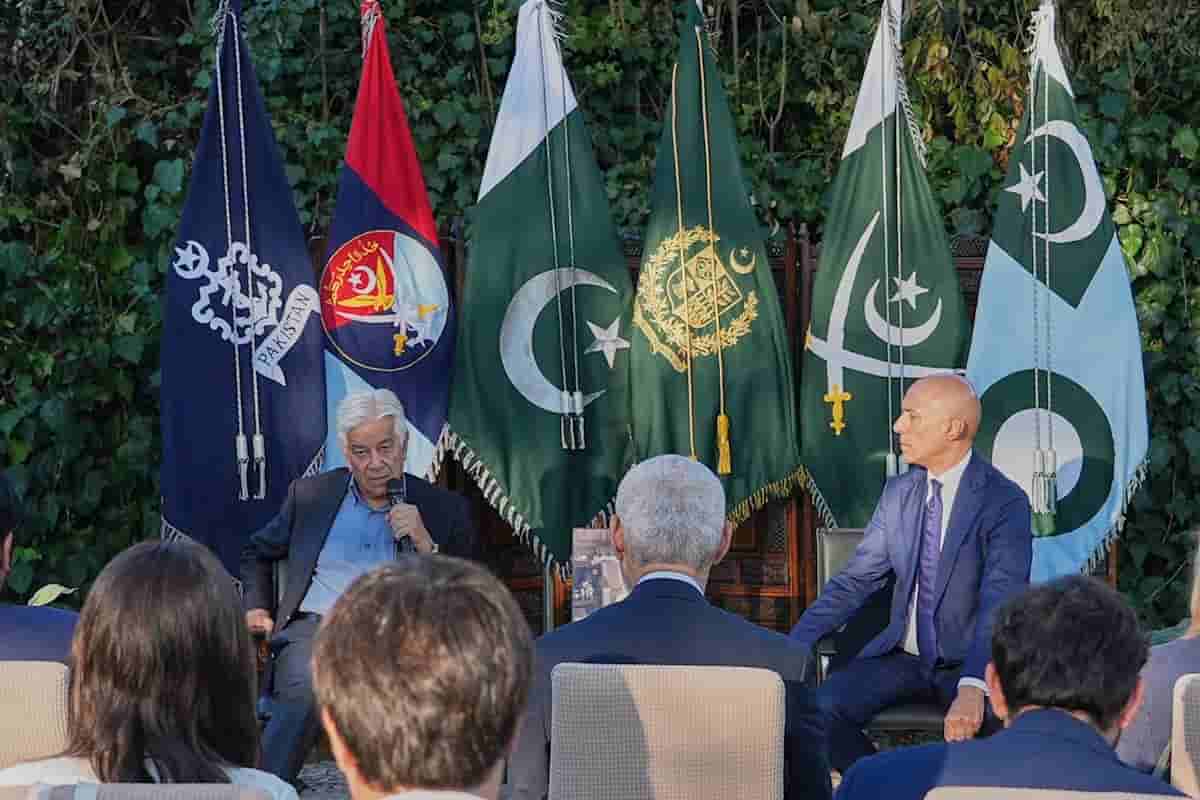
Pakistan's Defense Minister Khawaja Muhammad Asif stated on Tuesday that the country would employ "whatever means are available" to defend Saudi Arabia against Iran-backed Houthi rebels, signaling a potential direct involvement in the escalating regional conflict. Asif's remarks, made during a visit to Rome, offered one of Islamabad's clearest indications to date of its commitment under a new mutual defense pact.
Asif declined to confirm whether Pakistani forces had already participated in airstrikes, but emphasized that Pakistan's military capabilities would be at Saudi Arabia's disposal. This commitment stems from the Mecca Joint Defense Agreement signed on August 7 by Saudi Arabia, Pakistan, and Turkey, which stipulates that an attack on one member will be treated as an attack on all three. The pact is described as defensive and not directed against any specific state.
The comments come days after military chiefs from Pakistan, Turkey, and Saudi Arabia convened in Riyadh to strategize responses to the Houthi attacks. Asif characterized the Houthis as aggressors, noting their intensified missile and drone assaults on Saudi Arabia and their expansion of control along Yemen's Red Sea coast, including the strategic port city of Mokha and nearby islands. This expansion brings them closer to the Bab el-Mandeb Strait, a critical maritime route for global trade.
Despite the strong military commitment, Asif also highlighted Pakistan's ongoing efforts to promote negotiations to resolve the broader conflict involving Iran and supported reviving a negotiated agreement on Tehran's nuclear program. He suggested that some proxies, including the Houthis and certain Iraqi militias, might be acting with significant independence from Iran.
Pick the topics you care about. Get only what matters, on your cadence.