Key facts
- Fifty-four countries and four organizations signed the Toronto Pledge on Sept. 29.
- The pledge calls for the return of Ukrainian prisoners of war, unlawfully detained civilians, and children abducted by Russia.
- The pledge condemns Russia's forced militarization of Ukrainian children in occupied territories.
- Signatories include Austria, Denmark, Hungary, Japan, and the United Kingdom.
- Organizations including the Council of Europe and the European Union also signed.
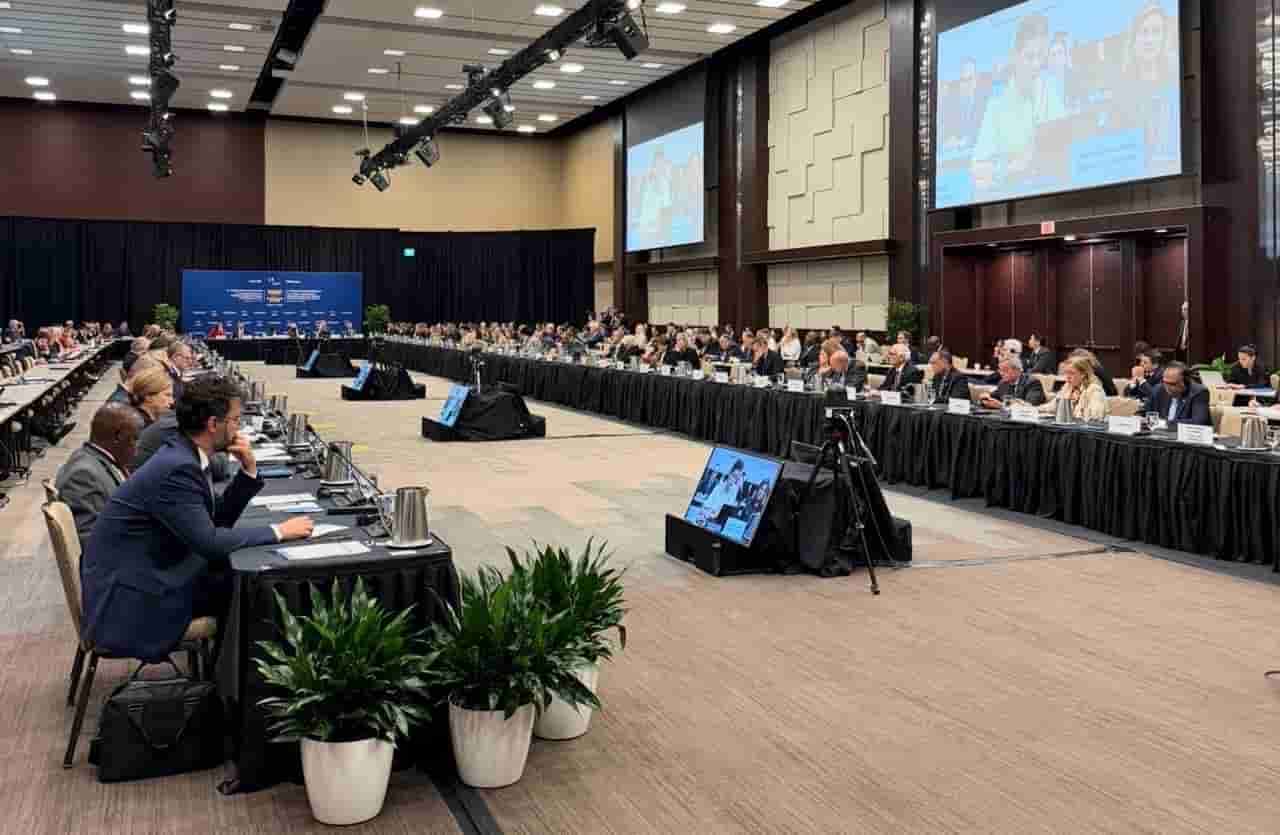
Dignitaries met at the Pathways to Peace: Second International Conference on Returning Ukrainian Children, Detained Civilians, and Prisoners of War in Toronto, Canada, on Sept. 29, 2026. Fifty-four countries and four organizations signed the Toronto Pledge, condemning Russia's actions.
The pledge stated, "We also express concern about the militarization of children in the temporarily occupied territories of Ukraine by the Russian Federation. These actions have serious negative consequences for their identity, well-being, family unity, human rights and fundamental freedoms."
Among the signatories were Austria, Denmark, Hungary, Japan, and the United Kingdom, along with organizations such as the Council of Europe and the European Union. Norwegian Foreign Ministry State Secretary Eivind Vad Petersson described Russia's treatment of Ukrainians as a "systemic challenge" requiring a "systemic response."
Canadian Foreign Minister Anita Anand emphasized the need for new technologies, including artificial intelligence and third-country intermediaries, to facilitate returns, noting that "gaps remain" in current efforts. Council of Europe Special Envoy Thordis Kolbrun Reykfjord Gylfadottir highlighted the importance of sustained international cooperation and post-return support for children.