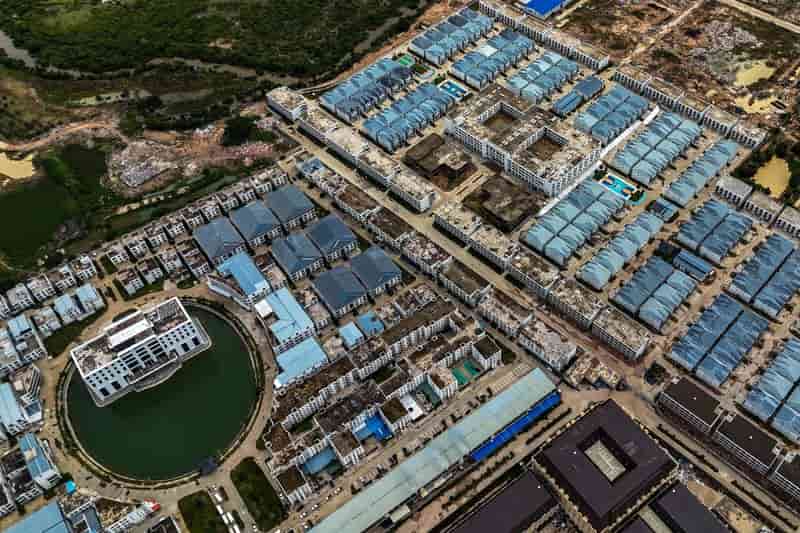
Cambodia is actively pursuing evidence against the alleged "masterminds" behind large-scale cyber fraud operations, according to Chhay Sinarith, the country's anti-scam minister. This effort comes as critics question the effectiveness of the government's year-long crackdown, suggesting that high-level figures and facilitators of the illicit industry remain untouched.
Sinarith stated that legal action, targeting masterminds, co-conspirators, owners, enablers, or protectors, requires time and evidence. He emphasized the importance of international cooperation, noting that information from global partners has aided in taking action against some suspects. He also cautioned that premature disclosure of investigations could allow suspects to evade capture.
Cambodia recently hosted a global anti-scam conference, bringing together representatives from over a dozen countries, including the US and China, to discuss strategies for combating the pervasive scam industry. This sector has significantly damaged Cambodia's reputation and economy, with scam centers in Southeast Asia reportedly stealing $10 billion from Americans in 2024 alone, according to US estimates.
Despite Sinarith's declaration last month that large-scale scam compounds have been eradicated, analysts remain skeptical. John Wojcik, a senior analyst at TRM Labs, observed that many large compounds continue to operate, while others have dispersed into smaller, decentralized sites. He added that the underlying technology, payment systems, money-laundering networks, and facilitators persist at scale.
Authorities are also intensifying their investigation into the financial network of Prince Group, a Cambodian conglomerate that the US alleges served as a front for multi-billion-dollar online fraud and money laundering activities. The group's founder, Chen Zhi, was arrested and deported to China earlier this year. Cambodian authorities showed reporters two facilities outside Phnom Penh, which they identified as Prince Group scam centers housing thousands of workers, including one with a fake Singaporean police station allegedly used for impersonation fraud. A spokesperson for Prince Group, however, denied any association with these facilities.