Key facts
- Russia's parliamentary election entered its third and final day on Sunday.
- The election is seen as a test of support for Russia's war in Ukraine.
- Most anti-war candidates were barred from the ballot.
- Two senior figures from the liberal Yabloko party received jail terms before the vote.
- The Kremlin views the conflict as an existential struggle with the West.
- Initial election results are expected around 1800 GMT on Sunday.
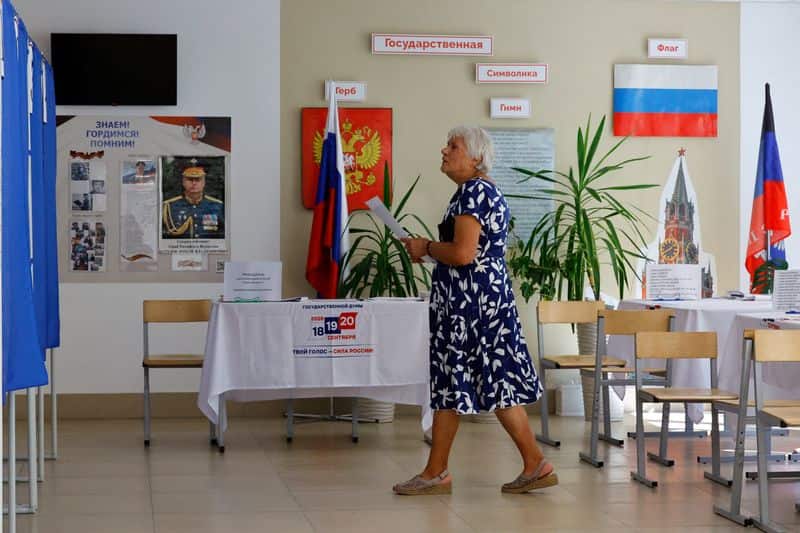
Russia's parliamentary election, which President Vladimir Putin has framed as a crucial test of public support for the ongoing war in Ukraine, entered its final day on Sunday. This vote is the first since Russia's full-scale invasion of Ukraine in February 2022.
The Kremlin is expected to present the election results as evidence of backing for Putin's policies and the conflict, which is Europe's deadliest since World War Two and shows no signs of ending soon.
Most candidates with anti-war platforms were disqualified from running. Those who did participate, such as from the liberal Yabloko party, expressed concerns for their safety following lengthy jail sentences handed to two senior party members for comments deemed illegal by authorities. Russian law punishes the discrediting of the army or spreading "fake news" with severe prison sentences.
The Kremlin maintains that national unity and censorship are necessary during what it terms its "special military operation" in Ukraine, portraying the conflict as an existential struggle against a hostile West. They also allege that Ukrainian intelligence and other adversaries are actively working to incite unrest within Russia.
Putin accused Ukraine of attempting to interfere in the election, citing an alleged Ukrainian strike on the home of an election official in the Russian-controlled Zaporizhzhia region that reportedly killed Elena Astanina. Reuters could not independently verify the details of this attack, and Kyiv has not yet commented.
Russian electoral authorities also reported a cyberattack on Moscow's online voting system on Saturday. Ukraine, which has suspended elections under martial law, has dismissed the Russian vote as a "pseudo election."
Despite the predictable outcome anticipated by most experts, the NEST think-tank in Berlin suggested the vote could still present challenges for the Kremlin amid economic difficulties. They noted that "accumulated anxiety and frustration may translate into votes for the systemic opposition parties that the Kremlin has allowed to remain on the ballot." The Communist party and the New People party are identified as potential beneficiaries, despite consistently voting with United Russia on key issues.
Putin, in a televised address, emphasized that the election would demonstrate widespread support for Russian soldiers, stating, "Your choice, and your will, will once again demonstrate that millions of people stand behind our soldiers, that we are a united people bound together by shared values, historical memory, and love for our homeland, and that no one will succeed in dividing or intimidating us."
Initial results are anticipated around 1800 GMT on Sunday, with more comprehensive results expected on Monday.