Key facts
- Ukraine's DSNS said at least 24 people were killed in the Komyshuvakha aid center strike, including two rescue workers and four police officers.
- President Volodymyr Zelensky said more than 50 people could be trapped under the rubble and the toll was set to rise.
- Russia's defense ministry said the attack targeted Ukrainian military units and killed 25 servicemen.
- A Russian missile destroyed a hospice in Dnipro, and nearly 50 terminally ill patients were being transferred, the report said.
- Russian strikes on energy infrastructure in nine regions cut Kyiv's water supply entirely and suspended the city's metro on Tuesday.
- The Kremlin said it would join US-brokered three-way peace talks with Ukraine in Abu Dhabi on November 10 and 11.
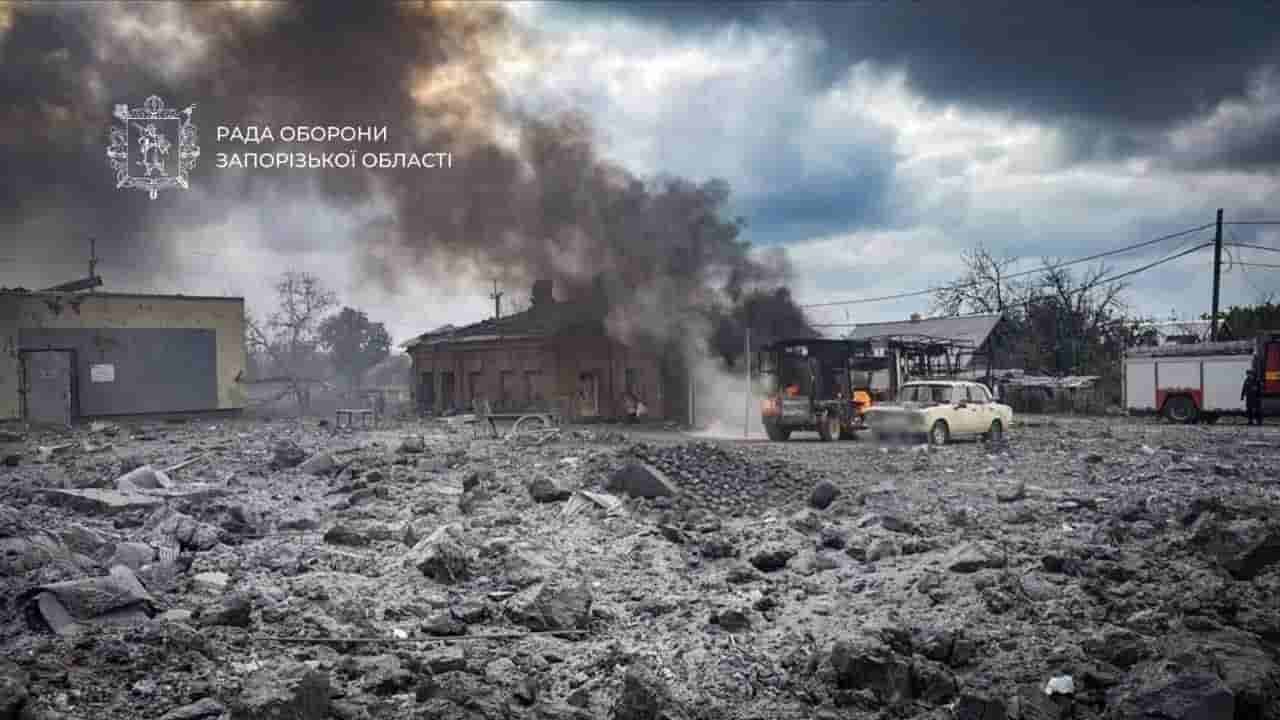
Russian aerial bombs struck a school used as a humanitarian aid center in Komyshuvakha, Zaporizhzhia Oblast, on the night of Monday, November 2, killing at least 24 people, Ukraine's State Emergency Service (DSNS) said. The dead included two rescue workers, four police officers and local residents, and five other people were injured, according to the DSNS.
President Volodymyr Zelensky said the number of victims was set to rise as more than 50 people could be trapped under the rubble, and he called the Komyshuvakha strike one of the largest mass killings committed by Russia during the war. Nine 3,000kg aerial bombs hit the settlement as residents were gathering to receive humanitarian aid at a distribution center, authorities said. Local media reported that people took refuge in an underground school when the attack began, but the roof of the shelter collapsed, trapping many underneath. "The scale of the tragedy is difficult to comprehend," regional head Mykhailo Semikin said.
Russia's defense ministry said the attack had targeted Ukrainian military units and killed 25 servicemen. BBC News Russian defense correspondent Ilya Abishev reported there was no credible evidence the site was being used by the Ukrainian military and that there were no major military or industrial facilities in Komyshuvakha, a village south-east of the city of Zaporizhzhia that Abishev described as part of Ukraine's defensive and transport network on the approaches to the regional capital.
Further north, in Dnipro, nearly 50 terminally ill patients were being transferred to other facilities after their hospice was destroyed by a Russian missile on Monday night, the report said. The oldest of the patients was 90 years old. Mayor Boris Filatov posted photos on Telegram showing elderly people in their beds in a hospice room with blown-out windows and rubble and broken glass on the floors. "I realise that I am violating ethics," Filatov wrote. "I want as many people as possible to see these photos."