Key facts
- Pope Leo said cooperation between Russia and Ukraine in the Oleshky ceasefire could strengthen their willingness to engage in dialogue.
- Ukraine and Russia said on October 23 they had agreed the ceasefire, brokered by Melania Trump with Pope Leo's involvement.
- The Kremlin said Putin told Pope Leo he supported a Vatican initiative to deliver supplies to Oleshky civilians.
- Archbishop Paul Gallagher said he did not believe the Vatican played a direct role in arranging the six-day ceasefire.
- Zelenskiy has said peace negotiators would meet for fresh talks in early November.
- Oleshky has been suffering acute food and medicine shortages, according to the report.
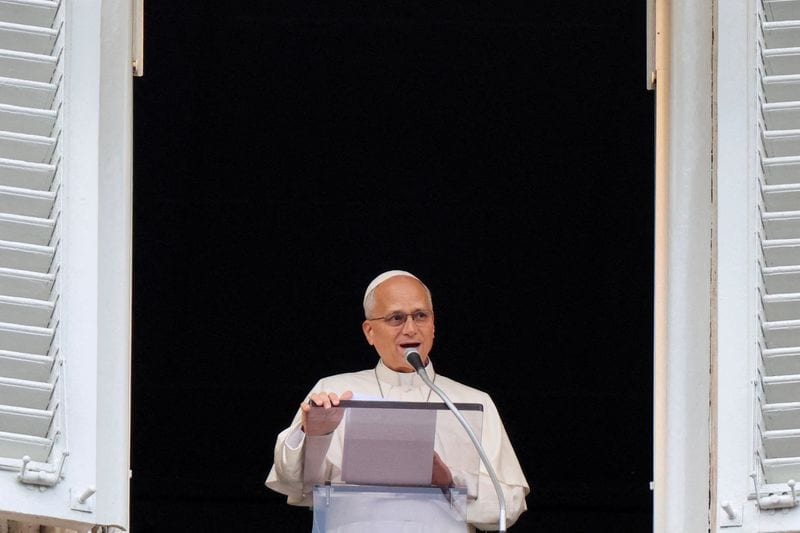
Pope Leo said on November 1 that he hoped cooperation between Russia and Ukraine in implementing a ceasefire in the Russian-occupied Ukrainian town of Oleshky would pave the way for broader peace efforts. Speaking during his Sunday prayer, he said a humanitarian operation had been carried out to help the civilian population and that he hoped the cooperation would strengthen the parties' willingness to engage in dialogue and lead to fresh concrete initiatives for peace.
Ukraine and Russia said on October 23 they had agreed a ceasefire in Oleshky, brokered by US first lady Melania Trump with the additional involvement of Pope Leo, to allow aid deliveries and evacuations from the frontline town, which has been suffering acute food and medicine shortages. Ukrainian President Volodymyr Zelenskiy has said peace negotiators would meet for fresh talks in early November.
Pope Leo spoke with both Russian President Vladimir Putin and Zelenskiy on October 16. Putin told Leo that he supported a Vatican initiative to deliver supplies to civilians in Oleshky and was ready to cooperate, the Kremlin said. On a Tuesday, the Vatican's foreign minister, Archbishop Paul Gallagher, said that although Leo had recently spoken with Putin and Zelenskiy, he did not believe the Vatican had played a direct role in arranging the six-day ceasefire.
Evacuees from Oleshky reached Ukrainian-controlled territory on October 31 after a 19-hour journey, a move confirmed by Zelenskiy. David Arakhamia, head of Zelenskiy's parliamentary faction, said four planes carrying hundreds of residents landed in Gomel, Belarus, on October 31, and the evacuees were expected to reach Ukrainian-controlled territory within a few hours. Ombudsman Dmytro Lubinets said the group was in Belarus with its people and pets and posted video of elderly residents and children getting off the planes.
Lubinets said the Ukrainian delegation reached Oleshky around 11:30 a.m. Kyiv time on October 30, with the ceasefire in effect for 80 hours and still holding. He said 25 buses with a combined capacity of 750 passengers, along with ambulances for people with limited mobility, had been prepared. Prime Minister Serhii Koretskyi initially said 527 residents planned to travel to Ukrainian-controlled territory, then clarified on Telegram that he had shared the figure by mistake and that no exact numbers were available.