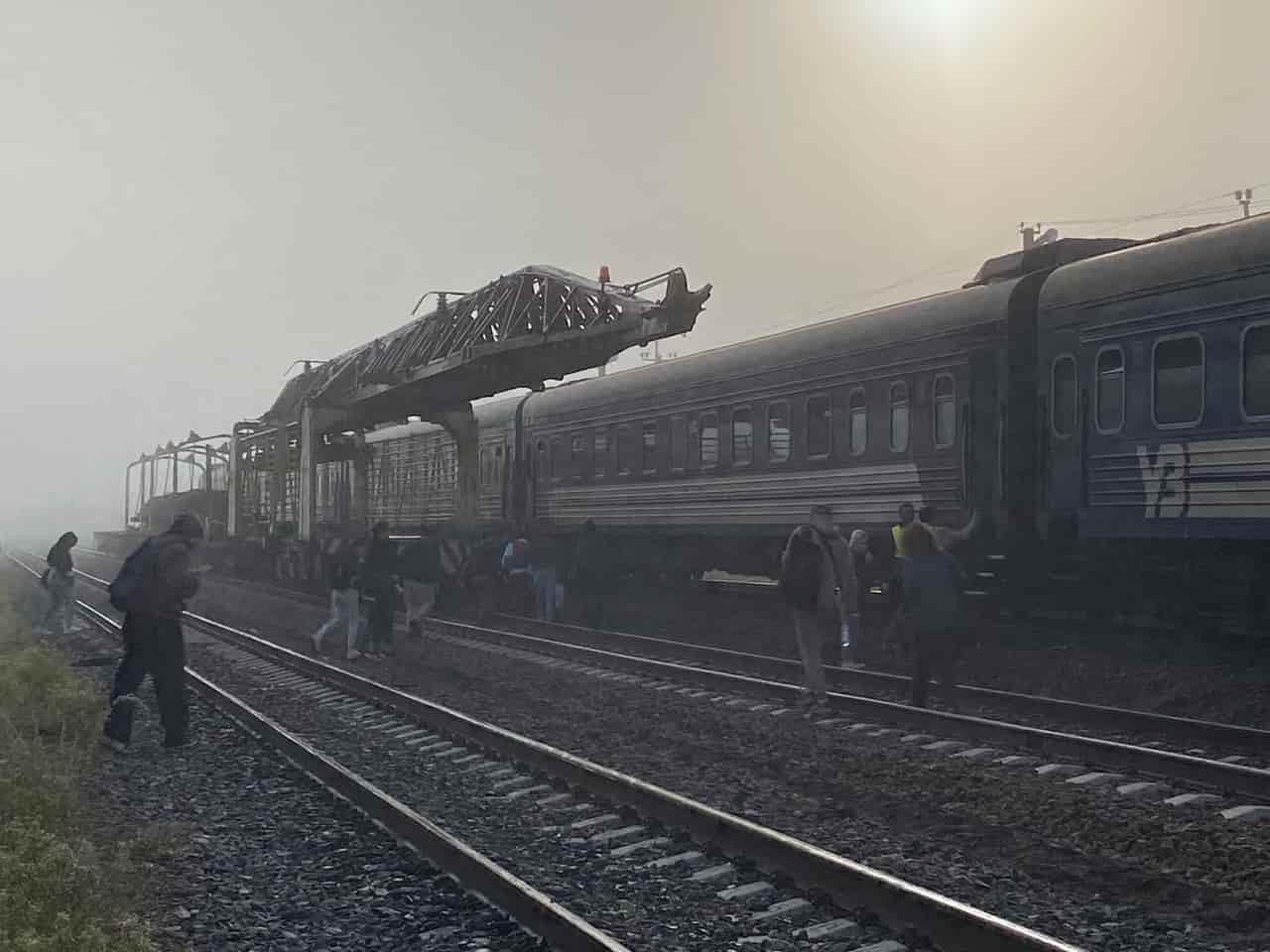
Key facts
- Russia has intensified attacks on Ukraine's railway infrastructure in 2026.
- Ukraine's railway system is crucial for 60% of its freight and 37% of passenger transport.
- Approximately half of Ukraine's exports move by rail.
- Russia has damaged or destroyed over 500 Ukrainian locomotives since the invasion began, with more than half destroyed in 2026.
- Ukraine is short of about 10% of the locomotive crews it needs.
- New rules allow trains to operate under lower air threat levels, with passenger and staff movement to shelters under the highest threat.
Russia's intensified attacks on Ukraine's railway infrastructure, including a recent drone strike near the Polish border, are disrupting critical passenger and freight transport. The damage to locomotives and infrastructure poses a significant threat to Ukraine's economy and its ability to maintain trade and diplomatic ties.
On September 13, 2026, a Russian drone struck the locomotive of a Kyiv-Warsaw passenger train just 2 kilometers from the Polish border. The attack near Yahodyn caused no casualties, but it highlighted the vulnerability of Ukraine's railway, a vital link to the outside world amid the ongoing war. Ukrainian state railway company Ukrzaliznytsia's monitoring team detected the threat early enough to evacuate the crew before the strike.
Russia has targeted Ukraine's railway throughout the full-scale invasion, but attacks have sharply increased in 2026. Foreign Ministry spokesperson Heorhii Tykhyi stated that Russia's goals are to disrupt logistics, weaken the economy, and potentially intimidate partners. While eroding international support is unlikely, the immediate impact on transportation and trade is significant.
Ukraine's heavy reliance on its extensive railway network, a legacy of its historical development, makes it particularly vulnerable. Around 60% of the country's freight and 37% of passenger transportation depend on rail, according to Serhiy Vovk, director of the Centre for Transport Strategies. In contrast, rail accounts for only 10% to 20% of transport in many European countries. Vovk estimates that about half of Ukrainian exports move by rail, with road transport being prohibitively expensive for bulk goods like iron ore, metals, and agricultural products.
The pressure on the railway could intensify if stable operations at Ukraine's Black Sea ports are not restored following sustained Russian bombing campaigns, potentially leading to filled storage facilities with grain and agricultural products needing export by November or December.
The railway has also served as a crucial artery for "iron diplomacy," enabling foreign leaders to travel to Kyiv after the airspace closure in 2022. However, passengers increasingly experience disruptions, with attacks hundreds of kilometers away causing significant delays. Russia's growing use of drones against trains and infrastructure necessitates evacuations and emergency stops.
Vovk believes that attacks solely on border crossings are unlikely to isolate Ukraine from Europe due to the relatively extensive rail network in western Ukraine, allowing for rerouting. However, the destruction of over 500 Ukrainian locomotives since the invasion, more than half this year alone, presents a critical bottleneck. Replacing these locomotives is difficult due to Ukraine's 1,520-millimeter rail gauge, which is incompatible with most European locomotives. Vovk warned that a shortage of locomotives could bring the entire system to a halt.
Furthermore, Ukraine faces a shortage of about 10% of its locomotive crews, a problem that cannot be quickly resolved as training qualified drivers takes time. New protocols implemented on September 18, 2026, allow trains to continue operating under lower-level air threats, but boarding and disembarkation are suspended under the highest threat levels. Decisions for trains in motion are made on a case-by-case basis. The company is also dispersing rolling stock, developing protected facilities, and exploring greater use of electronic warfare systems.
With winter approaching, the operational challenges are amplified. Stopping trains in open areas, inconvenient in summer, can become a safety hazard in freezing temperatures, especially with vulnerable passengers. Protocols are being adapted to ensure trains stop near stations or populated areas with access to shelter and heat. Beyond protecting infrastructure, Ukraine needs to restore and procure locomotives, train new personnel, and build reserves to manage increasing passenger and freight volumes.