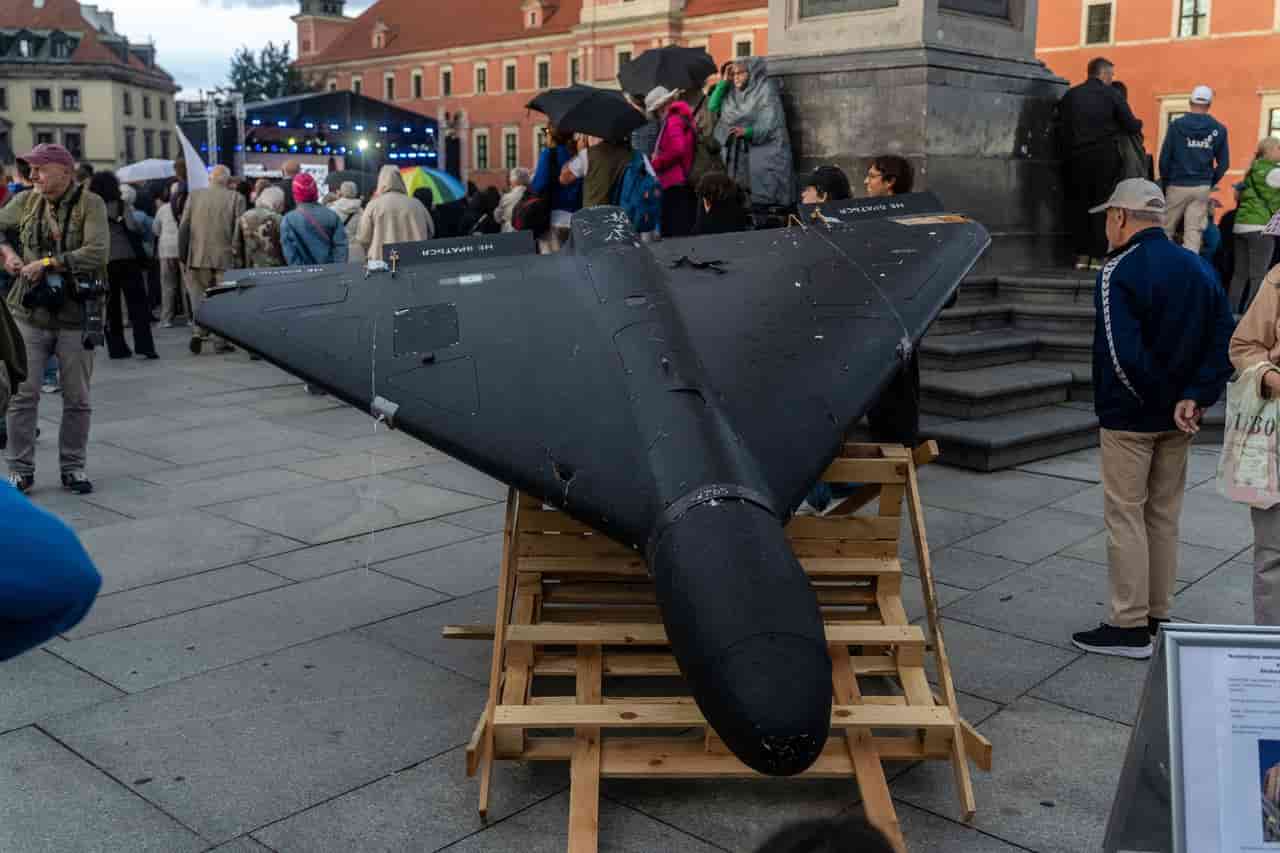
Polish military prosecutors discovered Polish SIM cards in some of the Russian drones that were shot down during a large-scale drone incursion into the country on the night of September 9 to September 10. The investigation into the origin of these SIM cards has since been discontinued because authorities could not identify the individuals responsible for the incursion.
Marcin Kozak, spokesman for the District Prosecutor’s Office in Lublin, stated that the investigation was halted because the perpetrator of the crime of violating Polish airspace and posing a threat to public safety was not identified. On September 9, over 30 Gerbera-type drones entered Polish airspace, with some being intercepted and downed by the Polish military.
Separately, two Ukrainian officials indicated on September 14 that Russia likely utilized Belarusian Long-Term Evolution (LTE) networks and a network of repeater stations in Belarus to ensure stable signals for Shahed-type drones during mass attacks on Ukraine. This revelation followed a significant drone attack by Russia on September 12, which involved hundreds of drones targeting western Ukraine.
Presidential Advisor Serhii "Flash" Beskretnov noted that the flight paths of the drones used in the September 12 attack suggested the use of Belarusian mobile networks for cross-border operations. Russia has been observed to use a combination of radio technologies to maintain connectivity with Shahed-type drones during large-scale assaults, particularly when lacking access to systems like SpaceX's Starlink.
Polish Prime Minister Donald Tusk had previously warned on September 13 about the potential for intensified Russian escalation in the coming months, citing recent Russian strikes near a Polish-Ukrainian border crossing and on a passenger train. He stated that the actions of the Russian Federation were becoming more frequent and closer to Poland's borders, and that the upcoming weeks and months could see intensive Russian activity, potentially including Polish territory.
In response to these threats, Deputy Defense Minister Cezary Tomczyk announced on September 28 that Poland would revise its procedures for military aircraft and helicopters engaging objects entering its airspace from the direction of Russia. The current peacetime procedure requires pilots to visually confirm a target before engaging. The new protocols will shift to "positive identification," allowing pilots or commanders to authorize engagement based on radar readings alone, thereby enabling faster responses to missiles or drones.