Key facts
- A catastrophic flood in Nepal on August 28, 2026, destroyed significant hydropower infrastructure.
- Over 1,900 people are missing, with over 900 feared lost from hydropower projects.
- Hundreds of workers and locals were trapped in tunnels of projects like Upper Trishuli 1 and Trishuli 3A.
- The flood destroyed 440MW of power generation capacity, 10% of Nepal's total.
- International financial institutions, including the IFC, ADB, and AIIB, had previously highlighted risks associated with such projects.
- The disaster is considered the worst in Nepal's history for economic damage to infrastructure and property.
A catastrophic flood in Nepal has devastated numerous hydropower projects, leading to a significant loss of power-generating capacity and raising critical questions about the country's extensive renewable energy expansion plans. The disaster, which occurred on August 28, 2026, has resulted in over 1,900 reported missing persons, with fears that more than 900 individuals are unaccounted for from the affected hydropower sites.
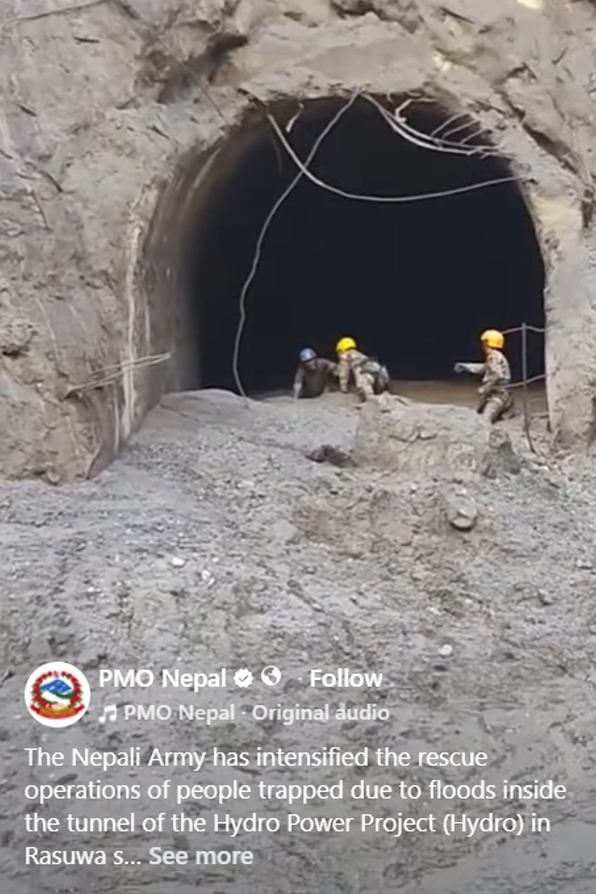
Rescue efforts by the Nepal Army have been underway to extract hundreds of laborers, engineers, and locals trapped inside tunnels of projects like Upper Trishuli 1 and Trishuli 3A. While over 350 have been rescued, many remain trapped. The Upper Trishuli I project, one of Nepal's largest and nearing completion, has been largely destroyed by the intense force of the Himalayan floods. The entire Trishuli Basin is densely populated with over 36 hydropower projects.
This event is being viewed as a potential turning point for the hydropower boom in South Asia, which has been heavily financed by international financial institutions and multilateral banks such as the ADB, World Bank Group's IFC, and China's Exim bank. Reports and internal assessments from these institutions, including cumulative impact assessments of the Trishuli Basin, had repeatedly highlighted the extreme dangers associated with developing infrastructure in this hazard-prone region. Despite these warnings and knowledge of previous floods in 2024 and 2025, preventive measures were not adequately implemented, and stringent checks and balances were not demanded by the funders. The funding was often provided under the guise of "Climate and Disaster Resilience."
The economic damage from this flood is considered the worst in Nepal's history, surpassing even the impact of the 2015 earthquake in terms of infrastructure and property loss. The disaster underscores the vulnerability of settlements and infrastructure located along river banks in the Himalayas, a practice that has increased due to economic desperation and rural outmigration, despite historical knowledge of flood risks.