All NewsEducationTVBrokers
Equities & FundsCrypto & Digital AssetsAI & TechnologyBusiness & CorporateUS Politics & PolicyGeopolitics & Global RiskMacro, Rates & FXCommodities & EnergyEuropean Politics & MarketsAsia-PacificReal Estate & Property
All NewsHome
← Back to Commodities & Energy

Nepal floods expose risks to hydropower in a warming Himalayas

Created at 31 Aug · 11:36 AM1 source↑ Market-relevant
IN SHORT

Catastrophic floods in Nepal have devastated hydropower projects, highlighting the growing risks to infrastructure in the warming Himalayas. Hundreds of workers are missing, and significant power capacity is offline, prompting calls for resilient rebuilding strategies.

Key Numbers

20,000people supplied by affected power station
900workers unaccounted for from hydropower projects
700 megawattspower capacity taken offline
10%of country's power capacity offline
900people dead in Nepal and China combined
4,700people missing in Nepal and China combined
$124 billionNepal's infrastructure exposed to climate disasters
$760 millionNepal's average annual losses from disasters

Who's Involved

Jakob Steiner
Geoscientist at the University of Graz, Austria
Ramraj Narasimhan
Senior Director, Coalition for Disaster Resilient Infrastructure
Himanshu Thakkar
Coordinator, South Asia Network on Dams, Rivers and People
Independent Power Producers’ Association, Nepal
Reported unaccounted workers from hydropower projects
Coalition for Disaster Resilient Infrastructure
Estimates infrastructure exposure and annual losses
International Center for Integrated Mountain Development
Provided reports on Himalayan climate risks

↳ Why This Matters

The floods underscore the increasing vulnerability of critical infrastructure in the Himalayas to climate change, threatening Nepal's energy security, economic growth, and the safety of its population. The disaster highlights the urgent need for revised planning and construction practices to mitigate future risks.

Key facts

  • Floods in Nepal have severely damaged or destroyed numerous hydropower projects.
  • Hundreds of workers are missing, with many feared trapped in tunnels.
  • Approximately 10% of Nepal's power capacity is offline due to infrastructure loss.
  • Experts advocate for rebuilding infrastructure with resilience and redundancy in mind.
  • The warming climate in the Himalayas is increasing the frequency and intensity of such disasters.

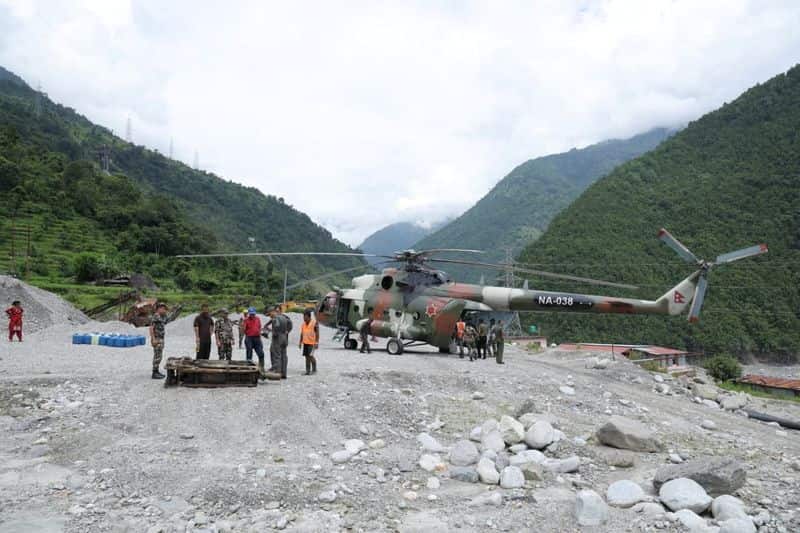
Workers are attempting to clear mud from a flood-damaged power station in central Nepal, which supplies electricity to over 20,000 people. The recent catastrophic floods have devastated numerous hydropower projects across the country, leaving up to 900 workers unaccounted for and hundreds believed trapped in tunnels. The loss of this infrastructure has taken an estimated 700 megawatts of power offline, representing about 10% of Nepal's total capacity.

Disaster experts and geoscientists are urging Nepalese authorities to reconsider rebuilding strategies, questioning the approval of new projects in vulnerable locations and emphasizing the need for resilient infrastructure that prioritizes service continuity and redundancy over making every structure indestructible. This could involve choosing safer locations, implementing alternate routes, ensuring backup power, and improving early warning systems and financial tools like insurance.

Climate scientists highlight that the Himalayan region is warming at an accelerated rate, leading to increased risks of floods, landslides, and debris flows due to melting glaciers, permafrost degradation, and erratic rainfall. Nepal's reliance on run-of-river hydropower, which is closely tied to steep river corridors, makes it particularly susceptible to these climate-driven disasters. While smaller floods can sometimes be managed with diversions, extreme events like the recent one can overwhelm physical defenses, making early warning systems critical for protecting lives.

There are also calls for more rigorous environmental, social, and disaster-risk assessments for future projects, coupled with stronger accountability and land-use regulations. Hydropower projects themselves can exacerbate downstream damage by altering river channels and adding debris. Some experts suggest that Nepal should also explore more decentralized energy sources, such as solar power, as part of a diversified energy mix.

Frequently asked questions

Up to 900 workers are unaccounted for from a dozen hydropower projects in Nepal, with hundreds believed to be trapped in tunnels.

The loss of hydropower infrastructure has taken an estimated 700 megawatts offline, which is about 10% of Nepal's total power capacity.

The Himalayas are warming faster than many other regions, leading to accelerating glacier melt, permafrost degradation, unstable slopes, glacial lakes, and increasingly erratic rainfall, all of which raise the risks of floods and landslides.

Nepal's national disaster funds are a fraction of the estimated average annual losses, which are nearly $760 million from various disasters.

What Happens Next

01Authorities will need to decide on rebuilding strategies for damaged hydropower projects.
02New project approvals will likely face increased scrutiny regarding disaster risk.
03Nepal may explore more decentralized energy sources like solar power.
CME Headlines
  • RBOB Gasoline futures reach multi-month highs on inventory draw.
    28 Aug · 10:40 PM
  • RBOB Gasoline futures reach multi-month highs on inventory draw.
    28 Aug · 10:40 PM
  • Live Cattle futures slide for 4th straight week as Lean Hogs rebound.
    28 Aug · 10:24 PM

How It Developed

Catastrophic floods in Nepal have damaged or destroyed multiple hydropower projects.
Hundreds of workers are unaccounted for, with many believed trapped in tunnels.
An estimated 700 megawatts of power capacity, about 10% of Nepal's total, has been taken offline.
Experts emphasize the need for resilient rebuilding strategies, considering location and redundancy.
Climate scientists note the Himalayas are warming faster, increasing risks of floods and landslides.
Nepal's reliance on run-of-river hydropower makes it particularly vulnerable to such disasters.
Calls are being made for stronger environmental and disaster-risk assessments for future projects.
Decentralized solar power is suggested as an alternative or supplement to hydropower.

Sources

T1
Nepal floods expose risks to hydropower in a warming HimalayasAP News

Related Stories

AI Boom Fuels Surge in U.S. Natural Gas Power Plant Development
30 Aug · 7:41 PM
China LNG Imports May Drop 18% in August Amid Soaring Prices
31 Aug · 12:56 PM
Asian Refiners Seek Argentinian Crude Amid Middle East Supply Disruptions
31 Aug · 9:06 AM
Turkmenistan begins fixing methane mega-leaks after global scrutiny
31 Aug · 7:11 AM
Saudi Arabia Backs Turkey’s Renewable Energy Expansion
30 Aug · 3:21 PM