Key facts
- NASA is celebrating the engineering achievement of a failed mission to save the Swift observatory.
- The rescue mission was developed by Katalyst Space Technologies under a $30 million contract.
- Katalyst's satellite, Link, successfully launched on July 3, 2026, but malfunctioned weeks later.
- The Swift observatory, launched in 2004, is falling out of orbit due to aerodynamic drag.
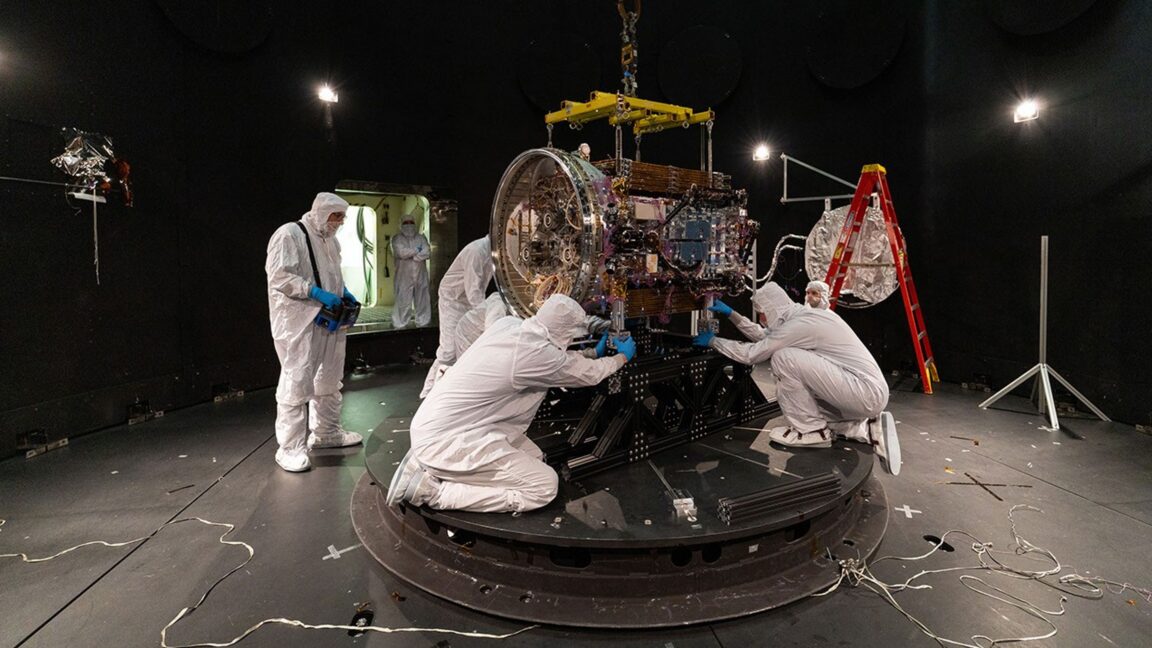
- Katalyst engineers built the Link satellite, weighing nearly a half-ton, in nine months.
- The Link mission aimed to capture Swift and boost it into a higher orbit.
An ambitious attempt to save NASA’s $500 million Neil Gehrels Swift Observatory from falling out of orbit has fallen short, but the rapid development and execution of the rescue mission are being recognized as significant engineering achievements. The mission, undertaken by Katalyst Space Technologies under a $30 million contract awarded by NASA in September 2025, aimed to capture Swift and boost it into a higher orbit.
Katalyst’s rescue spacecraft, named Link, successfully launched on July 3, 2026, and completed initial checkouts. However, a few weeks later, a malfunction caused the satellite to spin out of control, leading NASA to announce in August 2026 that the mission was aborted.
Despite the ultimate failure to reach Swift, the process of designing, building, and testing a satellite of Link’s complexity in just nine months was considered remarkable. Link weighed nearly a half-ton and was equipped with electric thrusters, robotic arms, and large solar arrays. Normally, such a satellite would take several years to develop from scratch.
The Swift Observatory, launched in 2004, has far exceeded its original design life. Lacking its own propulsion system, Swift is unable to counteract the aerodynamic drag in low-Earth orbit, a process accelerated by increased solar activity. Scientists rely on Swift for its unique ability to detect gamma-ray bursts, the most powerful explosions in the universe.
NASA and Katalyst officials are reviewing the mission's lessons learned. Shawn Domagal-Goldman, director of NASA’s astrophysics division, noted that the compressed timeline limited the scope of potential solutions, as NASA primarily worked with existing contract partners. Katalyst faced challenges in sourcing parts, sometimes resorting to building components in-house, and had to make critical decisions about pre-launch testing with Northrop Grumman.
Kieran Wilson, principal investigator for the Link mission, described the mission's core requirement as "do no harm and boost Swift," allowing Katalyst to prioritize engineering judgment for speed. The Link spacecraft was completed and ready for testing by April 2026. The launch was successful, but in late July, a failure in a reaction wheel switch's control electronics, specifically a shorted transistor in the regenerative braking circuit, caused overheating and rendered the circuit inoperable. While software and operational changes initially mitigated the issue, a subsequent unresponsive RCS valve led to the spacecraft spinning, preventing it from rendezvousing with Swift.