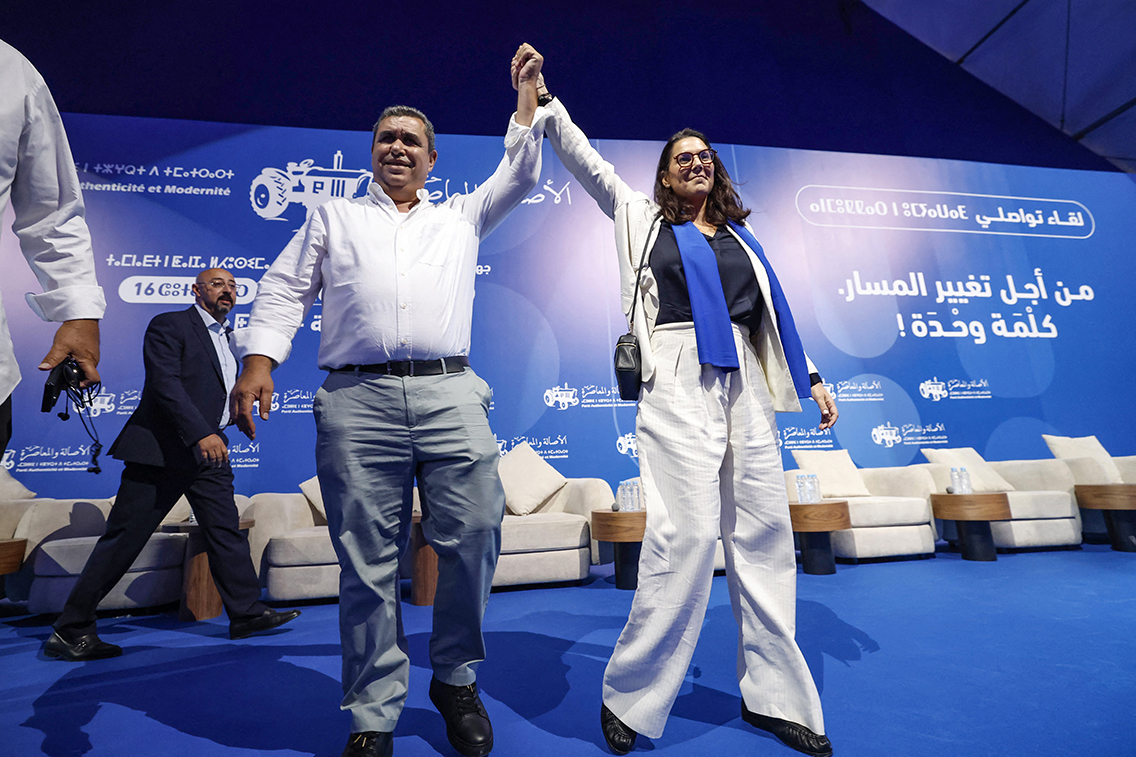
Key facts
- Fatima Ezzahra El Mansouri has been appointed as Morocco's first woman prime minister.
- The appointment followed the September 23 parliamentary election.
- El Mansouri's party, the Authenticity and Modernity Party (PAM), won 97 seats in the election.
- PAM emerged as the largest party in the 395-seat House of Representatives.
- The King appoints the head of government from the party that wins the most seats.
- El Mansouri previously served as mayor of Marrakech and as minister of national territorial planning, urban planning, housing and city policy.
RABAT, Sept. 29 (Reuters) - King Mohammed VI appointed Fatima Ezzahra El Mansouri as Morocco's first woman prime minister on Tuesday, following her liberal-centrist Authenticity and Modernity Party (PAM) emerging as the largest party in the September 23 parliamentary election. The royal palace announced the appointment.
The PAM secured 97 seats in the 395-seat House of Representatives, according to preliminary results from the interior ministry. This victory positions El Mansouri, a prominent politician and the party's leader, as a leading contender for the top government post. Under the constitution, the king appoints the head of government from the leading party, though it does not automatically go to the party leader. El Mansouri, 50, would be the second woman to head a government in the Arab world, after Tunisia's Najla Bouden.
El Mansouri, born in Marrakech in 1976, trained as a lawyer and entered politics after PAM's establishment in 2008. She became the first woman to serve as mayor of Marrakech in 2009 and returned to the position after the 2021 elections. She also served as minister of national territorial planning, urban planning, housing and city policy in the outgoing government. She further solidified her standing within PAM in 2024 by taking a leading role in the party's collective leadership.
The PAM will need to form a coalition government, as it fell short of the 198 seats required for an outright majority. Its outgoing coalition partners, the National Rally of Independents (RNI) with 66 seats and the Istiqlal Party with 65 seats, could provide the necessary support, as together they secured 228 seats. The Islamist Justice and Development Party (PJD) saw a significant comeback, winning 54 seats after securing only 13 in the previous election.