Key facts
- The IOPC found no evidence of 'tactical contact' or stinger use by police before the A66 crash.
- Two police officers and five young men died in the collision.
- The pursuit was called off before the crash, and police followed on the correct carriageway.
- The crash occurred on August 22, near Middlesbrough.
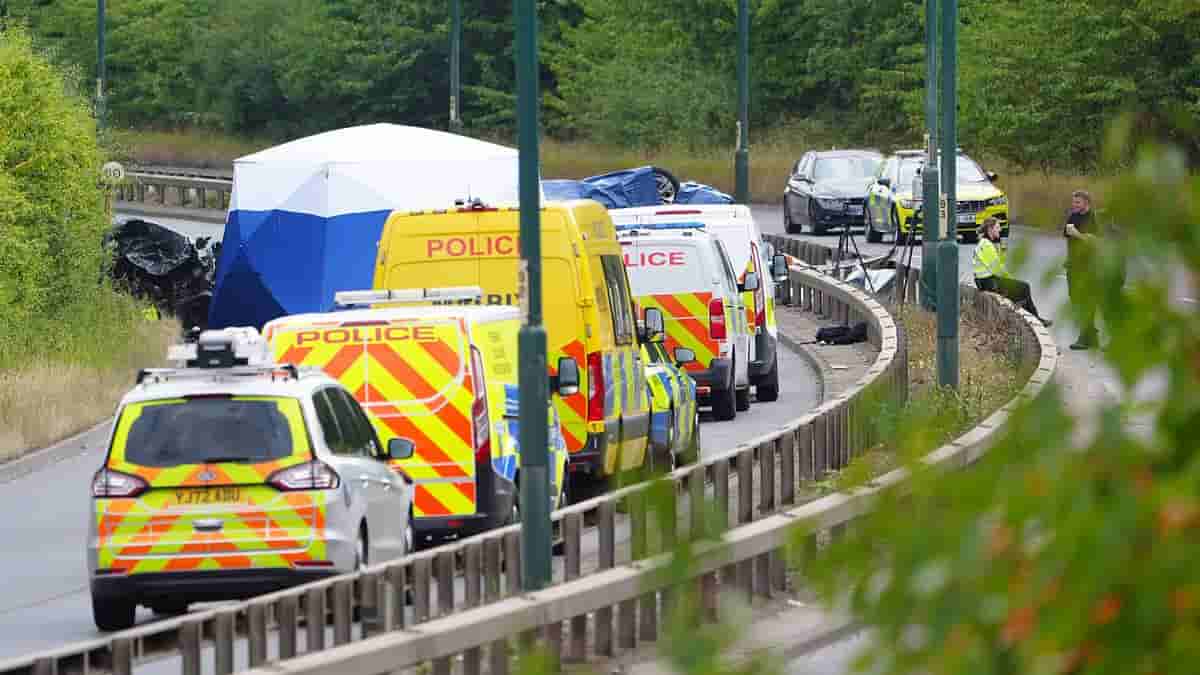
An initial investigation into a fatal head-on collision on the A66 near Middlesbrough has found no evidence that police used 'tactical contact' or a stinger device before the crash, the Independent Office for Police Conduct (IOPC) confirmed on September 29, 2026. The incident on August 22 resulted in the deaths of two police officers and five young men.
The IOPC stated that the pursuit by Cleveland Police officers began at 3:33 a.m. Analysis of in-car footage showed that six minutes later, at 3:39 a.m., the driver of a Volkswagen Passat slowed on the approach to the A66 junction and braked heavily. The driver then turned right and traveled along the A66 against the flow of traffic. However, the pursuing police car did not follow the Passat onto the wrong carriageway; its blue lights were turned off, and the officer followed on the correct carriageway. Approximately 17 seconds later, the Passat collided with another police vehicle that was traveling on the correct carriageway.
PC Matthew Blades, 37, and PC Tom Clough, 38, died when their marked police car was struck head-on. The five occupants of the Passat, identified as Jakub Matusiak, 23; Cole Worthy, 17; Theo Rae, 17; Makai Saddington, 18; and Michael Cahill, 23, were also pronounced dead at the scene.
IOPC director of engagement Emily Barry extended sympathies to the families and friends of those involved, emphasizing the focus on establishing the full circumstances of the tragic incident. The officers involved are currently being treated as witnesses. Barry reassured the public that the investigation is thorough and will take months to conclude, with families being provided regular updates.