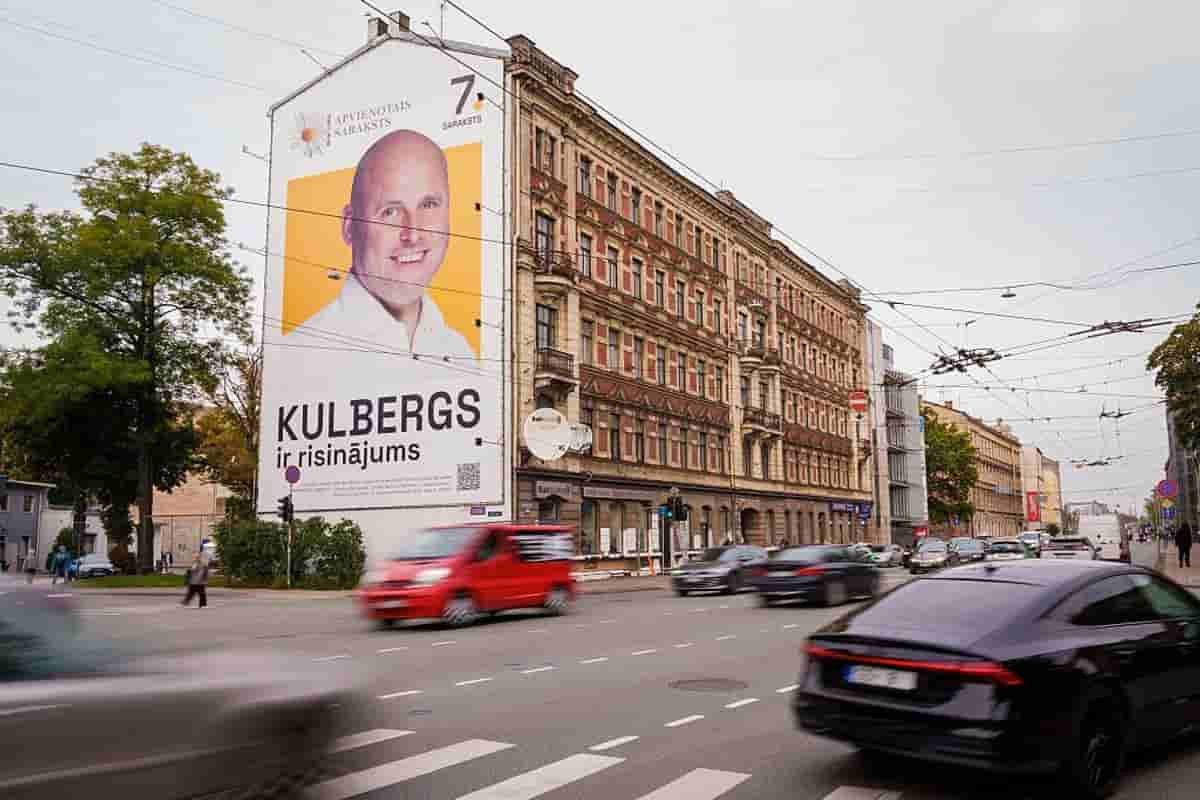
Key facts
- Latvia will elect a new 100-member parliament on October 3.
- Prime Minister Andris Kulbergs' United List party is favored to win.
- Security concerns over Russia and a cost-of-living crisis are key election issues.
- Latvia borders Russia and Belarus and has a significant Russian-speaking population.
- Latvia First, a populist party led by Ainars Slesers, polls third at 13.3%.
- Sovereign Power, a party opposing aid to Ukraine, polls second at 14.1%.
Latvia is set to hold parliamentary elections on October 3, with national security and the escalating threat from neighboring Russia dominating the campaign agenda. The election for the 100-member Saeima comes as Western nations express growing concern over Moscow's hybrid warfare tactics, a particularly sensitive issue for Latvia, which shares borders with Russia and Belarus and has a significant Russian-speaking minority.
Polls suggest a victory for the United List (AS) alliance, led by incumbent Prime Minister Andris Kulbergs, who has pledged "unwavering support to Ukraine." However, Kulbergs will likely require coalition partners to secure a parliamentary majority. His current coalition includes the nationalist National Alliance, the agrarian Union of Greens and Farmers (ZZS), and the liberal-conservative New Unity (JV). Recent surveys indicate that ZZS and JV may struggle to cross the 5% threshold needed to enter parliament.
The pro-European, social-democratic Progressives, polling around 10%, could offer support for a pro-Western bloc, but ideological differences might complicate alliances with center-right and right-wing parties. The Progressives left Silina's cabinet in May over defense issues.
A significant factor in the election is Latvia First (LPV), a right-wing populist party led by businessman Ainars Slesers, often compared to Donald Trump. Polling third at 13.3%, Slesers' party appeals to both Latvian and Russian speakers, criticizing government policies and advocating for restored economic ties with Russia post-war, though his stance on Ukraine has evolved. Politicians expelled from Latvia First in 2022 founded Sovereign Power (SV/AJ), which polls second at 14.1% and explicitly opposes aid to Ukraine. Kulbergs has ruled out a coalition with Sovereign Power, deeming it a threat to security and democracy, and has also rejected cooperation with Latvia First, though some observers believe Slesers could become a coalition partner if other options are limited.
Security has been a central theme, with Latvian intelligence warning of potential Russian hybrid attacks. Recent incidents in Estonia and Germany, attributed to Russia, have heightened these concerns. While Latvia has not detected signs of an imminent conventional attack, stray drones have previously entered its airspace. Governing politicians have emphasized their hawkish stance on Russia, with Latvia having previously imposed unilateral sanctions on two Russian oligarchs after they were removed from the EU sanctions list.